
Lauren Boebert (R-CO)
No Federal Tax Dollars for Illegal Aliens Health Insurance Act of 2026
A Republican bill with 15 Republican cosponsors · See all 15 cosponsors
Last activity — Referred to the Committee on Energy and Commerce, and in addition to the Committee on Ways and Means, for a period to be subsequently determined by the Speaker, in each case for consideration of such provisions as fall within the jurisdiction of the committee concerned.
In committee
Introduced and handed to a committee in the chamber it started in.
The committee holds it, and most bills are never heard from again. A hearing or a committee vote would be news; silence is the usual outcome, and it kills the bill without anyone voting against it.
Its path through Congress
- Introduced
- In Committee
What this bill would do
H.R. 7817 is known as the No Federal Tax Dollars for Illegal Aliens Health Insurance Act of 2026. The bill amends the Patient Protection and Affordable Care Act to ensure taxpayer funds for health insurance coverage are available only to authorized individuals. It specifically prohibits pass-through funding to States from being used to offset health insurance costs or provide benefits to individuals who are not U.S. citizens, nationals, or lawfully present aliens. Additionally, the bill mandates the rescission of certain previously approved waivers that do not meet these new requirements within 30 days of enactment.
Yes· 3 of 6
- Scored +2
Does this tighten control of the border?
The bill discourages undocumented presence by restricting access to taxpayer-funded healthcare benefits.
- Scored +2
Does this give the federal government more power?
The bill imposes federal statutory restrictions on how states may utilize Section 1332 waiver pass-through funds.
- Scored +1
Would middle-income households be better off under this?
Some taxpayers may view the restriction of funds to authorized individuals as a fairer use of public resources.
The opposite· 3 of 6
- Scored -6
Would immigrants be better off under this?
Unauthorized immigrants are explicitly barred from receiving health insurance cost offsets or benefits under ACA pass-through funds.
- Scored -4
Does this make health care easier to get in general?
The bill restricts health insurance coverage and cost-sharing reductions for individuals who are not lawfully present.
- Scored -3
Does this make it easier for immigrants already here to become citizens?
By withholding specific health benefits from unauthorized individuals, the bill creates further policy barriers for non-citizens.
Who it would affect, and how
Potential Positive Impacts for People
- Section 2(b) prohibits pass-through funding from being used to offset health insurance costs or provide benefits to individuals who are not U.S. citizens, nationals, or lawfully present aliens. This could be viewed positively by people who want to ensure taxpayer funds are restricted strictly to authorized individuals.
Potential Negative Impacts for People
- Section 2(b) blocks pass-through funding from being used to help cover health insurance costs or provide benefits for anyone who is not a U.S. citizen, national, or lawfully present alien. This could be considered a negative outcome for individuals who fall outside of those specific categories and would lose access to these health insurance cost offsets or benefits.
Groups and Interests Ranking
Every group the model scored this bill for, from -10 to +10. Tap or hover a score for the reason it gave.
- Demographic And Interest Groups
- Would middle-income households be better off under this? — Some taxpayers may view the restriction of funds to authorized individuals as a fairer use of public resources. Would immigrants be better off under this? — Unauthorized immigrants are explicitly barred from receiving health insurance cost offsets or benefits under ACA pass-through funds. Would Hispanic Americans be better off under this? — Immigrant communities and Hispanic populations with mixed-status or non-authorized members may experience reduced healthcare access. Would households on low incomes be better off under this? — Low-income households that include non-authorized individuals will lose access to specific health cost offsets.
- Healthcare
- Does this make health care easier to get in general? — The bill restricts health insurance coverage and cost-sharing reductions for individuals who are not lawfully present.
- Economy And Finance
- Does this make the government pay for what it commits to? — The legislation enforces stricter boundaries on how federal taxpayer funds are allocated under the Affordable Care Act. Does this reduce what the federal government spends? — By prohibiting pass-through funding for unauthorized individuals, federal and state health care expenditures could decrease. Does this reduce what the federal government owes? — The bill may slightly reduce government spending by restricting health insurance subsidies to unauthorized individuals.
- Social Issues And Justice
- Does this tighten control of the border? — The bill discourages undocumented presence by restricting access to taxpayer-funded healthcare benefits. Does this make it easier for immigrants already here to become citizens? — By withholding specific health benefits from unauthorized individuals, the bill creates further policy barriers for non-citizens.
- Governance And Ideology
- Does this give the federal government more power? — The bill imposes federal statutory restrictions on how states may utilize Section 1332 waiver pass-through funds. Does this leave more decisions to the states? — States are stripped of the flexibility to offer health insurance subsidies to unauthorized individuals via ACA waivers.
- 6/3/2026
- 1 Cosponsor added.
- 3/17/2026
- 1 Cosponsor added.
- 3/9/2026
- 2 Cosponsors added.
- 3/5/2026
- Referred to the Committee on Energy and Commerce, and in addition to the Committee on Ways and Means, for a period to be subsequently determined by the Speaker, in each case for consideration of such provisions as fall within the jurisdiction of the committee concerned.
- 11 Cosponsors added.
- Introduced in House
 Tim Burchett
Republican · Tennessee
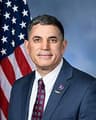 Andrew Clyde
Republican · Georgia
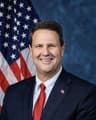 Jeff Crank
Republican · Colorado
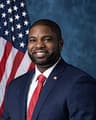 Byron Donalds
Republican · Florida
 Gabe Evans
Republican · Colorado
 Paul Gosar
Republican · Arizona
 Andy Harris
Republican · Maryland
 Jeff Hurd
Republican · Colorado
 Mark Harris
Republican · North Carolina
 Mike Kennedy
Republican · Utah
 Anna Paulina Luna
Republican · Florida
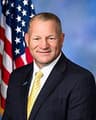 Troy Nehls
Republican · Texas
 Scott Perry
Republican · Pennsylvania
 Keith Self
Republican · Texas
 Jefferson Van Drew
Republican · New Jersey