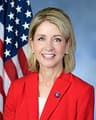
A Republican bill with 22 Republican cosponsors · See all 22 cosponsors
Last activity — Placed on the Union Calendar, Calendar No. 632.
Cleared committee, waiting for its first floor vote
A committee approved it and it is on the calendar of the chamber it started in.
This is further than most bills get, and still no promise of a vote: the calendar is a queue, and the majority leadership decides what is called. A bill can sit here until the Congress ends.
Its path through Congress
- Introduced
- On Calendar
What this bill would do
This bill is known as the Stop the Sexualization of Children Act. It amends the Elementary and Secondary Education Act of 1965. The legislation stops the use of funds provided under this Act for programs, activities, literature, or materials for children under 18 that include sexually oriented material. It defines sexually oriented material to include depictions of sexually explicit conduct, gender dysphoria, or transgenderism. The bill also provides specific rules of construction detailing what is not prohibited by the new restriction.
Yes
- Scored +3
Would children be better off under this?
The bill aims to protect children from exposure to sexually oriented materials.
- Scored +3
Does this give the federal government more power?
The bill uses federal authority to regulate the content of educational materials provided under the Act.
- Scored +2
Does this protect the freedom to practise a religion?
The bill explicitly protects the use of funds for teaching the texts of major world religions.
The opposite· 3 of 6
- Scored -7
Would LGBTQ people be better off under this?
The bill specifically targets and prohibits funding for materials related to gender dysphoria or transgenderism.
- Scored -6
Does this expand the rights of LGBTQ people?
The bill specifically prohibits funding for materials involving gender dysphoria or transgenderism.
- Scored -3
Does this protect what people are allowed to say in public life?
The bill restricts the types of educational content and literature that can be funded in schools.
Who it would affect, and how
Potential Positive Impacts for People
-
Protection from Explicit Material: Section 2 of the bill prohibits using federal education funds to develop, implement, facilitate, host, promote, or provide programs, activities, literature, or other materials to children under 18 that include sexually oriented material, such as exposure to nude adults, stripping, or lewd or lascivious dancing. This might be seen as positive for individuals who want to ensure children are not exposed to such content in school settings.
-
Safety and Trafficking Education: Section 2 of the bill includes a rule of construction explicitly allowing funds to be used for security measures designed to help students recognize and safely respond to attempts to sexually traffic or groom children, including using real-world examples based on criminal law and cases like Jeffrey Epstein and Ghislaine Maxwell. This could be considered positive for teaching children how to stay safe from predators.
-
Preservation of Standard Curriculum: Section 2 of the bill specifies that the restrictions do not prohibit using funds for teaching standard science coursework, major world religions, classic works of literature, or classic works of art. This may be viewed as a positive protection for traditional academic subjects and educational resources.
Potential Negative Impacts for People
- Restrictions on Specific Topics: Section 2 of the bill defines sexually oriented material to include any material involving gender dysphoria or transgenderism. This could be considered a negative burden for individuals, groups, or students seeking support, programs, or literature related to these specific topics in schools using these federal funds.
Groups and Interests Ranking
Every group the model scored this bill for, from -10 to +10. Tap or hover a score for the reason it gave.
- Social Issues And Justice
- Does this protect the freedom to practise a religion? — The bill explicitly protects the use of funds for teaching the texts of major world religions. Does this expand the rights of LGBTQ people? — The bill specifically prohibits funding for materials involving gender dysphoria or transgenderism. Does this protect what people are allowed to say in public life? — The bill restricts the types of educational content and literature that can be funded in schools.
- Demographic And Interest Groups
- Would children be better off under this? — The bill aims to protect children from exposure to sexually oriented materials. Would LGBTQ people be better off under this? — The bill specifically targets and prohibits funding for materials related to gender dysphoria or transgenderism. Would students be better off under this? — The bill restricts the scope of educational content available through federal funding.
- Education And Technology
- Does this put more money into public schools? — The bill imposes new restrictions on how federal funds can be used for certain educational curricula.
- Governance And Ideology
- Does this give the federal government more power? — The bill uses federal authority to regulate the content of educational materials provided under the Act. Does this protect the individual right to speak freely? — The bill restricts the types of educational content and literature that can be funded in schools.
- 7/2/2026
- Reported (Amended) by the Committee on Education and Workforce. H. Rept. 119-727.
- Placed on the Union Calendar, Calendar No. 632.
- 4/27/2026
- 2 Cosponsors added.
- 4/16/2026
- 1 Cosponsor added.
- 3/26/2026
- 1 Cosponsor added.
- 3/17/2026
- Committee Consideration and Mark-up Session Held
- Ordered to be Reported (Amended) by the Yeas and Nays: 18 - 13.
- 3/16/2026
- 1 Cosponsor added.
- 2/24/2026
- Referred to the House Committee on Education and Workforce.
- 17 Cosponsors added.
- Introduced in House
One bill Congress.gov lists as related to this one — companions in the other chamber, earlier versions, and bills this one absorbed or was folded into.
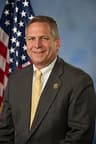 Mike Bost
Republican · Illinois
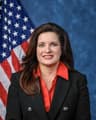 Sheri Biggs
Republican · South Carolina
 Warren Davidson
Republican · Ohio
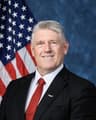 Troy Downing
Republican · Montana
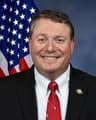 Randy Fine
Republican · Florida
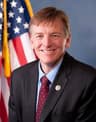 Paul Gosar
Republican · Arizona
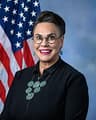 Harriet Hageman
Republican · Wyoming
 Julia Letlow
Republican · Louisiana
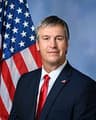 Barry Moore
Republican · Alabama
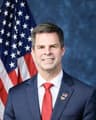 John McGuire
Republican · Virginia
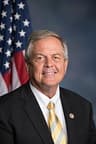 Ralph Norman
Republican · South Carolina
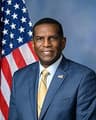 Burgess Owens
Republican · Utah
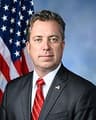 Andrew Ogles
Republican · Tennessee
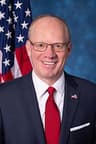 John Rose
Republican · Tennessee
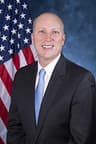 Chip Roy
Republican · Texas
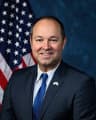 Marlin Stutzman
Republican · Indiana
 W. Steube
Republican · Florida
 Keith Self
Republican · Texas
 Claudia Tenney
Republican · New York
 David Taylor
Republican · Ohio
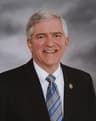 Daniel Webster
Republican · Florida
 Randy Weber
Republican · Texas