
A Republican bill with 32 Republican cosponsors · See all 32 cosponsors
Last activity — Referred to the House Committee on Energy and Commerce.
In committee
Introduced and handed to a committee in the chamber it started in.
The committee holds it, and most bills are never heard from again. A hearing or a committee vote would be news; silence is the usual outcome, and it kills the bill without anyone voting against it.
Its path through Congress
- Introduced
- In Committee
What this bill would do
This bill, titled the "Title X Abortion Provider Prohibition Act," seeks to amend title X of the Public Health Service Act. It would prohibit the Secretary from providing assistance under this title to any entity that performs abortions. To receive assistance, an entity must certify that it will not perform abortions or provide funds to other entities that perform them. Exceptions are made for abortions resulting from rape or incest, or when a physician certifies a life-threatening physical condition. Hospitals are also exempt from this prohibition as long as they do not fund non-hospital entities that perform abortions. Finally, the Secretary is required to submit annual reports to Congress regarding these entities and any exceptions used.
Yes
- Scored +3
Does this make what the government does easier for the public to see?
The bill requires the Secretary to submit annual reports to Congress detailing the use of exceptions and the distribution of funds.
The opposite· 3 of 7
- Scored -7
Does this make abortion easier to get?
The bill prohibits Title X assistance to entities that perform abortions, which limits the resources available to such providers.
- Scored -6
Would women be better off under this?
The bill restricts federal support for entities that provide abortion services, which can limit women's reproductive healthcare options.
- Scored -5
Does this narrow the gap between how men and women are treated?
The restriction on reproductive health service providers may disproportionately affect women's autonomy and access to healthcare.
Who it would affect, and how
Potential Positive Impacts for People
-
Protections for specific circumstances: The bill includes exceptions that allow for abortions in cases where a pregnancy results from rape or incest, or when a physician certifies that a woman's life is in danger due to a physical disorder, injury, or illness (Section 2, subsection b).
-
Hospital exemptions: Hospitals are not subject to the same prohibitions as other entities, provided they do not fund non-hospital entities that perform abortions (Section 2, subsection c).
Potential Negative Impacts for People
-
Funding restrictions for entities: Any entity that performs an abortion, or provides funds to an entity that performs an abortion, would be prohibited from receiving assistance under title X (Section 2, subsection a).
-
Broad definition of entities: The prohibition applies to the entire legal entity, including any entity that controls, is controlled by, or is under common control with the recipient (Section 2, subsection e).
Groups and Interests Ranking
Every group the model scored this bill for, from -10 to +10. Tap or hover a score for the reason it gave.
- Demographic And Interest Groups
- Would women be better off under this? — The bill restricts federal support for entities that provide abortion services, which can limit women's reproductive healthcare options. Would households on low incomes be better off under this? — The reduction in Title X funding could limit access to essential family planning services for low-income individuals. Would Hispanic Americans be better off under this? — The loss of federal family planning assistance may negatively impact healthcare access within demographic groups that rely heavily on these services.
- Healthcare
- Does this make abortion easier to get? — The bill prohibits Title X assistance to entities that perform abortions, which limits the resources available to such providers. Does this make health care easier to get in general? — By restricting federal funding for certain health entities, the bill may reduce the availability of family planning services for many patients.
- Social Issues And Justice
- Does this narrow the gap between how men and women are treated? — The restriction on reproductive health service providers may disproportionately affect women's autonomy and access to healthcare. Is this likely to lift people out of poverty? — The reduction in available family planning resources may negatively impact the economic stability of low-income families.
- Governance And Ideology
- Does this make what the government does easier for the public to see? — The bill requires the Secretary to submit annual reports to Congress detailing the use of exceptions and the distribution of funds.
- 5/12/2026
- 1 Cosponsor added.
- 8/19/2025
- 1 Cosponsor added.
- 3/10/2025
- 1 Cosponsor added.
- 1/21/2025
- 2 Cosponsors added.
- 1/14/2025
- 3 Cosponsors added.
- 1/13/2025
- Referred to the House Committee on Energy and Commerce.
- 24 Cosponsors added.
- Introduced in House
One bill Congress.gov lists as related to this one — companions in the other chamber, earlier versions, and bills this one absorbed or was folded into.
 Robert Aderholt
Republican · Alabama
 Rick Allen
Republican · Georgia
 Stephanie Bice
Republican · Oklahoma
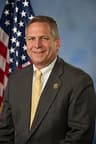 Mike Bost
Republican · Illinois
 Troy Balderson
Republican · Ohio
 James Baird
Republican · Indiana
 Tim Burchett
Republican · Tennessee
 Josh Brecheen
Republican · Oklahoma
 Sheri Biggs
Republican · South Carolina
 Michael Cloud
Republican · Texas
 Andrew Clyde
Republican · Georgia
 Ben Cline
Republican · Virginia
 Dan Crenshaw
Republican · Texas
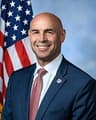 Jake Ellzey
Republican · Texas
 Randy Feenstra
Republican · Iowa
 Julie Fedorchak
Republican · North Dakota
 Brett Guthrie
Republican · Kentucky
 Paul Gosar
Republican · Arizona
 Glenn Grothman
Republican · Wisconsin
 Diana Harshbarger
Republican · Tennessee
 Erin Houchin
Republican · Indiana
 Brad Knott
Republican · North Carolina
 Robert Latta
Republican · Ohio
 Tracey Mann
Republican · Kansas
 Mary Miller
Republican · Illinois
 Mark Messmer
Republican · Indiana
 Dan Newhouse
Republican · Washington
 John Rutherford
Republican · Florida
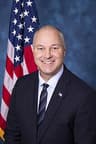 Pete Stauber
Republican · Minnesota
 W. Steube
Republican · Florida
 Daniel Webster
Republican · Florida
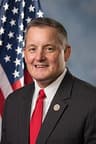 Bruce Westerman
Republican · Arkansas