
A Republican bill with 30 Democratic cosponsors · See all 47 cosponsors
Last activity — Referred to the Committee on Ways and Means, and in addition to the Committee on Energy and Commerce, for a period to be subsequently determined by the Speaker, in each case for consideration of such provisions as fall within the jurisdiction of the committee concerned.
In committee
Introduced and handed to a committee in the chamber it started in.
The committee holds it, and most bills are never heard from again. A hearing or a committee vote would be news; silence is the usual outcome, and it kills the bill without anyone voting against it.
Its path through Congress
- Introduced
- In Committee
What this bill would do
This bill, titled the ``End Kidney Deaths Act'', proposes to amend the Internal Revenue Code of 1986. It seeks to establish a refundable tax credit for individuals who make a qualified non-directed living kidney donation. A qualified donation involves a person donating a kidney without knowing the identity of the recipient or other connected individuals. The credit amount is $10,000 for the year of donation and each of the following four taxable years. There is a special rule to accelerate the credit amount if the donor dies during a taxable year. This provision is set to terminate after December 31, 2036, with amendments applying to kidneys removed after December 31, 2026.
Yes
- Scored +5
Does this make health care easier to get in general?
The bill incentivizes organ donation which can improve access to kidney transplants.
- Scored +3
Would middle-income households be better off under this?
The tax credit provides a direct financial benefit to participating donors.
- Scored +3
Does this cut taxes for middle-income families?
The bill provides a significant refundable tax credit for individuals who donate a kidney.
The opposite
No question was scored the opposite.
Who it would affect, and how
Potential Positive Impacts for People
-
Financial Credit for Donors: Individuals who make a qualified non-directed living kidney donation can receive a tax credit of $10,000 for the year of the donation and for each of the 4 succeeding taxable years (Section 2(a)).
-
Protection for Donors in Case of Death: If an individual dies during a taxable year for which the credit is allowed, the credit for that year is increased to $50,000 minus any credits already received in prior years (Section 2(c)(1)).
-
Legal Clarity Regarding Organ Purchases: The bill clarifies that this tax credit shall not be treated as valuable consideration for the purposes of the National Organ Transplant Act (Section 2(d)).
Potential Negative Impacts for People
- Expiration of Benefits: No credit will be allowed for any qualified non-directed living kidney donation after December 31, 2036 (Section 2(b)).
Groups and Interests Ranking
Every group the model scored this bill for, from -10 to +10. Tap or hover a score for the reason it gave.
- Healthcare
- Does this make health care easier to get in general? — The bill incentivizes organ donation which can improve access to kidney transplants.
- Demographic And Interest Groups
- Would middle-income households be better off under this? — The tax credit provides a direct financial benefit to participating donors.
- Economy And Finance
- Does this cut taxes for middle-income families? — The bill provides a significant refundable tax credit for individuals who donate a kidney.
- 1/12/2026
- 5 Cosponsors added.
- 10/31/2025
- 5 Cosponsors added.
- 10/3/2025
- 2 Cosponsors added.
- 9/16/2025
- 4 Cosponsors added.
- 9/9/2025
- 1 Cosponsor added.
- 8/26/2025
- 1 Cosponsor added.
- 7/17/2025
- 1 Cosponsor added.
- 7/15/2025
- 1 Cosponsor added.
- 7/14/2025
- 1 Cosponsor added.
- 7/10/2025
- 1 Cosponsor added.
- 6/30/2025
- 1 Cosponsor added.
- 6/26/2025
- 3 Cosponsors added.
- 6/24/2025
- 1 Cosponsor added.
- 6/4/2025
- 1 Cosponsor added.
- 5/29/2025
- 1 Cosponsor added.
- 5/19/2025
- 2 Cosponsors added.
- 5/15/2025
- 1 Cosponsor added.
- 5/13/2025
- 2 Cosponsors added.
- 5/8/2025
- 1 Cosponsor added.
- 5/6/2025
- 1 Cosponsor added.
- 4/28/2025
- 6 Cosponsors added.
- 4/17/2025
- 3 Cosponsors added.
- 4/14/2025
- 1 Cosponsor added.
- 4/7/2025
- Referred to the Committee on Ways and Means, and in addition to the Committee on Energy and Commerce, for a period to be subsequently determined by the Speaker, in each case for consideration of such provisions as fall within the jurisdiction of the committee concerned.
- 1 Cosponsor added.
- Introduced in House
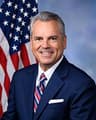 Mark Alford
Republican · Missouri
 Stephanie Bice
Republican · Oklahoma
 Don Bacon
Republican · Nebraska
 Wesley Bell
Democrat · Missouri
 Robert Bresnahan
Republican · Pennsylvania
 André Carson
Democrat · Indiana
 Donald Davis
Democrat · North Carolina
 Christopher Deluzio
Democrat · Pennsylvania
 Cleo Fields
Democrat · Louisiana
 Lois Frankel
Democrat · Florida
 Valerie Foushee
Democrat · North Carolina
 Randy Fine
Republican · Florida
 Josh Gottheimer
Democrat · New Jersey
 Chrissy Houlahan
Democrat · Pennsylvania
 Josh Harder
Democrat · California
 Harriet Hageman
Republican · Wyoming
 Sara Jacobs
Democrat · California
 Ro Khanna
Democrat · California
 Young Kim
Republican · California
 Ted Lieu
Democrat · California
 Barry Loudermilk
Republican · Georgia
 Nick LaLota
Republican · New York
 Sam Liccardo
Democrat · California
 Jared Moskowitz
Democrat · Florida
 Richard McCormick
Republican · Georgia
 Kevin Mullin
Democrat · California
 Celeste Maloy
Republican · Utah
 Ryan Mackenzie
Republican · Pennsylvania
 Sarah McBride
Democrat · Delaware
 Eleanor Norton
Democrat · District of Columbia
 Joe Neguse
Democrat · Colorado
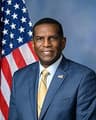 Burgess Owens
Republican · Utah
 Nancy Pelosi
Democrat · California
 Mark Pocan
Democrat · Wisconsin
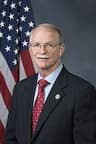 John Rutherford
Republican · Florida
 Michael Rulli
Republican · Ohio
 Thomas Suozzi
Democrat · New York
 Melanie Stansbury
Democrat · New Mexico
 Hillary Scholten
Democrat · Michigan
 Rashida Tlaib
Democrat · Michigan
 Ritchie Torres
Democrat · New York
 Jill Tokuda
Democrat · Hawaii
 Derrick Van Orden
Republican · Wisconsin
 Eugene Vindman
Democrat · Virginia
 Joe Wilson
Republican · South Carolina
 Debbie Wasserman Schultz
Democrat · Florida
 George Whitesides
Democrat · California