
A Republican bill with 29 Democratic cosponsors · See all 57 cosponsors
Last activity — Referred to the House Committee on Ways and Means.
In committee
Introduced and handed to a committee in the chamber it started in.
The committee holds it, and most bills are never heard from again. A hearing or a committee vote would be news; silence is the usual outcome, and it kills the bill without anyone voting against it.
Its path through Congress
- Introduced
- In Committee
What this bill would do
The "Revitalizing Downtowns and Main Streets Act" proposes to amend the Internal Revenue Code of 1986. It creates a new investment credit specifically for converting non-residential buildings into affordable housing. This credit is set at 20 percent of qualified conversion expenditures. To qualify, the building must be an eligible commercial building that was in service at least 20 years ago. The resulting residential building must have at least 20 percent of its units reserved for people with incomes at or below 80 percent of the area median income for 30 years.
Yes· 3 of 16
- Scored +9
Does this make housing cost less?
The primary purpose of the bill is to increase the supply of affordable housing through tax credits.
- Scored +8
Would households on low incomes be better off under this?
The bill directly aims to increase the availability of housing reserved for those at or below 80% of the area median income.
- Scored +5
Would people in cities be better off under this?
The bill focuses on converting commercial buildings in downtown areas, which benefits urban residents.
The opposite
No question was scored the opposite.
Who it would affect, and how
Potential Positive Impacts for People
-
Increased Affordable Housing Opportunities: The bill provides a 20 percent tax credit for the conversion of commercial buildings into residential units that are rent-restricted and reserved for individuals earning 80 percent or less of the area median income (Section 2(a), 2(b), 2(c), and 2(d)).
-
Support for Economically Distressed Areas: The Secretary can designate additional amounts, up to $3,000,000,000, for buildings located in economically distressed areas (Section 2(e)(2)(C)).
-
Enhanced Benefits for Specific Census Tracts: In qualified census tracts or difficult development areas, the requirement for rent-restricted and income-restricted units increases from 20 percent to 30 percent to encourage more housing (Section 2(g)(1)).
-
Support for Rural Historic Preservation: In rural areas, taxpayers participating in a historic preservation project can increase their credit to 35 percent for a portion of expenditures up to $2,000,000 (Section 2(g)(2)).
-
Environmental Remediation Support: The bill allows for expenditures related to the clean up of qualifying brownfield property to be included in the credit (Section 2(b)(3)).
Potential Negative Impacts for People
-
Strict Eligibility Requirements for Conversions: To qualify for the credit, the cost of the conversion must exceed a specific threshold, which is either 50 percent of the building's adjusted basis or $100,000 (Section 2(c)(1)).
-
Time-Limited Financial Incentives: The credit is limited to expenditures incurred during a 2-year period ending on the date the building is placed in service, unless specific progress expenditure rules apply (Section 2(b)(2)(A)).
-
Potential Loss of Credit: The Secretary may issue regulations for the recapture of the credit if a qualified affordable housing building ceases to be a qualified affordable housing building during the 30-year period (Section 2(h)(1)).
-
Exclusion of Acquisition Costs: The credit does not include the cost of acquiring any building or interest therein (Section 2(b)(2)(B)).
Groups and Interests Ranking
Every group the model scored this bill for, from -10 to +10. Tap or hover a score for the reason it gave.
- Demographic And Interest Groups
- Would households on low incomes be better off under this? — The bill directly aims to increase the availability of housing reserved for those at or below 80% of the area median income. Would people in rural areas be better off under this? — The bill offers increased credit rates for historic preservation projects in rural areas. Would people in cities be better off under this? — The bill focuses on converting commercial buildings in downtown areas, which benefits urban residents. Would business owners be better off under this? — Real estate developers can benefit from the new 20% investment tax credit. Would middle-income households be better off under this? — Increased housing supply can mitigate rising rental costs that impact middle-class budgets.
- Social Issues And Justice
- Does this make housing cost less? — The primary purpose of the bill is to increase the supply of affordable housing through tax credits. Is this likely to lift people out of poverty? — Increased affordable housing can help alleviate financial burdens on low-income households. Is this likely to reduce homelessness? — Expanding affordable housing inventory is a key strategy in reducing homelessness. Does this narrow racial gaps in how people are treated? — Targeting economically distressed areas and qualified census tracts can help address systemic housing inequities.
- Economy And Finance
- Is this likely to grow the economy? — By incentivizing the repurposing of commercial buildings, the bill promotes urban and rural economic revitalization. Does this make it easier to run a small business? — The bill includes provisions intended to support small businesses through the revitalization of surrounding areas. Is this likely to create jobs? — The investment credit for building conversions is likely to stimulate construction and development jobs.
- Environment Energy And Infrastructure
- Does this invest in rural communities? — The bill provides higher credit percentages specifically to encourage historic preservation in rural areas. Does this better protect air, water and wildlife? — The credit specifically includes expenditures for the clean up of qualifying brownfield property. Does this cut the pollution that drives climate change? — The bill incentivizes the reuse of existing structures, which can reduce the carbon footprint of new construction.
- Governance And Ideology
- Does this give the federal government more power? — The bill grants the Secretary authority to designate areas for additional funding and manage the credit program.
- 9/2/2026
- 2 Cosponsors added.
- 7/16/2026
- 4 Cosponsors added.
- 6/29/2026
- 6 Cosponsors added.
- 2/23/2026
- 2 Cosponsors added.
- 12/18/2025
- 4 Cosponsors added.
- 7/25/2025
- 8 Cosponsors added.
- 6/23/2025
- 3 Cosponsors added.
- 4/28/2025
- 1 Cosponsor added.
- 3/27/2025
- Referred to the House Committee on Ways and Means.
- 27 Cosponsors added.
- Introduced in House
2 bills Congress.gov lists as related to this one — companions in the other chamber, earlier versions, and bills this one absorbed or was folded into.
 Mark Amodei
Republican · Nevada
 Donald Beyer
Democrat · Virginia
 Brendan Boyle
Democrat · Pennsylvania
 Nanette Barragán
Democrat · California
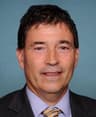 Troy Balderson
Republican · Ohio
 Michael Baumgartner
Republican · Washington
 Henry Cuellar
Democrat · Texas
 Judy Chu
Democrat · California
 Sean Casten
Democrat · Illinois
 Juan Ciscomani
Republican · Arizona
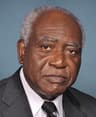 Danny Davis
Democrat · Illinois
 Christopher Deluzio
Democrat · Pennsylvania
 Suzan DelBene
Democrat · Washington
 Dwight Evans
Democrat · Pennsylvania
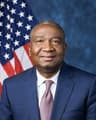 Cleo Fields
Democrat · Louisiana
 Brian Fitzpatrick
Republican · Pennsylvania
 Jimmy Gomez
Democrat · California
 Michael Guest
Republican · Mississippi
 Steven Horsford
Democrat · Nevada
 Jahana Hayes
Democrat · Connecticut
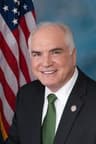 Mike Kelly
Republican · Pennsylvania
 David Kustoff
Republican · Tennessee
 Young Kim
Republican · California
 Thomas Kean
Republican · New Jersey
 Zoe Lofgren
Democrat · California
 John Larson
Democrat · Connecticut
 Darin LaHood
Republican · Illinois
 Nicholas Langworthy
Republican · New York
 Greg Landsman
Democrat · Ohio
 George Latimer
Democrat · New York
 Nicole Malliotakis
Republican · New York
 Tracey Mann
Republican · Kansas
 Gwen Moore
Democrat · Wisconsin
 Carol Miller
Republican · West Virginia
 Blake Moore
Republican · Utah
 Mariannette Miller-Meeks
Republican · Iowa
 James Moylan
Republican · Guam
 Max Miller
Republican · Ohio
 Nathaniel Moran
Republican · Texas
 Stacey Plaskett
Democrat · Virgin Islands
 Jimmy Panetta
Democrat · California
 Raul Ruiz
Democrat · California
 John Rutherford
Republican · Florida
 Linda Sánchez
Democrat · California
 Terri Sewell
Democrat · Alabama
 Bradley Schneider
Democrat · Illinois
 Thomas Suozzi
Democrat · New York
 Hillary Scholten
Democrat · Michigan
 Eric Sorensen
Democrat · Illinois
 Mike Thompson
Democrat · California
 Claudia Tenney
Republican · New York
 David Valadao
Republican · California
 Jefferson Van Drew
Republican · New Jersey
 Derrick Van Orden
Republican · Wisconsin
 Matt Van Epps
Republican · Tennessee
 Robert Wittman
Republican · Virginia
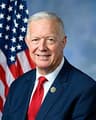 Randy Weber
Republican · Texas