
A Republican bill with 30 Republican cosponsors · See all 30 cosponsors
Last activity — Placed on the Union Calendar, Calendar No. 552.
Cleared committee, waiting for its first floor vote
A committee approved it and it is on the calendar of the chamber it started in.
This is further than most bills get, and still no promise of a vote: the calendar is a queue, and the majority leadership decides what is called. A bill can sit here until the Congress ends.
Its path through Congress
- Introduced
- On Calendar
What this bill would do
The Prove It Act aims to increase transparency regarding Federal regulatory decisions that affect small businesses. It amends title 5 of the United States Code to require agencies to consider potential indirect costs imposed on small entities. The bill establishes a process where small entities can petition the Chief Counsel for Advocacy of the Small Business Administration to review agency certifications. If a petition is warranted, a full review is conducted, which may require the agency to perform formal regulatory flexibility analyses. Additionally, the act mandates the publication of guidance documents and establishes consequences for agencies that fail to conduct required periodic reviews of rules.
Yes
- Scored +7
Would business owners be better off under this?
The bill empowers small business owners with specific mechanisms to challenge and review federal regulatory certifications.
- Scored +7
Does this make what the government does easier for the public to see?
The bill mandates increased disclosure of guidance documents and provides a clearer pathway for reviewing regulatory impacts.
- Scored +6
Does this make it easier to run a small business?
The bill provides significant new tools for small businesses to challenge federal regulations and increase transparency regarding indirect costs.
The opposite
- Scored -2
Does this give the federal government more power?
The bill places stricter procedural requirements and potential penalties on federal agencies.
Who it would affect, and how
Potential Positive Impacts for People
-
Increased Transparency on Indirect Costs: The bill requires agencies to consider foreseeable potential indirect costs that a proposed rule might impose on small entities, including those that conduct business with directly regulated entities (Section 2, amending section 603(b)).
-
Right to Petition for Review: Small entities or organizations representing them can petition the Chief Counsel for Advocacy of the Small Business Administration to review an agency's certification that a rule won't have a significant economic impact (Section 2, Sec. 605A(a)(1)).
-
Access to a Full Review Process: If a petition shows merit, the Chief Counsel conducts a full review, which includes a meeting with the petitioner and agency representatives to discuss economic implications (Section 2, Sec. 605A(d)(1)).
-
Accountability for Agency Cooperation: If an agency fails to attend required meetings or assist in a full review, the final rule will not apply to small entities (Section 2, Sec. 605A(d)(4)).
-
Public Access to Guidance: For rules likely to have a significant economic impact, agencies must publish all guidance documents and allow for public comments to ensure small entities can provide feedback (Section 3, amending section 609).
-
Automatic Review Triggers: The bill introduces a process where, if an agency fails to conduct a required periodic review of a rule within 10 years, the Chief Counsel notifies the agency that the rule has ceased to be effective (Section 4, amending section 610).
Potential Negative Impacts for People
-
Burden of Petitioning: Small entities wishing to challenge a certification must follow a specific, detailed process, which includes providing contact information, organizational status, specific problems, and proposed solutions (Section 2, Sec. 605A(a)(3)).
-
Limitations on Assistance: During consultations, the Chief Counsel is limited to describing the process and helping clarify the petition, and is strictly prohibited from advising a petitioner on whether to amend or withdraw a petition (Section 2, Sec. 605A(b)(3)).
-
Rule Invalidation/Cessation: Rules may cease to be effective if an agency fails to conduct a required review within a 10-year period (Section 4, amending section 610).
Groups and Interests Ranking
Every group the model scored this bill for, from -10 to +10. Tap or hover a score for the reason it gave.
- Demographic And Interest Groups
- Would business owners be better off under this? — The bill empowers small business owners with specific mechanisms to challenge and review federal regulatory certifications.
- Economy And Finance
- Does this make it easier to run a small business? — The bill provides significant new tools for small businesses to challenge federal regulations and increase transparency regarding indirect costs.
- Governance And Ideology
- Does this make what the government does easier for the public to see? — The bill mandates increased disclosure of guidance documents and provides a clearer pathway for reviewing regulatory impacts. Does this give the federal government more power? — The bill places stricter procedural requirements and potential penalties on federal agencies.
- 6/9/2026
- 1 Cosponsor added.
- 5/4/2026
- Reported (Amended) by the Committee on Judiciary. H. Rept. 119-108, Part II.
- Placed on the Union Calendar, Calendar No. 552.
- 4/20/2026
- 1 Cosponsor added.
- 2/9/2026
- 1 Cosponsor added.
- 1/21/2026
- 1 Cosponsor added.
- 1/14/2026
- 1 Cosponsor added.
- 12/19/2025
- 1 Cosponsor added.
- 11/17/2025
- 1 Cosponsor added.
- 11/10/2025
- 1 Cosponsor added.
- 11/7/2025
- 2 Cosponsors added.
- 10/6/2025
- 1 Cosponsor added.
- 9/15/2025
- 1 Cosponsor added.
- 9/9/2025
- 1 Cosponsor added.
- 9/8/2025
- 3 Cosponsors added.
- 9/3/2025
- 1 Cosponsor added.
- 5/21/2025
- Committee Consideration and Mark-up Session Held
- Reported (Amended) by the Committee on Small Business. H. Rept. 119-108, Part I.
- Ordered to be Reported in the Nature of a Substitute by the Yeas and Nays: 14 - 12.
- 1 Cosponsor added.
- 4/30/2025
- Committee Consideration and Mark-up Session Held
- Ordered to be Reported (Amended) by the Yeas and Nays: 15 - 11.
- 4/9/2025
- 1 Cosponsor added.
- 3/3/2025
- 1 Cosponsor added.
- 2/27/2025
- 1 Cosponsor added.
- 2/13/2025
- 1 Cosponsor added.
- 2/11/2025
- 1 Cosponsor added.
- 2/10/2025
- Referred to the Committee on the Judiciary, and in addition to the Committee on Small Business, for a period to be subsequently determined by the Speaker, in each case for consideration of such provisions as fall within the jurisdiction of the committee concerned.
- 7 Cosponsors added.
- Introduced in House
3 bills Congress.gov lists as related to this one — companions in the other chamber, earlier versions, and bills this one absorbed or was folded into.
 Don Bacon
Republican · Nebraska
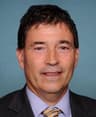 Troy Balderson
Republican · Ohio
 Aaron Bean
Republican · Florida
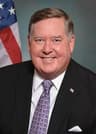 Ken Calvert
Republican · California
 Earl Carter
Republican · Georgia
 Mike Carey
Republican · Ohio
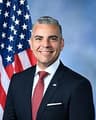 Juan Ciscomani
Republican · Arizona
 Jeff Crank
Republican · Colorado
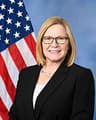 Michelle Fischbach
Republican · Minnesota
 Mike Flood
Republican · Nebraska
 Ashley Hinson
Republican · Iowa
 Harriet Hageman
Republican · Wyoming
 Mike Kennedy
Republican · Utah
 Michael Lawler
Republican · New York
 Tracey Mann
Republican · Kansas
 Daniel Meuser
Republican · Pennsylvania
 Carol Miller
Republican · West Virginia
 Nathaniel Moran
Republican · Texas
 Zachary Nunn
Republican · Iowa
 Maria Salazar
Republican · Florida
 Pete Sessions
Republican · Texas
 Pete Stauber
Republican · Minnesota
 Bryan Steil
Republican · Wisconsin
 Derek Schmidt
Republican · Kansas
 Glenn Thompson
Republican · Pennsylvania
 David Taylor
Republican · Ohio
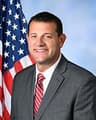 David Valadao
Republican · California
 Jefferson Van Drew
Republican · New Jersey
 Beth Van Duyne
Republican · Texas
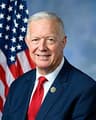 Randy Weber
Republican · Texas