
A Republican bill with 24 Republican cosponsors · See all 24 cosponsors
Last activity — Referred to the House Committee on Financial Services.
In committee
Introduced and handed to a committee in the chamber it started in.
The committee holds it, and most bills are never heard from again. A hearing or a committee vote would be news; silence is the usual outcome, and it kills the bill without anyone voting against it.
Its path through Congress
- Introduced
- In Committee
What this bill would do
This bill is called the "No HUD Funding for Sanctuary Cities Act". It would make sanctuary jurisdictions ineligible to receive grant funds from the Secretary of Housing and Urban Development. A sanctuary jurisdiction is defined as any State or political subdivision with policies that restrict sharing immigration status information or complying with certain Department of Homeland Security requests. These rules would apply to grant funds distributed 180 days after the Act is passed. The Secretary of Housing and Urban Development would work with the Secretary of Homeland Security to identify these jurisdictions.
Yes· 3 of 5
- Scored +6
Does this give the federal government more power?
Uses federal funding as leverage to compel state and local compliance with federal immigration policy.
- Scored +4
Does this tighten control of the border?
Forces local cooperation with federal immigration enforcement and detainer requests.
- Scored +2
Does this give the government more power to monitor people inside the country?
Encourages the sharing of immigration status information with federal authorities.
The opposite· 3 of 23
- Scored -9
Would households on low incomes be better off under this?
Directly reduces funding for affordable housing grants that low-income households rely on.
- Scored -9
Would immigrants be better off under this?
Increases risk of deportation and removes support for affordable housing.
- Scored -8
Does this make housing cost less?
Directly removes HUD grant funding used for affordable housing in sanctuary jurisdictions.
Who it would affect, and how
Potential Positive Impacts for People
- Compliance with Federal Law: The bill encourages jurisdictions to comply with Department of Homeland Security requests under section 236 or 287 of the Immigration and Nationality Act, as mentioned in Section 2(c)(1)(B).
Potential Negative Impacts for People
- Loss of Housing Funds: Sanctuary jurisdictions would be ineligible for any grant funds administered by the Secretary of Housing and Urban Development for use in that area, according to Section 2(a).
Groups and Interests Ranking
Every group the model scored this bill for, from -10 to +10. Tap or hover a score for the reason it gave.
- Demographic And Interest Groups
- Would immigrants be better off under this? — Increases risk of deportation and removes support for affordable housing. Would households on low incomes be better off under this? — Directly reduces funding for affordable housing grants that low-income households rely on. Would Hispanic Americans be better off under this? — High negative impact due to increased immigration enforcement and loss of housing support. Would people in cities be better off under this? — Most HUD grants are utilized in urban centers which are more likely to be sanctuary jurisdictions. Would children be better off under this? — Children in sanctuary cities may face housing instability due to loss of HUD funds. Would people with disabilities be better off under this? — Loss of HUD funds can impact specialized affordable housing for the disabled. Would retired people be better off under this? — Potential loss of subsidized housing for elderly residents in sanctuary jurisdictions. Would people over 65 be better off under this? — Seniors relying on HUD-funded housing may lose essential support. Would Black Americans be better off under this? — Disproportionate impact on urban areas where these populations often rely on HUD funding. Would Asian Americans be better off under this? Would business owners be better off under this? — Potential local economic decline in cities losing federal housing grants. Would people in middle age be better off under this? Would middle-income households be better off under this? Would people in their twenties and thirties be better off under this?
- Social Issues And Justice
- Does this tighten control of the border? — Forces local cooperation with federal immigration enforcement and detainer requests. Does this make housing cost less? — Directly removes HUD grant funding used for affordable housing in sanctuary jurisdictions. Is this likely to reduce homelessness? — The loss of HUD funding severely undermines efforts to combat homelessness in targeted cities. Is this likely to lift people out of poverty? — Reducing housing grants likely increases poverty and housing instability for low-income residents. Does this make it easier for immigrants already here to become citizens? — Increases pressure on sanctuary jurisdictions to assist in the deportation of undocumented immigrants. Does this narrow racial gaps in how people are treated? — Loss of housing funds may disproportionately impact minority communities in sanctuary cities.
- Governance And Ideology
- Does this give the federal government more power? — Uses federal funding as leverage to compel state and local compliance with federal immigration policy. Does this leave more decisions to the states? — Penalizes states and political subdivisions for establishing their own sanctuary policies. Does this protect people from being watched or searched? — Increases the likelihood of private immigration status being shared with federal law enforcement.
- Education And Technology
- Does this give people more control over their personal data? — Mandates the exchange of personal immigration status information with federal agencies.
- National Security And Foreign Policy
- Does this give the government more power to monitor people inside the country? — Encourages the sharing of immigration status information with federal authorities.
- Economy And Finance
- Does this reduce what the federal government spends? — Directly restricts the distribution of HUD grant funds to certain jurisdictions. Does this reduce what the federal government owes? — Potentially reduces federal spending by withholding HUD grants from sanctuary jurisdictions. Is this likely to grow the economy? — Loss of HUD funding in cities may hinder local economic development and housing stability.
- 10/1/2026
- 1 Cosponsor added.
- 9/14/2026
- 2 Cosponsors added.
- 9/3/2026
- 2 Cosponsors added.
- 9/2/2026
- Referred to the House Committee on Financial Services.
- 19 Cosponsors added.
- Introduced in House
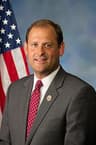 Andy Barr
Republican · Kentucky
 Brian Babin
Republican · Texas
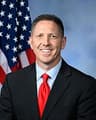 Josh Brecheen
Republican · Oklahoma
 Sheri Biggs
Republican · South Carolina
 Earl Carter
Republican · Georgia
 Michael Cloud
Republican · Texas
 Ben Cline
Republican · Virginia
 Warren Davidson
Republican · Ohio
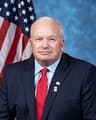 Scott Fitzgerald
Republican · Wisconsin
 Andy Harris
Republican · Maryland
 Diana Harshbarger
Republican · Tennessee
 Harriet Hageman
Republican · Wyoming
 Barry Loudermilk
Republican · Georgia
 Barry Moore
Republican · Alabama
 Richard McCormick
Republican · Georgia
 Tim Moore
Republican · North Carolina
 Robert Onder
Republican · Missouri
 Scott Perry
Republican · Pennsylvania
 Michael Rulli
Republican · Ohio
 Pete Sessions
Republican · Texas
 Pete Stauber
Republican · Minnesota
 W. Steube
Republican · Florida
 Keith Self
Republican · Texas
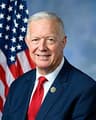 Randy Weber
Republican · Texas