
Alex Padilla (D-CA)
A resolution designating the week of August 2 through August 8, 2026, as "National Farmers Market Week".
A Democratic resolution with 7 Republican cosponsors · See all 24 cosponsors
Last activity — Submitted in the Senate, considered, and agreed to without amendment and with a preamble by Unanimous Consent. (consideration: CR S4365; text: CR S4392)
Adopted
The chamber formally agreed to it, and for a resolution that is the finish line: what it says is now officially the chamber's position, rule or tribute.
Nothing more is needed. A resolution is how a chamber speaks for itself or sets its own rules, so adopting it is what puts it into effect. It is not a law, so there is nothing for the President to sign.
Its path through Congress
- Introduced
- Officially Recorded
- Adopted by the Senate unanimous consent
A Senate resolution is the Senate speaking for itself: stating a position, honouring someone, or setting its own rules. Adopting it is the whole process. Once the Senate agrees to it, it is officially the Senate's word; it is not a law, so the House and the President have no part in it.
The Senate by unanimous consent (no one objected, so there was no vote): no senator's position on it was recorded.
What this bill would do
This resolution designates the week of August 2 through August 8, 2026, as ``National Farmers Market Week''. The measure recognizes the important role farmers markets play in supporting the livelihoods of millions of people, including farmers, food producers, and consumers. It also highlights how these markets bring communities together.
Yes· 3 of 13
- Scored +2
Would farmers be better off under this?
The resolution explicitly recognizes the vital role of farmers markets in supporting the livelihoods of farmers.
- Scored +1
Would households on low incomes be better off under this?
The resolution notes that farmers markets help improve health and wellness for low-income people.
- Scored +1
Would business owners be better off under this?
The resolution highlights the role of farmers markets in supporting the livelihoods of food producers.
The opposite
No question was scored the opposite.
Who it would affect, and how
Potential Positive Impacts for People
-
Economic Support: The resolution notes that farmers markets accounted for $1,700,000,000 in income for United States farmers in 2020, which supports local economies. (Whereas clause 1)
-
Community and Education: Farmers markets serve as bridges between urban and rural communities and act as educational sites to improve public understanding of farming and ranching. (Whereas clause 3)
-
Health and Wellness: These markets help improve the health and wellness of low-income people in the United States who receive Federal nutrition benefits. (Whereas clause 5)
-
Sustainability: The adoption of sustainable farming practices is associated with the farmer-to-consumer interactions found at these markets. (Whereas clause 4)
-
Livelihood Support: The resolution recognizes the vital role markets play in supporting the livelihoods of millions of people, from producers to consumers. (Section 2)
Potential Negative Impacts for People
- No negative impacts are mentioned in the provided text.
Groups and Interests Ranking
Every group the model scored this bill for, from -10 to +10. Tap or hover a score for the reason it gave.
- Demographic And Interest Groups
- Would farmers be better off under this? — The resolution explicitly recognizes the vital role of farmers markets in supporting the livelihoods of farmers. Would business owners be better off under this? — The resolution highlights the role of farmers markets in supporting the livelihoods of food producers. Would households on low incomes be better off under this? — The resolution notes that farmers markets help improve health and wellness for low-income people. Would people in rural areas be better off under this? — The resolution states that farmers markets act as bridges between urban and rural communities. Would people in cities be better off under this? — The resolution states that farmers markets act as bridges between urban and rural communities.
- Economy And Finance
- Is this likely to grow the economy? — By recognizing farmers markets, the resolution acknowledges their role in bolstering local economies. Does this make it easier to run a small business? — The resolution supports the livelihoods of food producers and local farmers. Is this likely to create jobs? — The resolution highlights the role of farmers markets in supporting the livelihoods of millions of people.
- Environment Energy And Infrastructure
- Does this better protect air, water and wildlife? — The resolution notes the association between farmers markets and sustainable farming practices. Does this invest in rural communities? — The resolution highlights how farmers markets serve as bridges between urban and rural communities. Does this cut the pollution that drives climate change? — The resolution associates farmers markets with the adoption of more sustainable farming practices.
- Healthcare
- Does this make health care easier to get in general? — The resolution notes that farmers markets help improve the health and wellness of low-income people.
- Social Issues And Justice
- Is this likely to lift people out of poverty? — The resolution highlights the role of farmers markets in improving the health of low-income people receiving federal benefits.
- 7/30/2026
- Passed/agreed to in Senate: Submitted in the Senate, considered, and agreed to without amendment and with a preamble by Unanimous Consent.
- Submitted in the Senate, considered, and agreed to without amendment and with a preamble by Unanimous Consent. (consideration: CR S4365; text: CR S4392)
- 24 Cosponsors added.
- Bill introduced.
 Angela Alsobrooks
Democrat · Maryland
 Michael Bennet
Democrat · Colorado
 Cory Booker
Democrat · New Jersey
 Richard Durbin
Democrat · Illinois
 Joni Ernst
Republican · Iowa
 John Fetterman
Democrat · Pennsylvania
 Chuck Grassley
Republican · Iowa
 John Hickenlooper
Democrat · Colorado
 Mazie Hirono
Democrat · Hawaii
 Martin Heinrich
Democrat · New Mexico
 Cindy Hyde-Smith
Republican · Mississippi
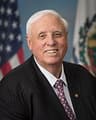 James Justice
Republican · West Virginia
 Amy Klobuchar
Democrat · Minnesota
 Angus King
Independent · Maine
 Patty Murray
Democrat · Washington
 Roger Marshall
Republican · Kansas
 Mike Rounds
Republican · South Dakota
 Adam Schiff
Democrat · California
 Jeanne Shaheen
Democrat · New Hampshire
 Tina Smith
Democrat · Minnesota
 Thomas Tillis
Republican · North Carolina
 Chris Van Hollen
Democrat · Maryland
 Ron Wyden
Democrat · Oregon
 Peter Welch
Democrat · Vermont