
A Democratic bill with 24 Democratic cosponsors · See all 25 cosponsors
Last activity — Read twice and referred to the Committee on the Judiciary.
In committee
Introduced and handed to a committee in the chamber it started in.
The committee holds it, and most bills are never heard from again. A hearing or a committee vote would be news; silence is the usual outcome, and it kills the bill without anyone voting against it.
Its path through Congress
- Introduced
- In Committee
What this bill would do
This bill, titled the "Do No Harm Act," seeks to amend the Religious Freedom Restoration Act of 1993. The primary goal is to protect civil rights and prevent meaningful harm to third parties. It introduces exceptions where the Religious Freedom Restoration Act would not apply, such as laws preventing discrimination or protecting against child labor and abuse. Additionally, it addresses requirements for employer compensation and health care services. Finally, it clarifies the rules regarding litigation between private parties and government entities.
Yes· 3 of 10
- Scored +6
Would children be better off under this?
The bill explicitly protects children against labor, abuse, and exploitation.
- Scored +5
Would Black Americans be better off under this?
The bill protects civil rights and equal opportunity protections like the Civil Rights Act.
- Scored +5
Would women be better off under this?
The bill preserves protections provided by the Violence Against Women Act.
The opposite
No question was scored the opposite.
Who it would affect, and how
Potential Positive Impacts for People
-
Protection against discrimination: The bill ensures that protections for equal opportunity, such as those in the Civil Rights Act of 1964 and the Americans with Disabilities Act of 1990, remain in place (Section 2, subsection 1, A).
-
Workplace protections: It maintains requirements for employers to provide wages, compensation, benefits, or leave, as well as protections for collective activity in the workplace (Section 2, subsection 1, B).
-
Child safety: The bill includes exceptions to protect against child labor, child abuse, or child exploitation (Section 2, subsection 1, C).
-
Healthcare access: It protects access to, information about, referrals for, or coverage for various health care items or services (Section 2, subsection 1, D).
-
Equality in government services: The amendment prevents the denial of full and equal enjoyment of goods, services, benefits, facilities, privileges, advantages, or accommodations provided by the government (Section 2, subsection 3).
Potential Negative Impacts for People
- Government contract requirements: The bill includes provisions regarding terms of government contracts, grants, or cooperative agreements that require specific goods, services, or activities to be performed for beneficiaries or participants (Section 2, subsection 2).
Groups and Interests Ranking
Every group the model scored this bill for, from -10 to +10. Tap or hover a score for the reason it gave.
- Demographic And Interest Groups
- Would children be better off under this? — The bill explicitly protects children against labor, abuse, and exploitation. Would Black Americans be better off under this? — The bill protects civil rights and equal opportunity protections like the Civil Rights Act. Would people with disabilities be better off under this? — The bill ensures the Americans with Disabilities Act remains a protected exception. Would women be better off under this? — The bill preserves protections provided by the Violence Against Women Act. Would households on low incomes be better off under this? — The bill protects access to government-funded goods, services, and benefits.
- Social Issues And Justice
- Does this expand the rights of people with disabilities? — The bill ensures that the Americans with Disabilities Act remains an exception to the Religious Freedom Restoration Act. Does this narrow racial gaps in how people are treated? — The bill maintains protections against discrimination provided by the Civil Rights Act of 1964.
- Economy And Finance
- Does this strengthen the rights of workers to organise? — The bill preserves standards protecting collective activity in the workplace.
- Healthcare
- Does this make health care easier to get in general? — The bill protects access to, information about, and coverage for healthcare items or services.
- Governance And Ideology
- Does this protect the right to fair treatment by the courts? — The bill clarifies the scope of judicial proceedings regarding government parties.
- 3/26/2026
- 1 Cosponsor added.
- 10/30/2025
- 1 Cosponsor added.
- 3/11/2025
- 2 Cosponsors added.
- 3/6/2025
- Read twice and referred to the Committee on the Judiciary.
- 21 Cosponsors added.
- Introduced in Senate
One bill Congress.gov lists as related to this one — companions in the other chamber, earlier versions, and bills this one absorbed or was folded into.
 Tammy Baldwin
Democrat · Wisconsin
 Richard Blumenthal
Democrat · Connecticut
 Catherine Cortez Masto
Democrat · Nevada
 Tammy Duckworth
Democrat · Illinois
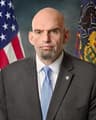 John Fetterman
Democrat · Pennsylvania
 Kirsten Gillibrand
Democrat · New York
 John Hickenlooper
Democrat · Colorado
 Mazie Hirono
Democrat · Hawaii
 Martin Heinrich
Democrat · New Mexico
 Amy Klobuchar
Democrat · Minnesota
 Edward Markey
Democrat · Massachusetts
 Patty Murray
Democrat · Washington
 Jeff Merkley
Democrat · Oregon
 Alex Padilla
Democrat · California
 John Reed
Democrat · Rhode Island
 Jacky Rosen
Democrat · Nevada
 Bernie Sanders
Independent · Vermont
 Adam Schiff
Democrat · California
 Jeanne Shaheen
Democrat · New Hampshire
 Tina Smith
Democrat · Minnesota
 Chris Van Hollen
Democrat · Maryland
 Ron Wyden
Democrat · Oregon
 Peter Welch
Democrat · Vermont
 Sheldon Whitehouse
Democrat · Rhode Island
 Elizabeth Warren
Democrat · Massachusetts