
A Republican bill with 5 Democratic cosponsors · See all 11 cosponsors
Last activity — Read twice and referred to the Committee on Homeland Security and Governmental Affairs.
In committee
Introduced and handed to a committee in the chamber it started in.
The committee holds it, and most bills are never heard from again. A hearing or a committee vote would be news; silence is the usual outcome, and it kills the bill without anyone voting against it.
Its path through Congress
- Introduced
- In Committee
What this bill would do
The CATCH Fentanyl Act establishes a pilot program to test new technologies at land ports of entry along the U.S. border. The program aims to improve the inspection of cars, trucks, and cargo containers to better detect illegal drugs, weapons, human smuggling, and other threats. The Secretary of Homeland Security will oversee the testing of at least five types of nonintrusive inspection technology enhancements, including artificial intelligence and machine learning. These pilot projects are intended to increase efficiency and reduce wait times at the border. The program will conclude five years after the Act is enacted.
Yes· 3 of 7
- Scored +7
Does this tighten control of the border?
The bill establishes a pilot program to enhance the detection of contraband, drugs, weapons, and human smuggling at land ports of entry.
- Scored +3
Would business owners be better off under this?
Increased efficiency in cargo inspections may benefit business owners by reducing border delays.
- Scored +3
Does this make what the government does easier for the public to see?
The bill mandates several reports to congressional committees regarding technology effectiveness and privacy impacts.
The opposite
- Scored -2
Would immigrants be better off under this?
The increased technological scrutiny may negatively impact the privacy and civil liberties of individuals crossing the border.
- Scored -2
Does this protect people from being watched or searched?
The new surveillance and inspection technologies present potential risks to the privacy of individuals crossing the border.
Who it would affect, and how
Potential Positive Impacts for People
-
Improved Detection of Threats: The pilot projects aim to assist personnel in detecting contraband, illegal drugs, illegal weapons, and human smuggling (Section 3(a)(1)).
-
Reduced Wait Times: The technology enhancements are intended to increase the efficiency of inspections to help address long wait times at land ports of entry (Section 3(a)(2)(B)(ii)).
-
Data Privacy Protections: The Secretary is required to safeguard the privacy and security of personal data collected during inspections through measures like data anonymization and regular audits (Section 3(a)(4)).
-
Civil Rights Protections: The bill requires reports regarding the potential impacts of these technologies on privacy, civil liberties, and civil rights, including recommendations for mitigation (Section 3(e)(1)).
Potential Negative Impacts for People
- Privacy and Civil Liberty Risks: There is a recognized potential for the new technologies to impact the privacy, civil liberties, and civil rights of individuals crossing the United States border (Section 3(e)(1)(A)).
Groups and Interests Ranking
Every group the model scored this bill for, from -10 to +10. Tap or hover a score for the reason it gave.
- Social Issues And Justice
- Does this tighten control of the border? — The bill establishes a pilot program to enhance the detection of contraband, drugs, weapons, and human smuggling at land ports of entry. Does this narrow racial gaps in how people are treated? — The bill includes requirements to report and mitigate impacts on civil rights and equality at the border.
- Economy And Finance
- Does this make it easier to run a small business? — The bill aims to increase inspection efficiencies which may reduce wait times for commercial goods and small business cargo.
- Education And Technology
- Does this put more money into scientific research? — The bill directs the testing and assessment of advanced technologies like artificial intelligence and quantum information sciences.
- Demographic And Interest Groups
- Would business owners be better off under this? — Increased efficiency in cargo inspections may benefit business owners by reducing border delays. Would immigrants be better off under this? — The increased technological scrutiny may negatively impact the privacy and civil liberties of individuals crossing the border.
- Environment Energy And Infrastructure
- Does this repair or build roads and bridges? — The bill targets the improvement of aging inspection infrastructure at land ports of entry.
- Governance And Ideology
- Does this make what the government does easier for the public to see? — The bill mandates several reports to congressional committees regarding technology effectiveness and privacy impacts. Does this protect people from being watched or searched? — The new surveillance and inspection technologies present potential risks to the privacy of individuals crossing the border.
- 3/4/2025
- 1 Cosponsor added.
- 2/25/2025
- Read twice and referred to the Committee on Homeland Security and Governmental Affairs.
- 10 Cosponsors added.
- Introduced in Senate
One bill Congress.gov lists as related to this one — companions in the other chamber, earlier versions, and bills this one absorbed or was folded into.
 Marsha Blackburn
Republican · Tennessee
 Shelley Capito
Republican · West Virginia
 Ruben Gallego
Democrat · Arizona
 Martin Heinrich
Democrat · New Mexico
 Maggie Hassan
Democrat · New Hampshire
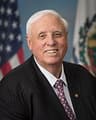 James Justice
Republican · West Virginia
 Mark Kelly
Democrat · Arizona
 Ben Luján
Democrat · New Mexico
 James Lankford
Republican · Oklahoma
 Bernie Moreno
Republican · Ohio
 Thomas Tillis
Republican · North Carolina