
Jerry Moran (R-KS)
Take Care of America’s Veterans Act
A Republican bill with 7 Republican cosponsors · See all 7 cosponsors
Last activity — Read the second time. Placed on Senate Legislative Calendar under General Orders. Calendar No. 433.
Cleared committee, waiting for its first floor vote
A committee approved it and it is on the calendar of the chamber it started in.
This is further than most bills get, and still no promise of a vote: the calendar is a queue, and the majority leadership decides what is called. A bill can sit here until the Congress ends.
Its path through Congress
- Introduced
- On Calendar
What this bill would do
The "Take Care of America's Veterans Act" aims to improve various benefits, services, and administrative functions provided by the Department of Veterans Affairs (VA). It addresses compensation, education, economic opportunity, health care, and memorial affairs for veterans and their families. The legislation also introduces measures to streamline claims processing, enhance healthcare access, and improve transparency and oversight within the VA. Ultimately, this bill holds officials accountable for delivering the support our veterans have rightfully earned.
Yes· 3 of 29
- Scored +10
Would veterans be better off under this, taking everything together?
Broadly enhances benefits, healthcare, and administration for the entire veteran population.
- Scored +10
Does this help veterans get medical care?
Extensively expands healthcare services, specialized care, and community care access for veterans.
- Scored +10
Does this increase the pay, pensions or support veterans receive?
The core purpose of the bill is to significantly enhance veterans' benefits and care.
The opposite· 3 of 4
- Scored -5
Does this reduce what the federal government spends?
The bill mandates significant increases in disability compensation and healthcare spending.
- Scored -3
Does this reduce what is spent on the military?
Increases federal spending on veterans' benefits.
- Scored -2
Does this reduce what the federal government owes?
Increased spending on veteran benefits and allowances will likely increase the national deficit.
Who it would affect, and how
Potential Positive Impacts for People
-
Section 101 (Major Richard Star Act): This provision allows certain combat-related disabled retirees with less than 20 years of service to receive both retired pay and veterans' disability compensation concurrently without offsets, directly benefiting injured veterans by increasing their overall monthly financial support.
-
Section 102 (Love Lives On Act): This section ensures that surviving spouses who remarry do not lose their VA dependency and indemnity compensation, and it protects survivor benefit plan annuities from termination solely due to remarriage, providing greater financial security for surviving families.
-
Section 103: This provision extends increased dependency and indemnity compensation to surviving spouses of veterans who die from amyotrophic lateral sclerosis (ALS) regardless of how long the veteran had the disease prior to death, offering much-needed support to grieving families.
-
Section 305: This section includes adaptive prostheses and terminal devices for sports and other recreational activities in the medical services furnished to eligible veterans, promoting physical rehabilitation and an improved quality of life.
-
Section 323: This provision mandates that each VA medical center contains a hygienic, accessible lactation space, directly benefiting women veterans, employees, and visitors who need a private area to express breast milk.
Potential Negative Impacts for People
- Section 108: This section revises the disability rating schedules for sleep apnea and tinnitus, reducing potential disability ratings or eliminating separate compensable ratings for tinnitus unless associated with specific noncompensable hearing loss. While existing ratings are protected, future claimants may receive lower disability ratings and reduced monthly compensation for these specific conditions.
Groups and Interests Ranking
Every group the model scored this bill for, from -10 to +10. Tap or hover a score for the reason it gave.
- Demographic And Interest Groups
- Would veterans be better off under this, taking everything together? — Broadly enhances benefits, healthcare, and administration for the entire veteran population. Would people with disabilities be better off under this? — Substantially expands disability compensation and specialized medical care. Would households on low incomes be better off under this? — Increases monthly allowances and compensation for disabled veterans. Would retired people be better off under this? — Improves concurrent receipt of retired pay and disability compensation. Would people over 65 be better off under this? — Increases aid and attendance allowances and survivor benefits. Would people in middle age be better off under this? — Improves disability compensation and healthcare access. Would middle-income households be better off under this? — Expands home loan eligibility and educational benefits. Would people in rural areas be better off under this? — Directly addresses and seeks to improve healthcare access for rural veterans. Would women be better off under this? — Improves MST claims processing and specific mid-life women's health research. Would people in their twenties and thirties be better off under this? — Provides better educational and transition assistance for younger veterans. Would students be better off under this? — Improves educational assistance and certification funding for student veterans. Would children be better off under this? — Improves notifications and assistance for children of veterans.
- Healthcare
- Does this help veterans get medical care? — Extensively expands healthcare services, specialized care, and community care access for veterans. Does this make mental health care easier to get? — Provides grants for mental health providers and specialized care for TBI and suicide prevention. Does this make health care easier to get in general? — Improves access via critical access hospitals and telehealth services for veterans. Does this do more about addiction and overdose deaths? — Establishes a pilot program for opioid rescue medications for veterans. Does this put more money into medical research? — Mandates research on menopause, toxic exposure descendants, and TBI.
- Social Issues And Justice
- Does this expand the rights of people with disabilities? — Expands prosthetic access and provides specialized care for spinal trauma and TBI. Does this make housing cost less? — Expands home loan eligibility for Guard and Reserve members. Is this likely to lift people out of poverty? — Increases disability and dependency compensation payments. Does this narrow the gap between how men and women are treated? — Provides specific research and health services for women's health, including menopause. Is this likely to reduce homelessness? — Expanded housing loan access helps veterans secure stable housing.
- Governance And Ideology
- Does this protect the right to fair treatment by the courts? — Improves the claims and appeals process, providing better protections against arbitrary denials. Does this make what the government does easier for the public to see? — Mandates numerous annual reports on claims processing and causes of death.
- Education And Technology
- Does this put more money into scientific research? — Increases research into TBI, toxic exposure, and women's health. Does this make college cost less? — Improves educational assistance payments and certification test funding for veterans.
- Economy And Finance
- Is this likely to grow the economy? — Increased financial support for veterans may increase consumer spending. Does this reduce what the federal government spends? — The bill mandates significant increases in disability compensation and healthcare spending. Does this make the government pay for what it commits to? — The bill focuses on expanding benefits without specifying offsetting funding sources. Does this reduce what the federal government owes? — Increased spending on veteran benefits and allowances will likely increase the national deficit.
- National Security And Foreign Policy
- Does this increase the pay, pensions or support veterans receive? — The core purpose of the bill is to significantly enhance veterans' benefits and care. Does this reduce what is spent on the military? — Increases federal spending on veterans' benefits.
- Environment Energy And Infrastructure
- Does this invest in rural communities? — Focuses on improving healthcare access and disability exam availability in rural areas.
- 8/4/2026
- 1 Cosponsor added.
- 7/29/2026
- 1 Cosponsor added.
- 6/17/2026
- 1 Cosponsor added.
- 6/16/2026
- 1 Cosponsor added.
- 6/15/2026
- 1 Cosponsor added.
- 6/11/2026
- Read the second time. Placed on Senate Legislative Calendar under General Orders. Calendar No. 433.
- 2 Cosponsors added.
- 6/10/2026
- Introduced in the Senate. Read the first time. Placed on Senate Legislative Calendar under Read the First Time.
- Introduced in Senate
37 bills Congress.gov lists as related to this one — companions in the other chamber, earlier versions, and bills this one absorbed or was folded into.
- 119-HR-785: Representing our Seniors at VA Act of 2026
- 119-HR-982: Warriors to Workforce Act
- 119-HR-1004: Love Lives On Act of 2025
- 119-HR-1039: Clear Communication for Veterans Claims Act
- 119-HR-1286: Simplifying Forms for Veterans Claims Act
- 119-HR-1458: VETS Opportunity Act of 2025
- 119-HR-1646: Lactation Spaces for Veteran Moms Act
- 119-HR-1845: TAP Promotion Act
- 119-HR-2137: Review Every Veterans Claim Act of 2025
- 119-HR-2426: Veterans Mental Health and Addiction Therapy Quality of Care Act
- 119-HR-2701: Fallen Servicemembers Religious Heritage Restoration Act
- 119-HR-3400: TRAVEL Act of 2025
- 119-HR-3481: Delivering Digitally to Our Veterans Act of 2025
- 119-HR-3482: Veterans Community Care Scheduling Improvement Act
- 119-HR-3854: Modernizing All Veterans and Survivors
- 119-HR-3951: Rural Veterans’ Improved Access to Benefits Act of 2025
- 119-HR-3983: Veterans Claims Quality Improvement Act of 2025
- 119-HR-6038: Improving Veteran Access to Care Act
- 119-HR-6444: Blast Overpressure Research and Mitigation Task Force Act
- 119-HR-6833: ARCA Act of 2025
- 119-HR-7083: CRUISE Act
- 119-HR-9237: Take Care of America’s Veterans Act
- 119-S-410: Love Lives On Act of 2025
- 119-S-607: Improving Veteran Access to Care Act
- 119-S-702: Veterans Mental Health and Addiction Therapy Quality of Care Act
- 119-S-749: Justice for ALS Veterans Act of 2025
- 119-S-778: Lactation Spaces for Veteran Moms Act
- 119-S-831: REP VA Act
- 119-S-972: Fairness in Veterans' Education Act of 2025
- 119-S-1318: Fallen Servicemembers Religious Heritage Restoration Act
- 119-S-1591: ARCA Act of 2025
- 119-S-1657: Review Every Veteran’s Claim Act of 2025
- 119-S-2981: Veterans Prosthetics Advancement and Reform Act
- 119-S-3042: Justice for America’s Veterans and Survivors Act of 2025
- 119-S-4400: Optimizing the VA Workforce for Veterans Act of 2026
- 119-S-4815: CHIP IN for Veterans Act of 2026
- 119-S-5581: Veteran Technology Employment Success Act of 2026
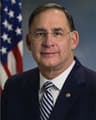 John Boozman
Republican · Arkansas
 Marsha Blackburn
Republican · Tennessee
 Bill Cassidy
Republican · Louisiana
 Kevin Cramer
Republican · North Dakota
 Cindy Hyde-Smith
Republican · Mississippi
 Tim Sheehy
Republican · Montana
 Thomas Tillis
Republican · North Carolina