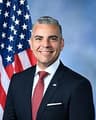
Juan Ciscomani (R-AZ)
Rural Veterans’ Improved Access to Benefits Act of 2025
A Republican bill with 2 Democratic cosponsors · See all 2 cosponsors
Last activity — Received in the Senate and Read twice and referred to the Committee on Veterans' Affairs.
In the other chamber's committee
Passed one chamber and has been handed to a committee in the other.
The committee decides whether it goes any further, and most bills that reach a committee never leave it. A committee that simply does nothing kills a bill without anyone ever voting against it, so no news from here is usually the news.
Its path through Congress
- Introduced
- Passed House voice vote
- In Senate committee
The House by voice vote (members called out yes or no together): no member's position on it was recorded.
What this bill would do
This bill, known as the ``Rural Veterans' Improved Access to Benefits Act of 2025'', aims to change how contract health care professionals perform medical disability examinations for the Department of Veterans Affairs. It amends existing laws to expand the definition of eligible health care professionals. These professionals must have a current and unrestricted license and not be barred from practicing in any State. Additionally, the bill delays a previous sunset date to September 30, 2031. Finally, it requires the Secretary of Veterans Affairs to submit a detailed report to Congress regarding the use of this authority.
Yes· 3 of 5
- Scored +6
Does this help veterans get medical care?
The bill improves veterans' healthcare by broadening the pool of professionals eligible to perform medical disability examinations and extending the program's duration.
- Scored +6
Would veterans be better off under this, taking everything together?
The bill facilitates easier access to medical disability examinations for veterans by expanding the types of licensed professionals who can perform them.
- Scored +5
Does this make health care easier to get in general?
The bill expands the definition of eligible health care professionals to improve access to medical disability examinations.
The opposite
No question was scored the opposite.
Who it would affect, and how
Potential Positive Impacts for People
-
Expanded definition of health care professionals: By replacing specific titles like
physicians assistants, nurse practitioners, audiologists, and psychologists'' with the broader termhealth care professionals'' in Section 2(c), the bill allows for a wider range of experts to perform authorized duties. This change is intended to improve the temporary licensure requirements for those performing medical disability examinations (Section 2(a)). -
Extended timeline for authority: The bill moves the sunset date to September 30, 2031, in Section 2(b), which extends the period during which these temporary licensure requirements can be used.
-
Increased oversight and accountability: The Secretary of Veterans Affairs must submit a report to the Committees on Veterans' Affairs of the Senate and House of Representatives within 15 months (Section 2(d)). This report is intended to track the number of examinations, costs, timeliness, legal adequacy, and any errors in the use of this authority.
Potential Negative Impacts for People
- No specific negative impacts are explicitly detailed in the text provided.
Groups and Interests Ranking
Every group the model scored this bill for, from -10 to +10. Tap or hover a score for the reason it gave.
- Healthcare
- Does this help veterans get medical care? — The bill improves veterans' healthcare by broadening the pool of professionals eligible to perform medical disability examinations and extending the program's duration. Does this make health care easier to get in general? — The bill expands the definition of eligible health care professionals to improve access to medical disability examinations.
- Demographic And Interest Groups
- Would veterans be better off under this, taking everything together? — The bill facilitates easier access to medical disability examinations for veterans by expanding the types of licensed professionals who can perform them. Would people in rural areas be better off under this? — The expansion of eligible health care professionals is intended to improve access to benefits, which often specifically benefits those in rural areas.
- National Security And Foreign Policy
- Does this increase the pay, pensions or support veterans receive? — The bill enhances the administration of medical disability examinations which are vital to the veterans' benefits process.
- 9/16/2025
- Received in the Senate and Read twice and referred to the Committee on Veterans' Affairs.
- 9/15/2025
- Motion to reconsider laid on the table Agreed to without objection.
- Passed/agreed to in House: On motion to suspend the rules and pass the bill, as amended Agreed to by voice vote. (text: CR H4289: 1)
- On motion to suspend the rules and pass the bill, as amended Agreed to by voice vote. (text: CR H4289)
- DEBATE - The House proceeded with forty minutes of debate on H.R. 3951.
- Considered under suspension of the rules. (consideration: CR H4289)
- Mr. Bost moved to suspend the rules and pass the bill, as amended.
- 9/9/2025
- Reported by the Committee on Veterans' Affairs. H. Rept. 119-259.
- Placed on the Union Calendar, Calendar No. 215.
- 7/23/2025
- Committee Consideration and Mark-up Session Held
- Ordered to be Reported by Voice Vote.
- 7/3/2025
- Subcommittee on Disability Assistance and Memorial Affairs Discharged
- 6/24/2025
- Subcommittee Hearings Held
- 6/23/2025
- Referred to the Subcommittee on Disability Assistance and Memorial Affairs.
- 6/12/2025
- Referred to the House Committee on Veterans' Affairs.
- 2 Cosponsors added.
- Introduced in House
3 bills Congress.gov lists as related to this one — companions in the other chamber, earlier versions, and bills this one absorbed or was folded into.
 Donald Davis
Democrat · North Carolina
 Marie Perez
Democrat · Washington