
A Republican bill with 6 Republican cosponsors · See all 6 cosponsors
Last activity — Read twice and referred to the Committee on the Judiciary.
In committee
Introduced and handed to a committee in the chamber it started in.
The committee holds it, and most bills are never heard from again. A hearing or a committee vote would be news; silence is the usual outcome, and it kills the bill without anyone voting against it.
Its path through Congress
- Introduced
- In Committee
What this bill would do
This bill, known as the "Blocking Leaks Undermining Enforcement Act" or the "BLUE Act," aims to prohibit the sharing of certain information. It specifically targets information regarding Federal law enforcement officers. The legislation seeks to amend title 18 of the United States Code. It introduces new restrictions to prevent interference with official duties or investigations. The bill also addresses the sharing of physical locations where these officers may be present.
Yes
- Scored +5
Does this protect people from being watched or searched?
The bill enhances the privacy and physical security of federal law enforcement officers by prohibiting the sharing of their locations.
- Scored +3
Does this change how police departments operate?
The bill provides enhanced protections for federal law enforcement officers by criminalizing the sharing of their locations or information intended to obstruct their duties.
The opposite
- Scored -3
Does this make what the government does easier for the public to see?
The bill limits the ability to share information about the movements and locations of federal officers, which may reduce public oversight.
Who it would affect, and how
Potential Positive Impacts for People
-
Protection of Officers and Investigations: By prohibiting the sharing of information with the intent to physically obstruct, impede, interfere with, or retaliate against a Federal law enforcement officer's lawful duty, the bill aims to protect official proceedings and operations (Section 2).
-
Safety Regarding Locations: The bill adds protections regarding the physical location of a Federal law enforcement officer, whether they are on or off duty, which could prevent the sharing of information meant to interfere with them (Section 2).
Potential Negative Impacts for People
- No negative impacts are explicitly stated in the provided text.
Groups and Interests Ranking
Every group the model scored this bill for, from -10 to +10. Tap or hover a score for the reason it gave.
- Social Issues And Justice
- Does this change how police departments operate? — The bill provides enhanced protections for federal law enforcement officers by criminalizing the sharing of their locations or information intended to obstruct their duties.
- Governance And Ideology
- Does this protect people from being watched or searched? — The bill enhances the privacy and physical security of federal law enforcement officers by prohibiting the sharing of their locations. Does this make what the government does easier for the public to see? — The bill limits the ability to share information about the movements and locations of federal officers, which may reduce public oversight.
- 5/13/2026
- Read twice and referred to the Committee on the Judiciary.
- 6 Cosponsors added.
- Introduced in Senate
 Marsha Blackburn
Republican · Tennessee
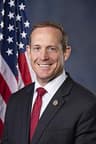 Ted Budd
Republican · North Carolina
 James Lankford
Republican · Oklahoma
 Mike Lee
Republican · Utah
 Mike Rounds
Republican · South Dakota
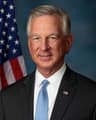 Tommy Tuberville
Republican · Alabama