
A Republican bill with 2 Democratic cosponsors · See all 3 cosponsors
Last activity — Read twice and referred to the Committee on Commerce, Science, and Transportation.
In committee
Introduced and handed to a committee in the chamber it started in.
The committee holds it, and most bills are never heard from again. A hearing or a committee vote would be news; silence is the usual outcome, and it kills the bill without anyone voting against it.
Its path through Congress
- Introduced
- In Committee
What this bill would do
The AI Fraud Accountability Act of 2026 aims to establish protections against digital impersonation fraud. It creates criminal penalties for those who use software, machine learning, or artificial intelligence to pose as real or imaginary people to defraud others of value. The bill amends the Communications Act of 1934 to include these new definitions and offenses. It also empowers the Federal Trade Commission to enforce these protections against unfair or deceptive acts. Additionally, the act establishes a working group to develop best practices for detecting and preventing such fraud. Finally, it encourages international cooperation to address violations originating from foreign countries.
Yes· 3 of 7
- Scored +6
Does this give people more protection from unfair business practices?
The bill provides new protections against fraudulent digital impersonations that target consumers.
- Scored +5
Does this better protect the country from computer attacks?
The bill enhances protections against AI-driven digital impersonation attacks.
- Scored +4
Does this put more rules on large technology companies?
The bill imposes new regulatory and criminal standards for the use of AI for digital impersonation.
The opposite
- Scored -2
Does this protect the individual right to speak freely?
The criminalization of digital impersonation poses potential risks to expressive freedom.
- Scored -2
Does this protect what people are allowed to say in public life?
The bill introduces criminal penalties for digital impersonation which could have chilling effects, despite the savings clause.
Who it would affect, and how
Potential Positive Impacts for People
-
Criminalization of Digital Impersonation Fraud: The bill makes it unlawful to falsely pose as an identifiable or imaginary individual in a digital impersonation with the intent to defraud people of money, documents, or things of value (Section 2). This provides a legal mechanism to punish those using AI or other technologies to deceive others for financial gain.
-
Strict Penalties for Offenders: Violators can face fines, up to three years in prison, or both (Section 2). There is also a requirement for the forfeiture of any property or gross proceeds derived from the violation (Section 2).
-
Protection Against Intimidation: The bill provides penalties for those who threaten to commit digital impersonation for the purpose of intimidation, coercion, extortion, or creating mental distress (Section s 2).
-
Development of Detection Standards: The creation of a working group through the National Institute of Standards and Technology (NIST) is intended to develop best practices and recommendations for recognizing, detecting, preventing, and tracing digital impersonations (Section 4).
-
Increased International Cooperation: The Federal Trade Commission is authorized to enter into agreements with high-offense foreign countries to ensure their law enforcement agencies cooperate in enforcing this act (Section 5).
Potential Negative Impacts for People
-
Exceptions for Law Enforcement: The criminal prohibitions do not apply to investigative, protective, or intelligence activities conducted by law enforcement or intelligence agencies (Section 2 and Section 3).
-
Risk to Free Expression if not for Savings Clause: While the bill includes a savings clause to protect parody, satire, and journalism under the First Amendment, the criminalization of digital impersonation is a significant new restriction (Section 6).
Groups and Interests Ranking
Every group the model scored this bill for, from -10 to +10. Tap or hover a score for the reason it gave.
- National Security And Foreign Policy
- Does this better protect the country from computer attacks? — The bill enhances protections against AI-driven digital impersonation attacks. Does this strengthen ties with allied countries? — The bill encourages international cooperation to combat digital fraud.
- Education And Technology
- Does this put more rules on large technology companies? — The bill imposes new regulatory and criminal standards for the use of AI for digital impersonation. Does this give people more control over their personal data? — The bill provides protections related to a person's digital likeness.
- Economy And Finance
- Does this give people more protection from unfair business practices? — The bill provides new protections against fraudulent digital impersonations that target consumers.
- Governance And Ideology
- Does this protect people from being watched or searched? — The bill protects the digital likeness and identity of individuals. Does this give the federal government more power? — The bill expands the authority of the FTC and Federal jurisdiction over digital impersonation. Does this protect the individual right to speak freely? — The criminalization of digital impersonation poses potential risks to expressive freedom.
- Social Issues And Justice
- Does this protect what people are allowed to say in public life? — The bill introduces criminal penalties for digital impersonation which could have chilling effects, despite the savings clause.
- 7/23/2026
- 2 Cosponsors added.
- 3/4/2026
- Read twice and referred to the Committee on Commerce, Science, and Transportation.
- 1 Cosponsor added.
- Introduced in Senate
One bill Congress.gov lists as related to this one — companions in the other chamber, earlier versions, and bills this one absorbed or was folded into.
 Lisa Blunt Rochester
Democrat · Delaware
 Ben Luján
Democrat · New Mexico
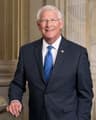 Roger Wicker
Republican · Mississippi