
A Republican bill with 11 Republican cosponsors · See all 12 cosponsors
Last activity — Committee on Health, Education, Labor, and Pensions. Hearings held.
In committee
Introduced and handed to a committee in the chamber it started in.
The committee holds it, and most bills are never heard from again. A hearing or a committee vote would be news; silence is the usual outcome, and it kills the bill without anyone voting against it.
Its path through Congress
- Introduced
- In Committee
What this bill would do
The American Franchise Act aims to protect the traditional franchise business model in the United States. It sets clear rules for when a parent company, known as a franchisor, can be considered a joint employer of the workers hired by an independent local franchise owner. The bill defines specific actions related to daily operations, wages, and hiring that do not automatically make a franchisor a joint employer. By doing this, the legislation seeks to prevent legal confusion and shield franchisors from liability unless they exercise substantial, direct control over workers. Ultimately, the bill relies on findings that franchises contribute heavily to the American economy and employ millions of workers.
Yes
- Scored +6
Would business owners be better off under this?
The bill protects franchisors and franchisees from broad joint-employer liability for setting brand standards.
- Scored +5
Does this make it easier to run a small business?
The bill provides more legal certainty and protects franchisees from unexpected liability from their franchisors.
The opposite
- Scored -4
Would union members be better off under this?
The bill restricts the ability of workers to hold franchisors liable as joint employers for labor relations issues.
- Scored -3
Does this strengthen the rights of workers to organise?
The bill narrows the definition of joint employment, which may make it more difficult for workers to organize against franchisors.
- Scored -2
Would households on low incomes be better off under this?
By making it harder to classify franchisors as joint employers, it may reduce the collective bargaining power of low-income service workers.
Who it would affect, and how
Potential Positive Impacts for People
-
Protection of Employee Benefit Plans: Under Section 3(a), adding Section 20(a)(1)(B) to the National Labor Relations Act, a franchisor's control over benefits does not include letting a franchisee participate in the franchisor's benefit plans like health insurance or pension plans through an arm's-length contract. This is positive because it can make it easier for local workers to access larger company benefit plans without risking the independent status of their local employer.
-
Preservation of Brand Standards and Training: Under Section 3(a), adding Section 20(a)(1)(G) to the National Labor Relations Act, a franchisor can set brand standards, offer training materials, and provide operational support without being deemed a joint employer. This is beneficial because it helps maintain consistent product quality and service safety for consumers while allowing local businesses to thrive.
Potential Negative Impacts for People
-
Limited Joint Accountability: Under Section 3(a), adding Section 20(b) to the National Labor Relations Act, a franchisor is only considered a joint employer if it possesses and exercises substantial direct and immediate control over essential employment terms. This could be seen as a negative for workers because it makes it much harder to hold the large parent company accountable for labor violations or unfair practices happening at a local franchise location.
-
Exclusion of Ongoing Legal Proceedings: Under Section 4, the Act and its amendments do not apply to any legal proceeding commenced before the date of enactment. This is a potential drawback for individuals currently involved in active disputes regarding joint employer status, as they will not receive the clarity or limitations provided by this new law.
Groups and Interests Ranking
Every group the model scored this bill for, from -10 to +10. Tap or hover a score for the reason it gave.
- Economy And Finance
- Does this make it easier to run a small business? — The bill provides more legal certainty and protects franchisees from unexpected liability from their franchisors. Does this strengthen the rights of workers to organise? — The bill narrows the definition of joint employment, which may make it more difficult for workers to organize against franchisors.
- Demographic And Interest Groups
- Would business owners be better off under this? — The bill protects franchisors and franchisees from broad joint-employer liability for setting brand standards. Would union members be better off under this? — The bill restricts the ability of workers to hold franchisors liable as joint employers for labor relations issues. Would households on low incomes be better off under this? — By making it harder to classify franchisors as joint employers, it may reduce the collective bargaining power of low-income service workers.
- 11/12/2026
- 1 Cosponsor added.
- 9/24/2026
- 7 Cosponsors added.
- 3/19/2026
- Committee on Health, Education, Labor, and Pensions. Hearings held.
- 12/17/2025
- Read twice and referred to the Committee on Health, Education, Labor, and Pensions.
- 4 Cosponsors added.
- Introduced in Senate
One bill Congress.gov lists as related to this one — companions in the other chamber, earlier versions, and bills this one absorbed or was folded into.
- Alan Armstrong
Republican · Oklahoma
 Jim Banks
Republican · Indiana
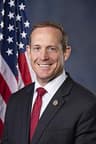 Ted Budd
Republican · North Carolina
 Katie Britt
Republican · Alabama
 Susan Collins
Republican · Maine
 John Curtis
Republican · Utah
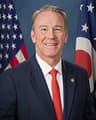 Jon Husted
Republican · Ohio
 Angus King
Independent · Maine
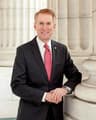 James Lankford
Republican · Oklahoma
 Rand Paul
Republican · Kentucky
 Tim Sheehy
Republican · Montana
 Tommy Tuberville
Republican · Alabama