
John Fetterman (D-PA)
National Programmable Cloud Laboratories Network Act of 2025
A Democratic bill with 1 Republican cosponsor · See the cosponsor
Last activity — Placed on Senate Legislative Calendar under General Orders. Calendar No. 451.
Cleared committee, waiting for its first floor vote
A committee approved it and it is on the calendar of the chamber it started in.
This is further than most bills get, and still no promise of a vote: the calendar is a queue, and the majority leadership decides what is called. A bill can sit here until the Congress ends.
Its path through Congress
- Introduced
- On Calendar
What this bill would do
The National Programmable Cloud Laboratories Network Act of 2025 aims to create a network of up to six programmable cloud laboratories to boost research efficiency and innovation. These laboratories will use advanced tools like robotics and artificial intelligence to allow for secure, remote experimentation. The Director of the National Science Foundation will oversee the network and award grants of up to $5,000,000 per year to each designated node. The program seeks to improve collaboration between government, academia, and private industry while promoting national security and economic competitiveness. It also includes requirements for establishing technical standards and conducting assessments of other laboratory infrastructures. The program is scheduled to terminate on September 30, 2031.
Yes· 3 of 10
- Scored +7
Does this put more money into scientific research?
The bill establishes a significant new funding stream for advanced research infrastructure.
- Scored +6
Does this put more money into medical research?
The bill provides significant funding for research in biotechnology and other scientific disciplines.
- Scored +5
Is this likely to grow the economy?
The act aims to accelerate national competitiveness and long-term economic competitiveness through scientific innovation.
The opposite
No question was scored the opposite.
Who it would affect, and how
Potential Positive Impacts for People
-
Increased Research Efficiency and Cost Savings: The network is designed to reduce the cost of federally funded research through automation and reproducibility (Section 3(a)(2)).
-
Enhanced National Competitiveness: The act aims to accelerate national competitiveness by transferring government-funded research into private-sector commercial applications (Section 3(a)(3)).
-
Workforce Development: The program supports building a workforce that aligns with the technical needs of industries within the United States (Section 3(a)(7)).
-
Improved Collaboration: The network is intended to improve collaboration among private industry, institutions of higher education, and federally funded national laboratories (Section 3(a)(4)).
-
Scientific Advancement: The program seeks to advance research in specific fields such as materials science, biotechnology, and chemistry (Section 3(a)(9)).
Potential Negative Impacts for People
-
Reliance on Federal Funding: While the bill aims for self-sustainability, the nodes are initially supported by federal grants, creating a potential reliance on government funds before they can establish revenue-generating models (Section 3(d)(2), Section 3(g)(7)).
-
Limited Duration: The program and all its authorities and funding are set to terminate on September 30, 2031, which creates a sunset on the established network (Section 78).
Groups and Interests Ranking
Every group the model scored this bill for, from -10 to +10. Tap or hover a score for the reason it gave.
- Economy And Finance
- Is this likely to grow the economy? — The act aims to accelerate national competitiveness and long-term economic competitiveness through scientific innovation. Is this likely to create jobs? — The bill supports workforce development aligned with the technical needs of industry. Does this make the government pay for what it commits to? — The bill incentivizes private-sector cost-sharing and requires plans for long-term self-sustainability.
- Demographic And Interest Groups
- Would business owners be better off under this? — The bill promotes collaboration between private industry and academic institutions. Would students be better off under this? — The network supports workforce development and advances scientific research capabilities.
- Education And Technology
- Does this put more money into scientific research? — The bill establishes a significant new funding stream for advanced research infrastructure.
- Healthcare
- Does this put more money into medical research? — The bill provides significant funding for research in biotechnology and other scientific disciplines.
- Governance And Ideology
- Does this make what the government does easier for the public to see? — The bill requires annual briefings to congressional committees. Does this give the federal government more power? — The bill expands the oversight and funding capabilities of the National Science Foundation.
- National Security And Foreign Policy
- Does this better protect the country from computer attacks? — The bill emphasizes research security and cybersecurity standards for the laboratory network.
- 7/13/2026
- Committee on Commerce, Science, and Transportation. Reported by Senator Cruz with amendments. With written report No. 119-129.
- Placed on Senate Legislative Calendar under General Orders. Calendar No. 451.
- 2/12/2026
- Committee on Commerce, Science, and Transportation. Ordered to be reported with amendments favorably.
- 12/11/2025
- Read twice and referred to the Committee on Commerce, Science, and Transportation.
- 1 Cosponsor added.
- Introduced in Senate
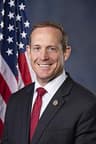 Ted Budd
Republican · North Carolina