
A Republican bill with 10 Republican cosponsors · See all 10 cosponsors
Last activity — Read twice and referred to the Committee on Health, Education, Labor, and Pensions.
In committee
Introduced and handed to a committee in the chamber it started in.
The committee holds it, and most bills are never heard from again. A hearing or a committee vote would be news; silence is the usual outcome, and it kills the bill without anyone voting against it.
Its path through Congress
- Introduced
- In Committee
What this bill would do
The Employee Rights Act aims to reform United States labor laws through several significant changes to existing statutes. It alters how employees are selected for collective bargaining by requiring secret ballots. The bill also restricts the voting rights and employee status of individuals without lawful immigration status. Additionally, it introduces new rules regarding employee privacy, the use of union dues, and the criteria for independent contractor and joint employer status. The Act expands the definition of the National Labor Relations Act to include Indian Tribes and provides for "independent negotiating" in certain states. Finally, it establishes penalties for union violence and clarifies employer rights regarding workplace conduct.
Yes· 3 of 4
- Scored +6
Would business owners be better off under this?
The bill provides clearer criteria for independent contractor status and narrows the definition of joint employers.
- Scored +5
Would Native Americans be better off under this?
The bill expands the National Labor Relations Act to cover Indian Tribes and their enterprises.
- Scored +5
Does this protect people from being watched or searched?
The bill provides new protections regarding how labor organizations use employee personal contact information.
The opposite· 3 of 6
- Scored -7
Would immigrants be better off under this?
The bill explicitly strips voting rights and employee status from those without lawful immigration status.
- Scored -5
Would Hispanic Americans be better off under this?
The bill removes the ability for undocumented workers to vote in labor elections or be considered employees for petitions.
- Scored -4
Would households on low incomes be better off under this?
The bill restricts labor rights and voting access for undocumented workers, who often comprise low-income populations.
Who it would affect, and how
Potential Positive Impacts for People
-
Enhanced Voting Procedures: The bill requires that employees selected for collective bargaining be chosen via a secret ballot in an election conducted by the Board (Section 2). This ensures a more direct and private voting process for workers.
-
Employee Privacy Protections: Employers must provide a voter list that includes the employee's name and one additional piece of contact information chosen by the employee (Section 4(a)). Furthermore, it becomes an unfair labor practice for a labor organization to fail to protect personal information or use it for reasons other than a representation proceeding (Section 4(b)).
-
Control Over Union Dues: Labor organization dues, fees, or contributions cannot be used for purposes not directly related to collective bargaining or contract administration unless the employee provides written authorization (Section 4(c)). This gives workers more control over how their money is spent.
-
Clarification of Independent Contractor Status: The bill provides specific criteria for determining if an individual is an independent contractor rather than an employee, noting that an individual is a contractor if the employer does not exercise significant control over work details and the individual has entrepreneurial risks (Section 5(a)).
-
Protection of Franchisor-Franchisee Relationships: It establishes that certain requirements, such as providing handbooks on sexual harassment or workplace violence, do not establish an employer-employee relationship between a franchisor and a franchisee (Section 5(c)).
-
Expanded Tribal Recognition: The bill extends the scope of the National Labor Relations Act to include Indian Tribes and enterprises operated by them on Indian lands (Section 6).
-
Protection from Harassment: Employers are permitted to take action to protect employees from discriminatory, harassing, or demeaning language or conduct, even during organizing campaigns or strikes (Section 10).
Potential Negative Impacts for People
-
Restriction of Voting Rights: Employees who do not have lawful status under immigration laws are prohibited from voting in elections conducted by the Board or any secret ballot (Section 3(a)). They are also not considered employees for the purposes of certain petitions (Section 3(a)).
-
Restrictions on Union Membership Voting: Individuals without lawful status who are members of a labor organization are not entitled to vote in elections conducted by that organization (Section 3(c)).
-
Impact on Joint Employer Status: The bill narrows the definition of a joint employer, requiring that each employer directly, actually, and immediately exercises significant control over essential terms of employment to be considered a joint employer (Section 5(b)).
-
Restrictions on Collective Bargaining Agreements: Provisions in a collective bargaining agreement that mandate or promote diversity, equity, or inclusion initiatives based on personal characteristics not related to job qualifications are prohibited unless required by law (Section 8).
-
Legal Penalties for Labor Disruptions: Under the Freedom From Union Violence Act, anyone who obstructs commerce through robbery or extortion in furtherance of a plan can face fines of up to $100,000 and up to 20 years in prison (Section 9).
Groups and Interests Ranking
Every group the model scored this bill for, from -10 to +10. Tap or hover a score for the reason it gave.
- Demographic And Interest Groups
- Would business owners be better off under this? — The bill provides clearer criteria for independent contractor status and narrows the definition of joint employers. Would Native Americans be better off under this? — The bill expands the National Labor Relations Act to cover Indian Tribes and their enterprises. Would immigrants be better off under this? — The bill explicitly strips voting rights and employee status from those without lawful immigration status. Would Hispanic Americans be better off under this? — The bill removes the ability for undocumented workers to vote in labor elections or be considered employees for petitions. Would households on low incomes be better off under this? — The bill restricts labor rights and voting access for undocumented workers, who often comprise low-income populations. Would union members be better off under this? — The bill introduces restrictions on union dues usage, narrows joint employer status, and limits union voting rights.
- Governance And Ideology
- Does this protect people from being watched or searched? — The bill provides new protections regarding how labor organizations use employee personal contact information.
- Economy And Finance
- Does this strengthen the rights of workers to organise? — The bill restricts union voting rights for undocumented workers and limits the scope of joint employer and independent contractor definitions.
- Social Issues And Justice
- Does this narrow racial gaps in how people are treated? — The bill extends the National Labor Relations Act to include Indian Tribes and their enterprises. Does this tighten control of the border? — The bill restricts the labor rights and voting eligibility of individuals without lawful immigration status.
- 10/21/2025
- 2 Cosponsors added.
- 10/8/2025
- Read twice and referred to the Committee on Health, Education, Labor, and Pensions.
- 8 Cosponsors added.
- Introduced in Senate
One bill Congress.gov lists as related to this one — companions in the other chamber, earlier versions, and bills this one absorbed or was folded into.
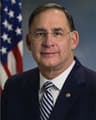 John Boozman
Republican · Arkansas
 John Barrasso
Republican · Wyoming
 Katie Britt
Republican · Alabama
 Mike Crapo
Republican · Idaho
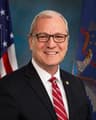 Kevin Cramer
Republican · North Dakota
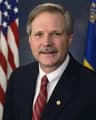 John Hoeven
Republican · North Dakota
 Cindy Hyde-Smith
Republican · Mississippi
 Markwayne Mullin
Republican · Oklahoma
 James Risch
Republican · Idaho
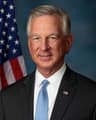 Tommy Tuberville
Republican · Alabama