
Rick Scott (R-FL)
Sunshine Protection Act of 2025
A Republican bill with 8 Democratic cosponsors · See all 18 cosponsors
Last activity — Read twice and referred to the Committee on Commerce, Science, and Transportation.
In committee
Introduced and handed to a committee in the chamber it started in.
The committee holds it, and most bills are never heard from again. A hearing or a committee vote would be news; silence is the usual outcome, and it kills the bill without anyone voting against it.
Its path through Congress
- Introduced
- In Committee
What this bill would do
The Sunshine Protection Act of 2025 aims to make daylight saving time permanent. It works by repealing the temporary period for daylight saving time established in the Uniform Time Act of 1966. The bill also amends the Calder Act to adjust hour offsets for various time zones. Additionally, it provides specific rules for how states or areas that previously exempted themselves from the Uniform Time Act will handle their standard time.
Yes
- Scored +1
Would people in rural areas be better off under this?
The bill provides states and areas that previously exempted themselves with specific options to determine their own standard time.
- Scored +1
Does this make what the government does easier for the public to see?
The bill standardizes time offsets across various jurisdictions through amendments to the Calder Act.
The opposite
No question was scored the opposite.
Who it would affect, and how
Potential Positive Impacts for People
- Permanent Daylight Saving Time: By repealing the temporary period, the bill seeks to make daylight saving time a permanent fixture (Section 2(a)).
Potential Negative Impacts for People
-
Changes to Time Offsets: The bill requires several adjustments to the number of hours used for time zone offsets in the Calder Act (Section 2(b)(1)).
-
New Time Standards for Exempted States: States or areas that had exempted themselves from the Uniform Time Act of 1966 must now determine their standard time based on specific options provided in the bill (Section 2(b)(2)).
Groups and Interests Ranking
Every group the model scored this bill for, from -10 to +10. Tap or hover a score for the reason it gave.
- Demographic And Interest Groups
- Would people in rural areas be better off under this? — The bill provides states and areas that previously exempted themselves with specific options to determine their own standard time.
- Governance And Ideology
- Does this make what the government does easier for the public to see? — The bill standardizes time offsets across various jurisdictions through amendments to the Calder Act.
- 4/28/2025
- 1 Cosponsor added.
- 3/5/2025
- 1 Cosponsor added.
- 1/8/2025
- 1 Cosponsor added.
- 1/7/2025
- Read twice and referred to the Committee on Commerce, Science, and Transportation.
- 15 Cosponsors added.
- Introduced in Senate
One bill Congress.gov lists as related to this one — companions in the other chamber, earlier versions, and bills this one absorbed or was folded into.
 Marsha Blackburn
Republican · Tennessee
 Katie Britt
Republican · Alabama
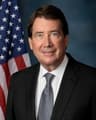 Bill Hagerty
Republican · Tennessee
 Martin Heinrich
Democrat · New Mexico
 Cindy Hyde-Smith
Republican · Mississippi
 Cynthia Lummis
Republican · Wyoming
 James Lankford
Republican · Oklahoma
 Edward Markey
Democrat · Massachusetts
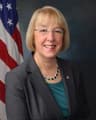 Patty Murray
Democrat · Washington
 Ashley Moody
Republican · Florida
 Alex Padilla
Democrat · California
 Rand Paul
Republican · Kentucky
 Tim Scott
Republican · South Carolina
 Brian Schatz
Democrat · Hawaii
 Tina Smith
Democrat · Minnesota
 Tommy Tuberville
Republican · Alabama
 Ron Wyden
Democrat · Oregon
 Sheldon Whitehouse
Democrat · Rhode Island