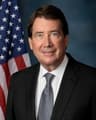
Bill Hagerty (R-TN)
Financial Exploitation Prevention Act of 2025
A Republican bill with 8 Democratic cosponsors · See all 13 cosponsors
Last activity — Read twice and referred to the Committee on Banking, Housing, and Urban Affairs.
In committee
Introduced and handed to a committee in the chamber it started in.
The committee holds it, and most bills are never heard from again. A hearing or a committee vote would be news; silence is the usual outcome, and it kills the bill without anyone voting against it.
Its path through Congress
- Introduced
- In Committee
What this bill would do
The bill, known as the Financial Exploitation Prevention Act of 2025, amends the Investment Company Act of 1940. It allows certain investment companies and transfer agents to postpone the payment or satisfaction upon redemption of securities if they reasonably believe financial exploitation of a specified adult has occurred, is occurring, or has been attempted. The legislation requires electing companies to ask customers for the contact information of at least one trusted individual. It sets specific time limits for delaying these redemptions and outlines rules for internal reviews and notifications. Additionally, the bill mandates that the Securities and Exchange Commission submit a report to Congress with recommendations on further regulatory and legislative changes to address financial exploitation within one year.
Yes· 3 of 6
- Scored +6
Does this give people more protection from unfair business practices?
The bill protects vulnerable adults from financial exploitation by allowing companies to delay redemptions and contact designated individuals.
- Scored +5
Would people over 65 be better off under this?
The bill provides specific protections against financial exploitation for adults aged 65 and older.
- Scored +5
Would people with disabilities be better off under this?
The bill includes adults with mental or physical impairments in its protections against financial exploitation.
The opposite
No question was scored the opposite.
Who it would affect, and how
Potential Positive Impacts for People
-
Trusted Contact Protection (Section 2, adding subsection (h)(2)(A)): Customers holding direct-at-fund accounts can provide the name and contact information of at least one trusted adult. This gives companies a designated person to contact to address possible financial exploitation, confirm health status, or identify legal representatives.
-
Temporary Halts to Prevent Theft (Section 2, adding subsection (i)(1)): Investment companies and transfer agents can postpone the redemption of securities for more than seven days if they reasonably believe a specified adult is facing financial exploitation. This creates a cooling-off period that helps protect vulnerable people from losing their money.
-
Clear Safeguards During Extensions (Section 2, adding subsection (i)(2)(B)): If a company extends a payment delay by an additional 10 business days, it must hold the delayed amounts in a demand deposit account, initiate an internal review, and notify the designated trusted contact. This ensures that the delay is handled with active oversight rather than indefinite stalling.
-
Broad Protection for Vulnerable Adults (Section 2, adding subsection (i)(3)): The bill protects individuals who are 65 years of age or older, as well as adults aged 18 or older who have a mental or physical impairment that leaves them unable to protect their own interests. This ensures younger adults with disabilities receive the same safeguard against financial abuse.
Potential Negative Impacts for People
-
Delayed Access to Funds (Section 2, adding subsection (i)(1)): Security holders may have the payment of their redeemed securities postponed for more than seven days if exploitation is suspected. This means individuals who legitimately need their own money immediately may face frustrating delays.
-
Extended Waiting Periods (Section 2, adding subsection (i)(2)(A) and (B)): The postponement period can last for up to 15 business days and may be extended by an additional 10 business days. During this total period of up to 25 business days, individuals are blocked from accessing their requested funds.
Groups and Interests Ranking
Every group the model scored this bill for, from -10 to +10. Tap or hover a score for the reason it gave.
- Demographic And Interest Groups
- Would people with disabilities be better off under this? — The bill includes adults with mental or physical impairments in its protections against financial exploitation. Would people over 65 be better off under this? — The bill provides specific protections against financial exploitation for adults aged 65 and older. Would households on low incomes be better off under this? — Safeguarding the assets of those with impairments helps prevent sudden loss of wealth due to exploitation.
- Economy And Finance
- Does this give people more protection from unfair business practices? — The bill protects vulnerable adults from financial exploitation by allowing companies to delay redemptions and contact designated individuals.
- Governance And Ideology
- Does this make what the government does easier for the public to see? — The bill requires the SEC to submit a report to Congress on necessary changes to address financial exploitation.
- Social Issues And Justice
- Is this likely to lift people out of poverty? — Protecting the assets of elderly and impaired adults from exploitation helps maintain their financial stability.
- 11/10/2026
- 4 Cosponsors added.
- 9/23/2026
- 1 Cosponsor added.
- 7/27/2026
- 1 Cosponsor added.
- 3/10/2026
- 2 Cosponsors added.
- 1/28/2026
- 1 Cosponsor added.
- 1/15/2026
- 1 Cosponsor added.
- 12/16/2025
- 1 Cosponsor added.
- 9/18/2025
- 1 Cosponsor added.
- 9/17/2025
- Read twice and referred to the Committee on Banking, Housing, and Urban Affairs.
- 1 Cosponsor added.
- Introduced in Senate
One bill Congress.gov lists as related to this one — companions in the other chamber, earlier versions, and bills this one absorbed or was folded into.
 Tammy Baldwin
Democrat · Wisconsin
 Susan Collins
Republican · Maine
 Catherine Cortez Masto
Democrat · Nevada
 Steve Daines
Republican · Montana
 Tammy Duckworth
Democrat · Illinois
 Ruben Gallego
Democrat · Arizona
 John Hickenlooper
Democrat · Colorado
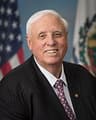 James Justice
Republican · West Virginia
 David McCormick
Republican · Pennsylvania
 Adam Schiff
Democrat · California
 Tim Sheehy
Republican · Montana
 Raphael Warnock
Democrat · Georgia
 Peter Welch
Democrat · Vermont