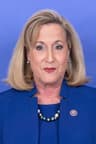
Ann Wagner (R-MO)
Financial Exploitation Prevention Act of 2025
A Republican bill with 4 Democratic cosponsors · See all 11 cosponsors
Last activity — Received in the Senate and Read twice and referred to the Committee on Banking, Housing, and Urban Affairs.
In the other chamber's committee
Passed one chamber and has been handed to a committee in the other.
The committee decides whether it goes any further, and most bills that reach a committee never leave it. A committee that simply does nothing kills a bill without anyone ever voting against it, so no news from here is usually the news.
Its path through Congress
- Introduced
- Passed House 414–2
- In Senate committee
What this bill would do
This bill amends the Investment Company Act of 1940 to help prevent the financial exploitation of certain vulnerable adults. It allows registered open-end investment companies and transfer agents to pause the payment or satisfaction of a security redemption if they reasonably believe financial exploitation is happening. To use this power, companies and transfer agents must first elect to comply with specific requirements and notify the Commission. These entities must ask customers with direct-at-fund accounts to provide the contact information of at least one trusted adult. If a payment is delayed due to suspected exploitation, the initial pause can last up to 15 business days, with potential extensions under certain conditions. Finally, the Securities and Exchange Commission is required to submit a report to Congress with legislative and regulatory recommendations regarding financial exploitation within one year.
Yes· 3 of 5
- Scored +7
Would people over 65 be better off under this?
The bill protects adults aged 65 and older from financial exploitation by allowing trusted contacts to be notified and payment redemptions to be paused.
- Scored +7
Would retired people be better off under this?
Retirees benefit from safeguards that help protect their investment accounts from potential financial exploitation.
- Scored +6
Would people with disabilities be better off under this?
The legislation covers adults with mental or physical impairments that render them unable to protect their own interests from financial exploitation.
The opposite
No question was scored the opposite.
What Congress actually voted on
One recorded vote has been taken on this bill.
- The House: a fast-track vote, needing two-thirds to pass The House sets aside its normal procedure to move quickly: no amendments, little debate, and a two-thirds bar instead of a simple majority. It is used for measures expected to be uncontroversial, so a bill that fails here failed despite broad expectations that it would not. Passed 414 yes · 2 no
06/25/2026 · Roll call 227 · recorded as “On Motion to Suspend the Rules and Pass, as Amended”
Who it would affect, and how
Potential Positive Impacts for People
-
Trusted Contact Protection: Under Section 2(a), adding subsection (h)(2)(A), direct-at-fund account customers are asked to provide the name and contact information of at least one trusted adult. This gives companies a way to reach out and address possible financial exploitation, confirm contact information or health status, or identify legal representatives.
-
Temporary Payment Halts for Safety: Under Section 2(a), adding subsection (i)(1), companies and transfer agents can postpone the payment of a redeemed security for more than seven days if they reasonably believe the security holder is a specified adult and financial exploitation has occurred, is occurring, or has been attempted. This creates a safety buffer to protect vulnerable individuals from losing their money.
-
Notice to Trusted Individuals: Under Section 2(a), adding subsection (i)(2)(B)(ii), if a company extends a payment delay by an additional 10 business days due to suspected exploitation, they must notify the individuals specified by the security holder in writing within two days, unless there is a reasonable belief that the specified individual is involved in the exploitation.
-
Government Accountability Report: Under Section 2(b), the Securities and Exchange Commission must consult with various financial and regulatory agencies and submit a report to Congress within one year. This report will provide recommendations on necessary regulatory and legislative changes to address the financial exploitation of specified adults.
Potential Negative Impacts for People
-
Delayed Access to Funds: Under Section 2(a), adding subsection (i)(1) and subsection (i)(2)(A), account holders may have their redemption payments postponed for more than seven days, and generally up to 15 business days, if financial exploitation is suspected. This means individuals who legitimately want their money may face frustrating delays in accessing their own funds.
-
Potential Extension of Payment Delays: Under Section 2(a), adding subsection (i)(2)(B), the initial delay period can be extended by an additional 10 business days if the company initiates an internal review, holds the delayed amounts in a demand deposit account, and fulfills notification requirements. This further extends the timeframe that a legitimate account holder might be kept waiting for their money.
Groups and Interests Ranking
Every group the model scored this bill for, from -10 to +10. Tap or hover a score for the reason it gave.
- Demographic And Interest Groups
- Would retired people be better off under this? — Retirees benefit from safeguards that help protect their investment accounts from potential financial exploitation. Would people over 65 be better off under this? — The bill protects adults aged 65 and older from financial exploitation by allowing trusted contacts to be notified and payment redemptions to be paused. Would people with disabilities be better off under this? — The legislation covers adults with mental or physical impairments that render them unable to protect their own interests from financial exploitation.
- Economy And Finance
- Does this give people more protection from unfair business practices? — The bill provides protections for vulnerable adults by allowing investment companies to temporarily halt redemptions if financial exploitation is suspected.
- Governance And Ideology
- Does this make what the government does easier for the public to see? — The bill requires the SEC to submit a comprehensive report and legislative recommendations to Congress regarding the financial exploitation of specified adults.
Handed to a committee to examine
What changed from Engrossed in House: No change to the wording. Only the printed details that record the bill’s progress, such as the heading and dates, are different.
- 7/13/2026
- Received in the Senate and Read twice and referred to the Committee on Banking, Housing, and Urban Affairs.
- 6/25/2026
- Motion to reconsider laid on the table Agreed to without objection.
- Passed/agreed to in House: On motion to suspend the rules and pass the bill, as amended Agreed to by the Yeas and Nays: (2/3 required): 414 - 2 (Roll no. 227).
- On motion to suspend the rules and pass the bill, as amended Agreed to by the Yeas and Nays: (2/3 required): 414 - 2 (Roll no. 227).
- Considered as unfinished business. (consideration: CR H4251-4252)
- 6/24/2026
- At the conclusion of debate, the chair put the question on the motion to suspend the rules. Mr. Hill (AR) objected to the vote on the grounds that a quorum was not present. Further proceedings on the motion were postponed. The point of no quorum was considered as withdrawn.
- DEBATE - The House proceeded with forty minutes of debate on H.R. 2478.
- Considered under suspension of the rules. (consideration: CR H4222-4226; text: CR H4222-4223)
- Mr. Hill (AR) moved to suspend the rules and pass the bill, as amended.
- 11/4/2025
- Reported (Amended) by the Committee on Financial Services. H. Rept. 119-361.
- Placed on the Union Calendar, Calendar No. 313.
- 9/16/2025
- Committee Consideration and Mark-up Session Held
- Ordered to be Reported (Amended) by the Yeas and Nays: 50 - 0.
- 1 Cosponsor added.
- 9/15/2025
- 1 Cosponsor added.
- 6/4/2025
- 1 Cosponsor added.
- 6/3/2025
- 1 Cosponsor added.
- 4/7/2025
- 1 Cosponsor added.
- 3/27/2025
- Referred to the House Committee on Financial Services.
- 6 Cosponsors added.
- Introduced in House
One bill Congress.gov lists as related to this one — companions in the other chamber, earlier versions, and bills this one absorbed or was folded into.
 Cleo Fields
Democrat · Louisiana
 Josh Gottheimer
Democrat · New Jersey
 Andrew Garbarino
Republican · New York
 Marie Perez
Democrat · Washington
 Bill Huizenga
Republican · Michigan
 Young Kim
Republican · California
 Michael Lawler
Republican · New York
 Zachary Nunn
Republican · Iowa
 Pete Sessions
Republican · Texas
 Bryan Steil
Republican · Wisconsin
 Eugene Vindman
Democrat · Virginia