
Marsha Blackburn (R-TN)
Keep Violent Criminals Off Our Streets Act
A Republican bill with 2 Republican cosponsors · See all 2 cosponsors
Last activity — Read twice and referred to the Committee on the Judiciary.
In committee
Introduced and handed to a committee in the chamber it started in.
The committee holds it, and most bills are never heard from again. A hearing or a committee vote would be news; silence is the usual outcome, and it kills the bill without anyone voting against it.
Its path through Congress
- Introduced
- In Committee
What this bill would do
This bill, titled the "Keep Violent Criminals Off Our Streets Act," aims to amend the Omnibus Crime Control and Safe Streets Act of 1968. It seeks to change how Edward Byrne Memorial Justice Assistance Grants are awarded to states and local governments. Specifically, it would prevent these grants from being given to any state or local entity that has a policy or law substantially limiting the use of cash bail for certain crimes. The "covered offenses" include violent or sexual acts and offenses that promote public disorder. This prohibition would take effect starting the first October 1 occurring after the bill is enacted.
Yes
- Scored +5
Does this give the federal government more power?
The bill increases federal leverage over state and local policies by using grant eligibility as a conditional tool.
The opposite
- Scored -5
Would households on low incomes be better off under this?
The bill indirectly impacts low-income individuals who are more likely to be affected by cash bail requirements.
- Scored -4
Does this change how police departments operate?
The bill penalizes jurisdictions that implement policies limiting cash bail, which is a key component of many police and judicial reforms.
- Scored -3
Would Black Americans be better off under this?
By enforcing cash bail requirements, the bill may disproportionately impact communities of color that are frequently subject to bail-related legal disparities.
Who it would affect, and how
Potential Positive Impacts for People
-
Support for Law Enforcement and Public Safety: By targeting "covered offenses" like murder, rape, and robbery (Section 2, subsection (c)(1)(A)), the bill aims to ensure that those who pose a threat to public safety are not released through limited cash bail provisions.
-
Addressing Public Disorder: The bill includes provisions for offenses that promote public disorder, such as looting or rioting (Section 2, subsection (c)(1)(B)), which may be seen as a way to maintain order and property protection.
Potential Negative Impacts for People
-
Loss of Federal Funding for Local Governments: States or local government units that have policies substantially limiting cash bail for "covered offenses" would be ineligible to receive, renew, or extend Edward Byrne Memorial Justice Assistance Grants (Section 2, subsection (c)(2)).
-
Impact on Specific Criminal Offenses: Entities that have policies limiting cash bail for crimes ranging from carjacking to fleeing from a law enforcement officer could face financial consequences due to the loss of these grants (Section 2, subsection (c)(1)).
Groups and Interests Ranking
Every group the model scored this bill for, from -10 to +10. Tap or hover a score for the reason it gave.
- Demographic And Interest Groups
- Would households on low incomes be better off under this? — The bill indirectly impacts low-income individuals who are more likely to be affected by cash bail requirements. Would Black Americans be better off under this? — By enforcing cash bail requirements, the bill may disproportionately impact communities of color that are frequently subject to bail-related legal disparities.
- Governance And Ideology
- Does this give the federal government more power? — The bill increases federal leverage over state and local policies by using grant eligibility as a conditional tool.
- Social Issues And Justice
- Does this change how police departments operate? — The bill penalizes jurisdictions that implement policies limiting cash bail, which is a key component of many police and judicial reforms.
- 10/7/2025
- 1 Cosponsor added.
- 9/4/2025
- Read twice and referred to the Committee on the Judiciary.
- 1 Cosponsor added.
- Introduced in Senate
One bill Congress.gov lists as related to this one — companions in the other chamber, earlier versions, and bills this one absorbed or was folded into.
 John Cornyn
Republican · Texas
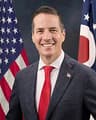 Bernie Moreno
Republican · Ohio