
Elise Stefanik (R-NY)
No Federal Funds for Cashless Bail Act
A Republican bill with 3 Republican cosponsors · See all 3 cosponsors
Last activity — Placed on the Union Calendar, Calendar No. 554.
Cleared committee, waiting for its first floor vote
A committee approved it and it is on the calendar of the chamber it started in.
This is further than most bills get, and still no promise of a vote: the calendar is a queue, and the majority leadership decides what is called. A bill can sit here until the Congress ends.
Its path through Congress
- Introduced
- On Calendar
What this bill would do
This bill, titled the "No Federal Funds for Cashless Bail Act," proposes changes to the Omnibus Crime Control and Safe Streets Act of 1968. It aims to prohibit the Attorney General from awarding, renewing, or extending Edward Byrne Memorial Justice Assistance Grants to specific entities. This restriction applies to States or local governments that have laws or policies substantially limiting the use of cash bail for certain offenses. The "covered offenses" include violent or sexual acts and offenses that promote public disorder.
Yes
- Scored +5
Does this reduce what the federal government spends?
The bill restricts the awarding and renewal of federal justice assistance grants to specific state and local entities.
- Scored +2
Would high-income households be better off under this?
High-income individuals are better positioned to meet cash bail requirements mandated by this bill.
- Scored +1
Would white Americans be better off under this?
The bill maintains traditional bail structures that may benefit higher-income white populations.
The opposite· 3 of 9
- Scored -5
Does this leave more decisions to the states?
The bill uses federal grant funding as leverage to restrict the ability of states and local governments to set their own bail policies.
- Scored -4
Would households on low incomes be better off under this?
Cash bail requirements pose a significant financial hurdle for low-income individuals.
- Scored -4
Would Black Americans be better off under this?
The bill may disproportionately impact Black Americans who are often more affected by cash bail systems.
Who it would affect, and how
Potential Positive Impacts for People
-
Maintaining Cash Bail Availability: The bill targets entities that have policies or laws that "substantially limits cash bail as a potential condition for every individual charged with a covered offense" (Section 2, Subsection (c)(2)). This ensures that cash bail remains an available option for individuals charged with specific crimes.
-
Addressing Specific Crimes: The bill defines "covered offense" to include crimes such as "murder, rape, sexual assault, carjacking, robbery, burglary, and assault" as well as "looting, vandalism, destruction of property, rioting or inciting to riot, or fleeing from a law enforcement officer" (Section 2, Subsection (c)(1)).
Potential Negative Impacts for People
- Loss of Federal Grant Funding: The Attorney General may be prohibited from awarding, renewing, or extending grants under the specified subpart to any State or unit of local government that implements policies substantially limiting cash bail for covered offenses (Section 2, Subsection (c)(2)).
Groups and Interests Ranking
Every group the model scored this bill for, from -10 to +10. Tap or hover a score for the reason it gave.
- Demographic And Interest Groups
- Would high-income households be better off under this? — High-income individuals are better positioned to meet cash bail requirements mandated by this bill. Would white Americans be better off under this? — The bill maintains traditional bail structures that may benefit higher-income white populations. Would Black Americans be better off under this? — The bill may disproportionately impact Black Americans who are often more affected by cash bail systems. Would households on low incomes be better off under this? — Cash bail requirements pose a significant financial hurdle for low-income individuals. Would Hispanic Americans be better off under this? — The bill's focus on cash bail may disproportionately affect Hispanic communities. Would Asian Americans be better off under this? — The bill's judicial requirements may have indirect negative impacts on these communities. Would middle-income households be better off under this? — The bill's focus on bail may impact middle-income households through broader economic or judicial implications.
- Social Issues And Justice
- Does this change how police departments operate? — The bill opposes policies that limit cash bail, which is a central component of many criminal justice reform efforts. Does this narrow racial gaps in how people are treated? — By mandating the use of cash bail, the bill may negatively affect racial equity due to the disproportionate impact of cash bail on minority communities. Is this likely to lift people out of poverty? — The requirement of cash bail can create financial barriers for low-income individuals seeking to secure their release.
- Economy And Finance
- Does this reduce what the federal government spends? — The bill restricts the awarding and renewal of federal justice assistance grants to specific state and local entities.
- Governance And Ideology
- Does this leave more decisions to the states? — The bill uses federal grant funding as leverage to restrict the ability of states and local governments to set their own bail policies.
- 5/4/2026
- Reported (Amended) by the Committee on Judiciary. H. Rept. 119-637.
- Placed on the Union Calendar, Calendar No. 554.
- 1/8/2026
- Committee Consideration and Mark-up Session Held
- Ordered to be Reported (Amended) by the Yeas and Nays: 20 - 10.
- 9/9/2025
- 1 Cosponsor added.
- 9/8/2025
- Referred to the House Committee on the Judiciary.
- 2 Cosponsors added.
- Introduced in House
One bill Congress.gov lists as related to this one — companions in the other chamber, earlier versions, and bills this one absorbed or was folded into.
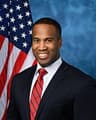 John James
Republican · Michigan
 Tim Moore
Republican · North Carolina
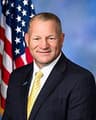 Troy Nehls
Republican · Texas