
A Republican bill with 7 Republican cosponsors · See all 7 cosponsors
Last activity — Read twice and referred to the Committee on Health, Education, Labor, and Pensions.
In committee
Introduced and handed to a committee in the chamber it started in.
The committee holds it, and most bills are never heard from again. A hearing or a committee vote would be news; silence is the usual outcome, and it kills the bill without anyone voting against it.
Its path through Congress
- Introduced
- In Committee
What this bill would do
The Association Health Plans Act seeks to amend the Employee Retirement Income Security Act of 1974. This bill clarifies how certain associations or groups of employers are treated under the law. It allows groups of employers, regardless of their industry, to be treated as a single employer for health plan purposes if they meet specific requirements. The legislation also includes provisions for self-employed individuals to participate in these groups. Additionally, it establishes specific rules regarding premium rates and protections against discrimination based on health status.
Yes· 3 of 6
- Scored +6
Would business owners be better off under this?
It empowers small business owners and the self-employed to access collective health insurance benefits.
- Scored +5
Does this make health care easier to get in general?
It expands access to group health coverage for self-employed individuals and small business owners.
- Scored +5
Does this make it easier to run a small business?
The bill provides new health insurance options for small business owners and self-employed individuals through association plans.
The opposite
No question was scored the opposite.
Who it would affect, and how
Potential Positive Impacts for People
-
Inclusion of Self-Employed Individuals: The bill allows self-employed individuals—defined as those with a bona fide ownership right who work at least 10 hours a week—to be treated as both an employer and an employee within these groups (Section 2(c)).
-
Protection Against Health Status Discrimination: The bill prohibits these plans from denying coverage based on pre-existing conditions or discriminating against individuals regarding enrollment and premiums based on health status-related factors (Section 3(b)).
-
Flexible Premium Rating: Groups can establish base premium rates using a modified community rating methodology that considers the pooling of all participant claims (Section 3(a)(1)(A)(i)).
-
Employer-Specific Adjustments: The act allows for the adjustment of contribution rates for specific employer members based on their specific risk profile (Section 3(a)(1)(A)(ii)).
-
Standardized Rates for Self-Employed Groups: If a group consists entirely of self-employed individuals, the plan must treat them as a single risk pool and charge every participant the same premium rate (Section 3(a)(2)).
Potential Negative Impacts for People
-
Membership Limitations: Coverage under these plans is strictly limited to employees of employer members or the self-employed individuals themselves, meaning coverage cannot be provided to anyone else (Section 2(a)(B)(vii)).
-
Restrictions on Group Formation: To qualify, a group or association must be formed for purposes other than just providing medical care through insurance or otherwise (Section 2(a)(B)(iv)).
-
Membership Denial Based on Board Determination: A group's governing board has the authority to determine if an individual meets the requirements to be a member and can stop providing coverage if those requirements are no longer met (Section 2(c)(iii)).
Groups and Interests Ranking
Every group the model scored this bill for, from -10 to +10. Tap or hover a score for the reason it gave.
- Demographic And Interest Groups
- Would business owners be better off under this? — It empowers small business owners and the self-employed to access collective health insurance benefits. Would people with disabilities be better off under this? — The bill protects against discrimination based on health status-related factors.
- Healthcare
- Does this make health care easier to get in general? — It expands access to group health coverage for self-employed individuals and small business owners. Does this lower what people pay for private health insurance? — By allowing multiple employers to pool their risks, it may create more cost-effective insurance options.
- Economy And Finance
- Does this make it easier to run a small business? — The bill provides new health insurance options for small business owners and self-employed individuals through association plans. Does this give people more protection from unfair business practices? — It includes protections against health status discrimination and pre-existing condition denials for those in these plans.
- 9/30/2026
- 1 Cosponsor added.
- 6/2/2026
- 1 Cosponsor added.
- 2/11/2026
- 1 Cosponsor added.
- 12/17/2025
- 1 Cosponsor added.
- 10/16/2025
- 1 Cosponsor added.
- 7/15/2025
- 1 Cosponsor added.
- 5/21/2025
- Read twice and referred to the Committee on Health, Education, Labor, and Pensions.
- 1 Cosponsor added.
- Introduced in Senate
One bill Congress.gov lists as related to this one — companions in the other chamber, earlier versions, and bills this one absorbed or was folded into.
 Jim Banks
Republican · Indiana
- Darline Graham
Republican · South Carolina
 Ashley Moody
Republican · Florida
 Tim Scott
Republican · South Carolina
 Rick Scott
Republican · Florida
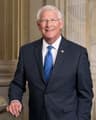 Roger Wicker
Republican · Mississippi
 Todd Young
Republican · Indiana