
Thomas Tillis (R-NC)
Radiation Oncology Case Rate Value Based Program Act of 2025
A bill to amend Title XVIII of the Social Security Act to create a Radiation Oncology Case Rate Value Based Payment Program exempt from budget neutrality adjustment requirements, and to amend section 1128A of title XI of the Social Security Act to create a new statutory exception for the provision of free or discounted transportation for radiation oncology patients to receive radiation therapy services.
A Republican bill with 2 Democratic cosponsors · See all 6 cosponsors
Last activity — Read twice and referred to the Committee on Finance.
In committee
Introduced and handed to a committee in the chamber it started in.
The committee holds it, and most bills are never heard from again. A hearing or a committee vote would be news; silence is the usual outcome, and it kills the bill without anyone voting against it.
Its path through Congress
- Introduced
- In Committee
What this bill would do
This bill establishes the Radiation Oncology Case Rate Value Based Payment Program (ROCR Program) to change how Medicare pays for radiation therapy. The program moves toward per-episode payments to provide more stable and unified payments for cancer treatments. It aims to improve care quality, encourage the use of new technology, and reduce disparities in access. The legislation also creates a specific add-on payment to help patients with transportation insecurity. Additionally, it establishes legal exceptions to allow providers to offer free or discounted transportation to patients.
Yes· 3 of 8
- Scored +7
Does this make health care easier to get in general?
The bill improves access to radiation therapy by addressing transportation insecurity and aiming to reduce care disparities.
- Scored +6
Would people over 65 be better off under this?
The bill benefits Medicare-eligible seniors by improving access to radiation oncology services.
- Scored +6
Would retired people be better off under this?
The program enhances care stability and access for Medicare beneficiaries, many of whom are retirees.
The opposite
- Scored -2
Would business owners be better off under this?
Providers may face payment reductions if they do not meet specific accreditation requirements.
Who it would affect, and how
Potential Positive Impacts for People
-
Stable and Unified Payments: The ROCR Program seeks to create stable, unified payments for radiation therapy services (Section 3, subsection (a)(3)(A)).
-
Increased Access and Reduced Disparities: The program aims to reduce disparities in care by increasing access to services close to where patients live (Section 3, subsection (a)(3)(B)).
-
Improved Quality of Care: The program intends to enhance care quality through practice accreditation and shorter treatment courses (Section 3, subsection (a)(3)(C)).
-
Technology Advancement: The program encourages the use of state-of-the-art technology to improve patient outcomes (Section 3, subsection (a)(3)(D)).
-
Support for Transportation Needs: An add-on payment is provided to help patients access and complete treatments by addressing transportation insecurity (Section 3, subsection (g)(1)).
-
Flexible Payment for Coinsurance: Providers may collect coinsurance in multiple installments under a payment plan (Section 3, subsection (e)(1)).
Potential Negative Impacts for People
-
Potential Payment Reductions for Providers: The ROCR Program includes a provision where payments may be reduced by 2.5 percent if a provider does not meet specific accreditation requirements (Section 3, subsection (h)(1)(B)).
-
Budgetary Savings Adjustments: The Secretary is authorized to apply a savings adjustment to reduce payment rates to achieve Medicare savings (Section 3, subsection (d)(3)(B)).
-
Mandatory Participation Requirements: Most radiation therapy providers and suppliers participating in Medicare will be required to participate in the ROCR Program (Section 3, subsection (f)(1)).
Groups and Interests Ranking
Every group the model scored this bill for, from -10 to +10. Tap or hover a score for the reason it gave.
- Demographic And Interest Groups
- Would retired people be better off under this? — The program enhances care stability and access for Medicare beneficiaries, many of whom are retirees. Would people over 65 be better off under this? — The bill benefits Medicare-eligible seniors by improving access to radiation oncology services. Would households on low incomes be better off under this? — The health equity add-on payment helps low-income patients facing transportation insecurity. Would people in rural areas be better off under this? — The bill addresses access to care in rural areas through technology and potential grant/loan programs. Would business owners be better off under this? — Providers may face payment reductions if they do not meet specific accreditation requirements.
- Healthcare
- Does this make health care easier to get in general? — The bill improves access to radiation therapy by addressing transportation insecurity and aiming to reduce care disparities. Does this put more money into Medicare, the health coverage for people over 65? — The bill establishes a new value-based payment program specifically for Medicare beneficiaries receiving radiation therapy.
- Economy And Finance
- Does this reduce what the federal government spends? — The bill seeks to achieve reasonable spending reductions in Medicare for radiation therapy services.
- Environment Energy And Infrastructure
- Does this invest in rural communities? — The bill includes provisions to help identify and address radiation therapy deserts in rural areas.
- 9/17/2026
- 1 Cosponsor added.
- 7/16/2026
- 1 Cosponsor added.
- 4/28/2026
- 1 Cosponsor added.
- 7/15/2025
- 2 Cosponsors added.
- 3/13/2025
- Read twice and referred to the Committee on Finance.
- 1 Cosponsor added.
- Introduced in Senate
One bill Congress.gov lists as related to this one — companions in the other chamber, earlier versions, and bills this one absorbed or was folded into.
 Shelley Capito
Republican · West Virginia
 Christopher Coons
Democrat · Delaware
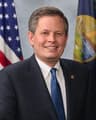 Steve Daines
Republican · Montana
 Roger Marshall
Republican · Kansas
 Gary Peters
Democrat · Michigan
 Dan Sullivan
Republican · Alaska