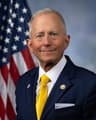
Jefferson Van Drew (R-NJ)
Expressing the sense of the House of Representatives that European laws and regulations unfairly and unreasonably burden American speech and innovation.
A Republican resolution with 6 Republican cosponsors · See all 6 cosponsors
Last activity — Referred to the Committee on Foreign Affairs, and in addition to the Committee on the Judiciary, for a period to be subsequently determined by the Speaker, in each case for consideration of such provisions as fall within the jurisdiction of the committee concerned.
In committee
Introduced and handed to a committee in the chamber it started in.
The committee holds it, and most bills are never heard from again. A hearing or a committee vote would be news; silence is the usual outcome, and it kills the bill without anyone voting against it.
Its path through Congress
- Introduced
- In Committee
A House resolution is the House speaking for itself: stating a position, honouring someone, or setting its own rules. Adopting it is the whole process. Once the House agrees to it, it is officially the House's word; it is not a law, so the Senate and the President have no part in it.
What this bill would do
H. Res. 967 expresses the House of Representatives' view that European and British digital laws unfairly burden American innovation and speech. The resolution claims these foreign regulations censor political discourse and act as trade barriers against U.S. companies. It calls on the Trump administration to use diplomatic and economic tools to protect First Amendment rights and American innovation. Additionally, it asks the Department of Justice and the Federal Trade Commission to reject the antitrust principles of these foreign laws and stop cooperating with European governments in their enforcement.
Yes· 3 of 11
- Scored +8
Does this protect the individual right to speak freely?
Central to the resolution is the effort to protect U.S. citizens' First Amendment rights from foreign censorship.
- Scored +7
Does this protect what people are allowed to say in public life?
The resolution specifically calls for the protection of First Amendment rights against foreign censorship.
- Scored +6
Would business owners be better off under this?
Positively impacts U.S. tech business owners by seeking to remove foreign regulatory burdens.
The opposite
- Scored -6
Does this put more rules on large technology companies?
The resolution explicitly opposes foreign digital regulations and calls for the U.S. to reject such antitrust principles.
- Scored -3
Does this strengthen ties with allied countries?
The resolution expresses strong disapproval of EU and UK laws and calls for rejecting cooperation with them on antitrust enforcement.
Who it would affect, and how
Potential Positive Impacts for People
-
Protection of Free Speech: The resolution calls for the Trump administration to protect the free expression rights of United States citizens from being undermined by foreign governments (Section 2).
-
Support for Innovation and Consumers: The resolution urges the Trump administration to protect American innovation to prevent foreign authorities from harming United States companies and consumers (Section 3).
Potential Negative Impacts for People
- Lack of Specific Provisions: The provided text does not list specific sections or provisions that would create negative consequences or burdens for individuals or groups in the United States.
Groups and Interests Ranking
Every group the model scored this bill for, from -10 to +10. Tap or hover a score for the reason it gave.
- Demographic And Interest Groups
- Would business owners be better off under this? — Positively impacts U.S. tech business owners by seeking to remove foreign regulatory burdens. Would billionaires be better off under this? — Protects the interests of large American tech companies from foreign antitrust penalties.
- Governance And Ideology
- Does this protect the individual right to speak freely? — Central to the resolution is the effort to protect U.S. citizens' First Amendment rights from foreign censorship. Does this give the federal government more power? — It calls for the executive branch to use economic and diplomatic tools in foreign relations.
- Economy And Finance
- Is this likely to grow the economy? — The resolution aims to remove foreign regulatory burdens and trade barriers that hinder American economic competitiveness. Does this make it easier to run a small business? — Protecting American innovators from unfair foreign digital regulations supports the business environment. Is this likely to create jobs? — By opposing foreign regulations that burden American companies, the bill seeks to support the growth of U.S. innovation and jobs. Does this give people more protection from unfair business practices? — Claims that foreign regulations harm U.S. consumers by burdening American companies.
- Social Issues And Justice
- Does this protect what people are allowed to say in public life? — The resolution specifically calls for the protection of First Amendment rights against foreign censorship.
- Education And Technology
- Does this put more rules on large technology companies? — The resolution explicitly opposes foreign digital regulations and calls for the U.S. to reject such antitrust principles.
- National Security And Foreign Policy
- Does this make trade with other countries easier? — It seeks to remove foreign regulatory barriers that are described as targeted trade barriers against U.S. companies. Does this favour talking over confrontation abroad? — It encourages the administration to use diplomatic tools to resolve regulatory conflicts. Does this strengthen ties with allied countries? — The resolution expresses strong disapproval of EU and UK laws and calls for rejecting cooperation with them on antitrust enforcement.
- 1/8/2026
- 1 Cosponsor added.
- 1/7/2026
- 1 Cosponsor added.
- 12/18/2025
- Submitted in House
- Referred to the Committee on Foreign Affairs, and in addition to the Committee on the Judiciary, for a period to be subsequently determined by the Speaker, in each case for consideration of such provisions as fall within the jurisdiction of the committee concerned.
- 4 Cosponsors added.
 Chuck Edwards
Republican · North Carolina
 Scott Fitzgerald
Republican · Wisconsin
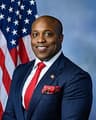 Wesley Hunt
Republican · Texas
 Anna Paulina Luna
Republican · Florida
 Barry Moore
Republican · Alabama
 Keith Self
Republican · Texas