
Sean Casten (D-IL)
Period PROUD (Providing Resources for Our Underserved and Disadvantaged) Act of 2025
A Democratic bill with 32 Democratic cosponsors · See all 32 cosponsors
Last activity — Referred to the Committee on Ways and Means, and in addition to the Committee on the Budget, for a period to be subsequently determined by the Speaker, in each case for consideration of such provisions as fall within the jurisdiction of the committee concerned.
In committee
Introduced and handed to a committee in the chamber it started in.
The committee holds it, and most bills are never heard from again. A hearing or a committee vote would be news; silence is the usual outcome, and it kills the bill without anyone voting against it.
Its path through Congress
- Introduced
- In Committee
What this bill would do
The Period PROUD (Providing Resources for Our Underserved and Disadvantaged) Act of 2025 aims to increase the availability of menstrual products for those with limited access. It provides targeted funding through the Social Services Block Grant program for fiscal years 2025 through 2029. States and eligible entities can use these funds to distribute free products or improve access for low-income individuals. The bill also allows for integrating these efforts with other basic needs assistance programs. Additionally, the Secretary of Health and Human Services is tasked with conducting an evaluation of the program's effectiveness.
Yes· 3 of 10
- Scored +8
Would households on low incomes be better off under this?
The bill provides free or highly accessible menstrual products to low-income individuals and families.
- Scored +8
Would women be better off under this?
The bill specifically targets the distribution of essential menstrual products to women and menstruating individuals.
- Scored +7
Does this narrow the gap between how men and women are treated?
The bill addresses the unmet need for menstrual products which impacts gender-specific health needs.
The opposite
- Scored -1
Does this reduce what the federal government spends?
The bill appropriates new funds for the distribution of menstrual products.
Who it would affect, and how
Potential Positive Impacts for People
-
Increased Access to Essential Products: The bill aims to decrease the unmet need for menstrual products by distributing free products, conducting community outreach, or improving access for low-income individuals (Section 2(b)(1)(A)).
-
Support for Low-Income Families: The funds are intended to increase the ability of communities and low-income families to provide for the menstrual product needs of low-income adults (Section 2(b)(1)(A)(ii)).
-
Integration with Existing Assistance: Eligible entities can integrate menstrual product distribution with other programs that serve low-income families, such as those for children's health, nutrition (WIC), or home visiting services (Section 2(b)(2)(A)(ii)).
-
Protection of Benefits: Any assistance or benefits a family receives through these funds will not be counted against them when determining eligibility for other Federal needs-based programs (Section 2(b)(4)).
Potential Negative Impacts for People
-
Administrative Cost Caps: There is a limit on how much of the funds can be used for administrative costs, which is capped at 9 percent for eligible entities (Section 2(b)(2)(B)).
-
Time Constraints on Spending: Funds distributed to an eligible entity by a State can only be used within that specific fiscal year or the following fiscal year (Section 2(b)(3)(A)).
Groups and Interests Ranking
Every group the model scored this bill for, from -10 to +10. Tap or hover a score for the reason it gave.
- Demographic And Interest Groups
- Would households on low incomes be better off under this? — The bill provides free or highly accessible menstrual products to low-income individuals and families. Would women be better off under this? — The bill specifically targets the distribution of essential menstrual products to women and menstruating individuals. Would children be better off under this? — The bill supports health programs for children through the integration of menstrual product distribution. Would Native Americans be better off under this? — The bill includes tribal organizations as eligible entities to distribute menstrual products.
- Healthcare
- Does this make health care easier to get in general? — The bill increases access to essential menstrual products for low-income individuals. Does this put more money into Medicaid, the health coverage for people on low incomes? — The bill allows for the integration of menstrual product distribution with Medicaid programs. Does this put more money into medical research? — The bill funds an evaluation of the effectiveness of menstrual product assistance programs.
- Social Issues And Justice
- Does this narrow the gap between how men and women are treated? — The bill addresses the unmet need for menstrual products which impacts gender-specific health needs. Is this likely to lift people out of poverty? — The bill provides essential hygiene products to low-income families to reduce their financial burden.
- Governance And Ideology
- Does this make what the government does easier for the public to see? — The bill requires the publication of the program's evaluation results on a public website.
- Economy And Finance
- Does this reduce what the federal government spends? — The bill appropriates new funds for the distribution of menstrual products.
- 12/2/2025
- 1 Cosponsor added.
- 7/29/2025
- 1 Cosponsor added.
- 7/10/2025
- 1 Cosponsor added.
- 2/11/2025
- 2 Cosponsors added.
- 2/4/2025
- Referred to the Committee on Ways and Means, and in addition to the Committee on the Budget, for a period to be subsequently determined by the Speaker, in each case for consideration of such provisions as fall within the jurisdiction of the committee concerned.
- 27 Cosponsors added.
- Introduced in House
One bill Congress.gov lists as related to this one — companions in the other chamber, earlier versions, and bills this one absorbed or was folded into.
 Nikki Budzinski
Democrat · Illinois
 Yvette Clarke
Democrat · New York
 Steve Cohen
Democrat · Tennessee
 Sheila Cherfilus-McCormick
Democrat · Florida
 Jasmine Crockett
Democrat · Texas
 Madeleine Dean
Democrat · Pennsylvania
 Sarah Elfreth
Democrat · Maryland
 Raúl Grijalva
Democrat · Arizona
 Josh Gottheimer
Democrat · New Jersey
 Jesús García
Democrat · Illinois
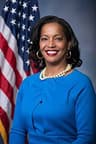 Jahana Hayes
Democrat · Connecticut
 Henry Johnson
Democrat · Georgia
 Pramila Jayapal
Democrat · Washington
 Summer Lee
Democrat · Pennsylvania
 Gregory Meeks
Democrat · New York
 Gwen Moore
Democrat · Wisconsin
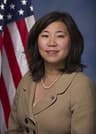 Grace Meng
Democrat · New York
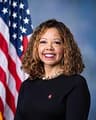 Lucy McBath
Democrat · Georgia
 LaMonica McIver
Democrat · New Jersey
 Jerrold Nadler
Democrat · New York
 Eleanor Norton
Democrat · District of Columbia
 Janice Schakowsky
Democrat · Illinois
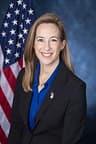 Mikie Sherrill
Democrat · New Jersey
 Melanie Stansbury
Democrat · New Mexico
 Paul Tonko
Democrat · New York
 Rashida Tlaib
Democrat · Michigan
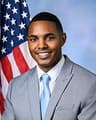 Ritchie Torres
Democrat · New York
 Jill Tokuda
Democrat · Hawaii
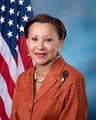 Nydia Velázquez
Democrat · New York
 Nikema Williams
Democrat · Georgia
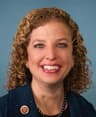 Debbie Wasserman Schultz
Democrat · Florida
 Bonnie Watson Coleman
Democrat · New Jersey