A Republican bill with 15 Republican cosponsors · See all 15 cosponsors
Last activity — Referred to the Subcommittee on Oversight, Investigations, and Accountability.
In committee
Introduced and handed to a committee in the chamber it started in.
The committee holds it, and most bills are never heard from again. A hearing or a committee vote would be news; silence is the usual outcome, and it kills the bill without anyone voting against it.
Its path through Congress
- Introduced
- In Committee
What this bill would do
The "Permanent Trump Secure Border Act" focuses on securing the United States borders through increased physical and technological infrastructure, specifically by mandating the resumption and completion of the border wall. The bill implements significant reforms to the asylum process through stricter eligibility requirements, mandatory inspections, and new procedures for handling unaccompanied children. It also directs the reopening of specific ICE detention facilities and provides for increased staffing and retention bonuses for U.S. Border Patrol agents. Additionally, the legislation authorizes the Secretary of State to negotiate regional immigration agreements with Western Hemisphere countries. The bill introduces stricter penalties for visa overstays and modifies criteria for immigration parole.
Yes· 3 of 9
- Scored +8
Does this tighten control of the border?
The bill mandates the construction of a border wall, expands surveillance technology, and increases personnel levels to achieve operational control.
- Scored +3
Does this give the government more power to monitor people inside the country?
The bill expands the use of surveillance technology, including drones and sensors, along the border.
- Scored +2
Would veterans be better off under this, taking everything together?
The bill allows for easier hiring of veterans into CBP positions through the waiver of certain requirements.
The opposite· 3 of 13
- Scored -8
Would immigrants be better off under this?
The bill greatly expands detention mandates, tightens asylum eligibility via firm resettlement bars, and restricts parole opportunities.
- Scored -7
Would children be better off under this?
The bill mandates the detention of many children and implements stricter, more rapid repatriation rules for unaccompanied minors.
- Scored -6
Does this make it easier for immigrants already here to become citizens?
The bill introduces stricter 'firm resettlement' bars and limits parole eligibility, making it harder for many to secure legal status.
Who it would affect, and how
Potential Positive Impacts for People
-
Increased Border Security Infrastructure: The bill mandates the resumption and completion of the border wall and the deployment of practical physical barriers and tactical infrastructure (Sec. 102; Sec. 103). This is intended to achieve situational awareness and operational control of the southwest border.
-
Enhanced Technology at Ports of Entry: There is a requirement to upgrade license plate readers and expand integrated surveillance and intrusion detection systems at land ports of entry (Sec. 106).
-
Support for Law Enforcement Personnel: The bill provides for a retention bonus for front-line U.S. Border Patrol agents with five or more years of service (Sec. 107) and requires the hiring of a sufficient number of agents to maintain a presence of no fewer than 22,000 full-time equivalents (Sec. 107).
-
Support for Law Enforcement Agencies through Grants: The "Operation Stonegarden" program provides grants to eligible law enforcement agencies to enhance border security through equipment and personnel support (Sec. 110).
-
Protection for DHS Employees: The bill prohibits COVID-19 vaccine mandates and protects employees from adverse actions based solely on their refusal to receive a vaccine (Sec. 121).
-
Improved Security Through Technology: The bill establishes a strategic 5-year technology investment plan to mitigate security risks, combat criminal activity, and facilitate legal trade (Sec. 104).
-
Restoration of Detention Facilities: The Secretary of Homeland Security is required to reopen or restore specific facilities, such as the Irwin County Detention Center and the South Texas Family Residential Center, to their January 20, 2021, operational levels (Sec. 202(a)-(b)).
-
Regional Cooperation and Humanitarian Protections: The bill directs the Secretary of State to negotiate agreements with countries like Mexico, Honduras, El Salvador, and Guatemala to include provisions for appropriate humanitarian protections for certain nationals (Sec. 302(a)(1)-(3)).
-
Clarification of Family Detention: The bill aims to clarify that the detention of an alien child who is not unaccompanied is governed by specific sections of the Immigration and Nationality Act, intending to satisfy requirements regarding accompanied minors (Sec. 401(a)-(b)).
-
Streamlined Parole for Specific Groups: The bill allows for the parole of certain individuals, including those with urgent medical emergencies, those needing to attend a family member's funeral, or those assisting in law enforcement matters (Sec. 701(a)(5)).
Potential Negative Impacts for People
-
Impact on Natural Resources and Communities: The construction of physical barriers and tactical infrastructure may impact natural resources, commerce, and sites of historical or cultural significance for communities near the construction sites (Sec. 103).
-
Restrictions on Asylum Seekers: The bill implements stricter rules for determining asylum eligibility, including more rigorous "credible fear" interviews and specific limitations on the definition of "particular social group" and "persecution" (Sec. 101; Sec. 102; Sec. 107).
-
Financial Burdens on Asylum Applicants: The bill imposes a fee of not less than $50 for each asylum application (Sec. 106).
-
Limitations on Employment Authorization: Certain asylum applicants may be denied employment authorization based on how they entered the United States (Sec. 105). Furthermore, those granted parole under the general humanitarian category may not accept employment (Sec. 701(a)(8)).
-
Impact on Migrant Protections: The bill includes provisions that restrict the release of certain applicants, potentially requiring them to be detained or returned to a foreign territory (Sec. s 201).
-
Potential for Unlawful Activity Restrictions: The bill restricts the use of the CBP One Mobile Application solely to the inspection of perishable cargo (Sec. 122).
-
Mandatory Repatriation of Children: The bill changes the rules for unaccompanied alien children, requiring the transfer of custody to the Secretary of Health and Human Services within 30 days for those who do not meet specific new criteria, with the goal of facilitating their return to their country of origin (Sec. 502(a)(2)).
-
Increased Penalties for Visa Overstays: Individuals who violate their nonimmigrant status for 10 days or more face new penalties, including fines and potential imprisonment for up to 6 months or 2 years depending on the offense (Sec. 601(a)-(b)).
-
Repeal of Agricultural Employment Rules: The legislation repeals existing rules relating to the temporary agricultural employment of H-2A nonimmigrants (Sec. 801).
Groups and Interests Ranking
Every group the model scored this bill for, from -10 to +10. Tap or hover a score for the reason it gave.
- Demographic And Interest Groups
- Would veterans be better off under this, taking everything together? — The bill allows for easier hiring of veterans into CBP positions through the waiver of certain requirements. Would immigrants be better off under this? — The bill greatly expands detention mandates, tightens asylum eligibility via firm resettlement bars, and restricts parole opportunities. Would children be better off under this? — The bill mandates the detention of many children and implements stricter, more rapid repatriation rules for unaccompanied minors. Would Hispanic Americans be better off under this? — The bill targets Western Hemisphere nationals with stricter enforcement, limited parole options, and restrictive immigration provisions. Would households on low incomes be better off under this? — The bill imposes a minimum $50 fee on asylum applications and changes to parole rules may negatively impact low-income migrant families. Would people in cities be better off under this? — Increased detention center operations may affect local urban and suburban communities hosting these facilities.
- National Security And Foreign Policy
- Does this give the government more power to monitor people inside the country? — The bill expands the use of surveillance technology, including drones and sensors, along the border. Does this favour talking over confrontation abroad? — The bill directs the Secretary of State to negotiate regional immigration agreements with Western Hemisphere countries. Does this strengthen ties with allied countries? — The bill authorizes new agreements and burden-sharing with Western Hemisphere countries to manage migration flows. Does this better protect the country from computer attacks? — While primarily focused on physical borders, the expansion of government authority over immigrants slightly shifts security focus.
- Governance And Ideology
- Does this make what the government does easier for the public to see? — The bill requires the publication of operational statistics regarding alien encounters and drug seizures. Does this leave more decisions to the states? — The bill preempts state licensing requirements for immigration detention facilities. Does this protect people from being watched or searched? — The bill mandates the collection of DNA and biometric information at the border.
- Environment Energy And Infrastructure
- Does this better protect air, water and wildlife? — The mandate for border wall construction and tactical infrastructure may negatively impact natural resources and historical sites.
- Social Issues And Justice
- Does this tighten control of the border? — The bill mandates the construction of a border wall, expands surveillance technology, and increases personnel levels to achieve operational control. Does this change how police departments operate? — The bill provides for increased staffing, retention bonuses, and improved workload models for border law enforcement. Does this make it easier for immigrants already here to become citizens? — The bill introduces stricter 'firm resettlement' bars and limits parole eligibility, making it harder for many to secure legal status. Does this make child care cost less? — The mandate to detain families and unaccompanied children in specific facilities may increase the social and economic burden on families. Does this narrow racial gaps in how people are treated? — The bill implements stricter asylum and detention standards that disproportionately affect many non-white immigrants.
- Economy And Finance
- Does this make it easier to run a small business? — Repealing H-2A wage rate methodology regulations may reduce costs for businesses employing temporary agricultural workers. Is this likely to create jobs? — The bill mandates hiring more Border Patrol agents to maintain a presence of at least 22,000 full-time equivalents. Does this strengthen the rights of workers to organise? — The repeal of H-2A wage rate regulations may reduce the cost of labor for employers but could weaken labor standards.
- 7/20/2026
- 1 Cosponsor added.
- 7/9/2026
- 1 Cosponsor added.
- 7/7/2026
- Referred to the Subcommittee on Transportation and Maritime Security.
- Referred to the Subcommittee on Border Security and Enforcement.
- Referred to the Subcommittee on Oversight, Investigations, and Accountability.
- 6/22/2026
- 1 Cosponsor added.
- 6/15/2026
- 2 Cosponsors added.
- 6/10/2026
- 1 Cosponsor added.
- 6/9/2026
- 3 Cosponsors added.
- 6/8/2026
- Referred to the Committee on the Judiciary, and in addition to the Committees on Homeland Security, Ways and Means, and Foreign Affairs, for a period to be subsequently determined by the Speaker, in each case for consideration of such provisions as fall within the jurisdiction of the committee concerned.
- 6 Cosponsors added.
- Introduced in House
4 bills Congress.gov lists as related to this one — companions in the other chamber, earlier versions, and bills this one absorbed or was folded into.
 Lauren Boebert
Republican · Colorado
 Sheri Biggs
Republican · South Carolina
 Michael Cloud
Republican · Texas
 Andrew Clyde
Republican · Georgia
 Byron Donalds
Republican · Florida
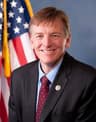 Paul Gosar
Republican · Arizona
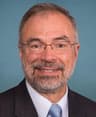 Andy Harris
Republican · Maryland
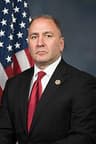 Clay Higgins
Republican · Louisiana
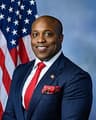 Wesley Hunt
Republican · Texas
 Mark Harris
Republican · North Carolina
 Ronny Jackson
Republican · Texas
 Ralph Norman
Republican · South Carolina
 Andrew Ogles
Republican · Tennessee
 Scott Perry
Republican · Pennsylvania
 Keith Self
Republican · Texas