
A Republican bill with 21 Republican cosponsors · See all 21 cosponsors
Last activity — Received in the Senate and Read twice and referred to the Committee on the Judiciary.
In the other chamber's committee
Passed one chamber and has been handed to a committee in the other.
The committee decides whether it goes any further, and most bills that reach a committee never leave it. A committee that simply does nothing kills a bill without anyone ever voting against it, so no news from here is usually the news.
Its path through Congress
- Introduced
- Passed House voice vote
- In Senate committee
The House by voice vote (members called out yes or no together): no member's position on it was recorded.
What this bill would do
The Kayleigh's Law Act of 2026 seeks to amend title 18 of the United States Code. It introduces a provision for "natural lifetime injunctions" for certain victims. When a defendant is convicted of a covered offense, a court can issue an order prohibiting contact with the victim. This order is intended to remain in effect for the entire life of the defendant. The act specifies that these orders are issued at the time of sentencing.
Yes· 3 of 13
- Scored +6
Would women be better off under this?
Increases safety and long-term protection for women who are disproportionately victims of sexual and domestic violence.
- Scored +5
Would children be better off under this?
Provides long-term protection for child victims of covered offenses, including sexual acts.
- Scored +5
Would people in their twenties and thirties be better off under this?
Provides enhanced long-term security for young adult victims of violent crimes.
The opposite
No question was scored the opposite.
Who it would affect, and how
Potential Positive Impacts for People
-
Victim Protection: The bill allows for an order that prohibits any direct or indirect contact between a defendant and a victim, which can include physical, oral, electronic, or digital communication (Sec. 2(a), Sec. 2(d)(2)).
-
Cost Relief for Victims: The law explicitly states that no fee can be assessed or collected from a victim regarding the issuance of these orders (Sec. 2(c)).
-
Permanent Security: For those convicted of specific crimes like violent felonies or offenses involving sexual conduct, the order stays in effect for the life of the defendant (Sec. 2(a)).
Potential Negative Impacts for People
-
Strict Termination Requirements: An injunction can only be terminated or suspended under specific circumstances, such as a pardon, commutation, or if a conviction is overturned on appeal (Sec. 2(b)(1)).
-
Legal Burdens for Defendants: A defendant who wants to challenge an injunction must file a motion alleging that their conviction was dismissed or overturned on appeal (Sec. 2(b)(1)(B)).
Groups and Interests Ranking
Every group the model scored this bill for, from -10 to +10. Tap or hover a score for the reason it gave.
- Demographic And Interest Groups
- Would women be better off under this? — Increases safety and long-term protection for women who are disproportionately victims of sexual and domestic violence. Would children be better off under this? — Provides long-term protection for child victims of covered offenses, including sexual acts. Would LGBTQ people be better off under this? — Provides long-term protection for LGBTQ individuals who are victims of covered offenses. Would men be better off under this? — Provides lifelong protection for male victims of covered violent or sexual crimes. Would people in middle age be better off under this? — Provides long-term protection for adult victims of covered offenses. Would people with disabilities be better off under this? — Provides long-term security for disabled victims of covered crimes. Would people over 65 be better off under this? — Provides lifelong security for senior victims of violent or sexual crimes. Would students be better off under this? — Provides long-term protection for students who are victims of covered offenses. Would people in their twenties and thirties be better off under this? — Provides enhanced long-term security for young adult victims of violent crimes. Would high-income households be better off under this? — Ensures no fee is assessed for victims to obtain these protection orders. Would households on low incomes be better off under this? — Ensures no fee is assessed for victims to obtain these protection orders. Would middle-income households be better off under this? — Ensures no fee is assessed for victims to obtain these protection orders.
- Governance And Ideology
- Does this give the federal government more power? — Creates a new federal mechanism for lifetime injunctions across state jurisdictions.
- 9/14/2026
- Received in the Senate and Read twice and referred to the Committee on the Judiciary.
- 8/31/2026
- Motion to reconsider laid on the table Agreed to without objection.
- Passed/agreed to in House: On motion to suspend the rules and pass the bill, as amended Agreed to by voice vote. (text: CR H5270-5271)
- On motion to suspend the rules and pass the bill, as amended Agreed to by voice vote. (text: CR H5270-5271)
- DEBATE - The House proceeded with forty minutes of debate on H.R. 8481.
- Considered under suspension of the rules. (consideration: CR H5270-5272)
- Ms. Lee (FL) moved to suspend the rules and pass the bill, as amended.
- 7/6/2026
- Reported (Amended) by the Committee on Judiciary. H. Rept. 119-731.
- Placed on the Union Calendar, Calendar No. 636.
- 6/3/2026
- Committee Consideration and Mark-up Session Held
- Ordered to be Reported (Amended) by the Yeas and Nays: 23 - 0.
- 1 Cosponsor added.
- 4/28/2026
- 1 Cosponsor added.
- 4/27/2026
- 2 Cosponsors added.
- 4/23/2026
- Referred to the House Committee on the Judiciary.
- 17 Cosponsors added.
- Introduced in House
One bill Congress.gov lists as related to this one — companions in the other chamber, earlier versions, and bills this one absorbed or was folded into.
 Brian Babin
Republican · Texas
 Andy Biggs
Republican · Arizona
 Tim Burchett
Republican · Tennessee
 Ken Calvert
Republican · California
 Elijah Crane
Republican · Arizona
 Juan Ciscomani
Republican · Arizona
 Troy Downing
Republican · Montana
 Mike Ezell
Republican · Mississippi
 Paul Gosar
Republican · Arizona
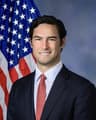 Brandon Gill
Republican · Texas
 David Joyce
Republican · Ohio
 Kimberlyn King-Hinds
Republican · Northern Mariana Islands
 Nancy Mace
Republican · South Carolina
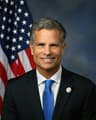 Daniel Meuser
Republican · Pennsylvania
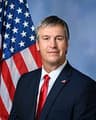 Barry Moore
Republican · Alabama
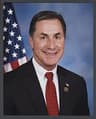 Gary Palmer
Republican · Alabama
 Christopher Smith
Republican · New Jersey
 David Schweikert
Republican · Arizona
 Marlin Stutzman
Republican · Indiana
 W. Steube
Republican · Florida
 David Taylor
Republican · Ohio