
A Democratic bill with 8 Republican cosponsors · See all 16 cosponsors
Last activity — Referred to the House Committee on Energy and Commerce.
In committee
Introduced and handed to a committee in the chamber it started in.
The committee holds it, and most bills are never heard from again. A hearing or a committee vote would be news; silence is the usual outcome, and it kills the bill without anyone voting against it.
Its path through Congress
- Introduced
- In Committee
What this bill would do
The State of Men's Health Act directs the Secretary of Health and Human Services to take action regarding men's health in the United States. The bill requires the Comptroller General to conduct a study and submit a report on the state of men's health within one year. Additionally, the Secretary must establish an Office of Men's Health within the Department of Health and Human Services within 18 months. This new office will focus on promoting programs, coordinating public awareness, and maintaining a database of best practices and clinical research. The Secretary is also tasked with submitting a report to Congress regarding the office's activities after two years.
Yes· 3 of 13
- Scored +5
Would men be better off under this?
The bill establishes an Office of Men's Health to promote awareness, screening, and better health outcomes specifically for men.
- Scored +3
Would veterans be better off under this, taking everything together?
The bill emphasizes the importance of addressing the physical and mental well-being of military men and veterans.
- Scored +3
Does this make mental health care easier to get?
The bill mandates that the Office of Men's Health coordinate public awareness and screening for mental health.
The opposite
No question was scored the opposite.
Who it would affect, and how
Potential Positive Impacts for People
-
Improved Health Awareness and Outcomes: The establishment of an Office of Men's Health aims to improve the state of men's health through programs, education, and screening (Section 4). This could help address risks like cardiovascular disease, mental health, HIV/AIDS, and various cancers (Section 2).
-
Enhanced Disease Screening: The Office will assist in coordinating public awareness and screening programs, specifically emphasizing colorectal cancer, prostate cancer, diabetes, high cholesterol, and mental health (Section 4).
-
Better Data and Best Practices: The Office is tasked with creating a database of clinical guidelines, research, and funding opportunities related to men's health (Section 4).
-
Targeted Identification of Health Disparities: The GAO study is required to identify specific health disparities in men's health to help optimize Federal programs (Section 3).
Potential Negative Impacts for People
- No New Funding Authorized: The bill explicitly states that no additional funds are authorized to carry out the GAO study or the establishment of the Office of Men's Health; instead, funds must be derived from other existing provisions of law (Section 3 and Section 4).
Groups and Interests Ranking
Every group the model scored this bill for, from -10 to +10. Tap or hover a score for the reason it gave.
- Demographic And Interest Groups
- Would men be better off under this? — The bill establishes an Office of Men's Health to promote awareness, screening, and better health outcomes specifically for men. Would veterans be better off under this, taking everything together? — The bill emphasizes the importance of addressing the physical and mental well-being of military men and veterans. Would Black Americans be better off under this? — The bill highlights that African-American men face higher risks of certain cancers which the new office aims to address. Would people over 65 be better off under this? — The bill addresses health risks including diabetes and cancer that disproportionately affect older age groups. Would households on low incomes be better off under this? — The bill aims to optimize federal programs to address health disparities that impact various socioeconomic conditions.
- Healthcare
- Does this make health care easier to get in general? — The creation of the Office of Men's Health aims to increase engagement in the health care system through education and screening coordination. Does this make mental health care easier to get? — The bill mandates that the Office of Men's Health coordinate public awareness and screening for mental health. Does this put more money into medical research? — The GAO study is tasked with identifying opportunities for additional investments in men's health research.
- National Security And Foreign Policy
- Does this increase the pay, pensions or support veterans receive? — The bill specifically highlights the need to address the mental health and well-being of veterans.
- Social Issues And Justice
- Does this narrow racial gaps in how people are treated? — The bill requires a study to identify health disparities that disproportionately affect specific groups like African-American men. Is this likely to lift people out of poverty? — The bill notes that addressing men's health may reduce the economic burden on families and the costs associated with premature death.
- Economy And Finance
- Is this likely to grow the economy? — The bill notes that improving men's health can improve the Nation's overall economic well-being.
- Governance And Ideology
- Does this make what the government does easier for the public to see? — The bill requires the submission of specific studies and activity reports to Congress.
- 7/21/2026
- 2 Cosponsors added.
- 7/13/2026
- 2 Cosponsors added.
- 6/23/2026
- 2 Cosponsors added.
- 5/20/2026
- 2 Cosponsors added.
- 4/21/2026
- 5 Cosponsors added.
- 3/4/2026
- 2 Cosponsors added.
- 2/20/2026
- Referred to the House Committee on Energy and Commerce.
- 1 Cosponsor added.
- Introduced in House
One bill Congress.gov lists as related to this one — companions in the other chamber, earlier versions, and bills this one absorbed or was folded into.
 Don Bacon
Republican · Nebraska
 Yvette Clarke
Democrat · New York
 Steve Cohen
Democrat · Tennessee
 Earl Carter
Republican · Georgia
 Andy Harris
Republican · Maryland
 Greg Landsman
Democrat · Ohio
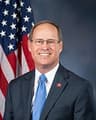 Gregory Murphy
Republican · North Carolina
 Addison McDowell
Republican · North Carolina
 Eleanor Norton
Democrat · District of Columbia
 Robert Onder
Republican · Missouri
 Adam Smith
Democrat · Washington
 Terri Sewell
Democrat · Alabama
 Thomas Suozzi
Democrat · New York
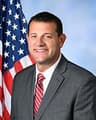 David Valadao
Republican · California
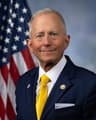 Jefferson Van Drew
Republican · New Jersey
 James Walkinshaw
Democrat · Virginia