
Lori Trahan (D-MA)
To amend title XIX of the Social Security Act to establish a definition of essential health system in statute and for other related purposes.
A Democratic bill with 11 Republican cosponsors · See all 25 cosponsors
Last activity — Referred to the House Committee on Energy and Commerce.
In committee
Introduced and handed to a committee in the chamber it started in.
The committee holds it, and most bills are never heard from again. A hearing or a committee vote would be news; silence is the usual outcome, and it kills the bill without anyone voting against it.
Its path through Congress
- Introduced
- In Committee
What this bill would do
This bill seeks to amend title XIX of the Social Security Act to create a formal definition for an "essential health system." An essential health system is defined as a specific type of hospital that meets particular criteria regarding its service to Medicaid and low-income patients. The bill establishes specific benchmarks for Medicare disproportionate patient percentages and uncompensated care. It also mandates that MACPAC prepare and submit a list of these systems to Congress annually. Finally, the bill directs MACPAC to include payment policies in its agenda to provide targeted support for these systems.
Yes· 3 of 25
- Scored +8
Would households on low incomes be better off under this?
Directly targets the preservation and support of hospitals that serve low-income and Medicaid populations.
- Scored +6
Does this make health care easier to get in general?
By designating and supporting essential health systems, the bill aims to ensure continued access to critical community services for low-income populations.
- Scored +4
Would Black Americans be better off under this?
Low-income healthcare support disproportionately benefits communities of color who utilize these systems.
The opposite
No question was scored the opposite.
Who it would affect, and how
Potential Positive Impacts for People
-
Targeted Support for Essential Services: The bill directs the development of payment policies that use specific criteria to provide targeted support for essential health systems, which is intended to ensure access to the essential community services they provide (Section 1(c)(3)).
-
Identification of High-Volume Care Providers: By establishing a definition based on high volumes of care for Medicaid and low-income patients, the bill recognizes hospitals that meet specific criteria for Medicare disproportionate patient percentages or uncompensated care (Section 1(a)(1)(C)).
Potential Negative Impacts for People
- No negative impacts are explicitly stated in the provided text.
Groups and Interests Ranking
Every group the model scored this bill for, from -10 to +10. Tap or hover a score for the reason it gave.
- Demographic And Interest Groups
- Would households on low incomes be better off under this? — Directly targets the preservation and support of hospitals that serve low-income and Medicaid populations. Would Black Americans be better off under this? — Low-income healthcare support disproportionately benefits communities of color who utilize these systems. Would Hispanic Americans be better off under this? — Low-income healthcare support disproportionately benefits communities of color who utilize these systems. Would Native Americans be better off under this? — Provides critical support for healthcare infrastructure serving underserved native populations. Would immigrants be better off under this? — Improves the stability of systems that often serve uninsured or low-income immigrant populations. Would people with disabilities be better off under this? — Essential health systems often provide critical care for low-income individuals with disabilities. Would retired people be better off under this? — Supports the systems serving low-income retirees and Medicare patients. Would people in rural areas be better off under this? — Supports rural hospitals that qualify as essential health systems for their communities. Would people over 65 be better off under this? — Provides support for systems that handle high volumes of Medicare and low-income patients. Would people in cities be better off under this? — Many essential health systems are located in high-density urban areas serving the poor. Would Asian Americans be better off under this? — Provides benefits to low-income Asian Americans utilizing essential health systems. Would children be better off under this? — Improved access to essential health systems benefits low-income children. Would LGBTQ people be better off under this? — Increases support for hospitals providing essential services to low-income LGBTQ individuals. Would men be better off under this? — Increases support for hospitals providing essential services to low-income men. Would people in middle age be better off under this? — Improved access to essential health systems benefits low-income middle-aged adults. Would women be better off under this? — Increases support for hospitals providing essential services to low-income women. Would people in their twenties and thirties be better off under this? — Improved access to essential health systems benefits low-income young adults. Would white Americans be better off under this? — Benefits low-income white populations utilizing these systems.
- Healthcare
- Does this make health care easier to get in general? — By designating and supporting essential health systems, the bill aims to ensure continued access to critical community services for low-income populations. Does this put more money into Medicaid, the health coverage for people on low incomes? — The bill allows for payment policies to provide targeted support for essential health systems serving Medicaid patients.
- Social Issues And Justice
- Is this likely to lift people out of poverty? — Provides systemic support for the healthcare infrastructure that serves the poorest populations. Does this narrow racial gaps in how people are treated? — Supporting hospitals that serve high volumes of low-income patients often positively impacts marginalized communities.
- Environment Energy And Infrastructure
- Does this invest in rural communities? — Supports hospitals in underserved areas that qualify as essential health systems.
- Governance And Ideology
- Does this make what the government does easier for the public to see? — Creates a public index and list of hospitals meeting specific high-volume care criteria. Does this give the federal government more power? — Increases federal oversight by mandating MACPAC to maintain a national index of essential health systems.
- 10/1/2026
- 2 Cosponsors added.
- 9/14/2026
- 1 Cosponsor added.
- 9/2/2026
- 1 Cosponsor added.
- 8/31/2026
- 1 Cosponsor added.
- 8/10/2026
- 1 Cosponsor added.
- 8/3/2026
- 1 Cosponsor added.
- 6/30/2026
- 1 Cosponsor added.
- 6/10/2026
- 2 Cosponsors added.
- 6/3/2026
- 1 Cosponsor added.
- 5/12/2026
- 1 Cosponsor added.
- 4/22/2026
- 5 Cosponsors added.
- 3/26/2026
- 1 Cosponsor added.
- 2/4/2026
- 2 Cosponsors added.
- 1/16/2026
- Referred to the House Committee on Energy and Commerce.
- 5 Cosponsors added.
- Introduced in House
 Gus Bilirakis
Republican · Florida
 Troy Balderson
Republican · Ohio
 Robert Bresnahan
Republican · Pennsylvania
 Emanuel Cleaver
Democrat · Missouri
 Yvette Clarke
Democrat · New York
 Angie Craig
Democrat · Minnesota
 Troy Carter
Democrat · Louisiana
 Juan Ciscomani
Republican · Arizona
 Madeleine Dean
Democrat · Pennsylvania
 Gabe Evans
Republican · Colorado
 Jonathan Jackson
Democrat · Illinois
 Jennifer Kiggans
Republican · Virginia
 Timothy Kennedy
Democrat · New York
 Nicholas Langworthy
Republican · New York
 James McGovern
Democrat · Massachusetts
 Burgess Owens
Republican · Utah
 Brittany Pettersen
Democrat · Colorado
 Terri Sewell
Democrat · Alabama
 Darren Soto
Democrat · Florida
 Ritchie Torres
Democrat · New York
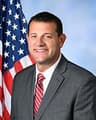 David Valadao
Republican · California
 Marc Veasey
Democrat · Texas
 Gabe Vasquez
Democrat · New Mexico
 Robert Wittman
Republican · Virginia
 Ann Wagner
Republican · Missouri