
A Democratic bill with 3 Republican cosponsors · See all 10 cosponsors
Last activity — Referred to the Subcommittee on Highways and Transit.
In committee
Introduced and handed to a committee in the chamber it started in.
The committee holds it, and most bills are never heard from again. A hearing or a committee vote would be news; silence is the usual outcome, and it kills the bill without anyone voting against it.
Its path through Congress
- Introduced
- In Committee
What this bill would do
This bill, known as the "PATH to Education Act," aims to increase access to higher education and center-based Head Start programs through public transit grants. It authorizes the Secretary to provide grants to public transportation providers that partner with eligible institutions. These institutions include community colleges, minority-serving institutions, Head Start agencies, and certain technical or rural-serving schools. Grant funds can be used to add transit stops, routes, or paratransit services, or to increase the frequency and adjust the timing of existing services. The goal is to better connect students and their families to these educational opportunities.
Yes· 3 of 11
- Scored +5
Does this improve buses, trains and other public transport?
The bill provides direct funding to expand and optimize public transit routes and services.
- Scored +4
Would households on low incomes be better off under this?
The bill prioritizes institutions where a high percentage of students receive Federal Pell Grants.
- Scored +4
Would students be better off under this?
The bill specifically aims to connect students to their educational institutions through better transit.
The opposite
No question was scored the opposite.
Who it would affect, and how
Potential Positive Impacts for People
-
Improved Transportation Access: The bill allows for adding bus or rail stops, routes, and paratransit services to better connect students to campuses and surrounding areas (Section 2, paragraph 3A).
-
Flexible Scheduling for Students and Families: By increasing service frequency or adjusting the timing of routes, the bill helps students get to and from classes and assists Head Start participants and their families in getting to and from programs (Section 2, paragraph 3B).
-
Support for High-Need Institutions: The Secretary will give priority to partnerships involving institutions where more than 25 percent of students receive a Federal Pell Grant (Section 2, paragraph 4B).
-
Funding for Operating Costs: Grant funds can be used to cover operating costs for the expanded or adjusted transit services (Section s 2, paragraph 3C).
Potential Negative Impacts for People
- No specific negative impacts or burdens are explicitly stated in the provided text.
Groups and Interests Ranking
Every group the model scored this bill for, from -10 to +10. Tap or hover a score for the reason it gave.
- Demographic And Interest Groups
- Would households on low incomes be better off under this? — The bill prioritizes institutions where a high percentage of students receive Federal Pell Grants. Would students be better off under this? — The bill specifically aims to connect students to their educational institutions through better transit. Would children be better off under this? — The bill improves access to Head Start programs for young children. Would people in their twenties and thirties be better off under this? — The bill facilitates easier transit access to community colleges and technical schools for students. Would Black Americans be better off under this? — The bill supports minority-serving institutions which often serve diverse populations. Would people in rural areas be better off under this? — The bill includes support for rural-serving institutions of higher education.
- Environment Energy And Infrastructure
- Does this improve buses, trains and other public transport? — The bill provides direct funding to expand and optimize public transit routes and services.
- Social Issues And Justice
- Does this narrow racial gaps in how people are treated? — The bill prioritizes grants for partnerships involving minority-serving institutions. Is this likely to lift people out of poverty? — By improving transit access to education and Head Start, the bill helps reduce barriers to economic mobility.
- Economy And Finance
- Is this likely to grow the economy? — The bill invests in public transit infrastructure to improve connectivity for students and workers.
- Education And Technology
- Does this make college cost less? — The bill reduces indirect costs of higher education by improving transit access to campuses.
- 8/24/2026
- 1 Cosponsor added.
- 4/14/2026
- 1 Cosponsor added.
- 3/2/2026
- 3 Cosponsors added.
- 1/16/2026
- Referred to the Subcommittee on Highways and Transit.
- 1/15/2026
- Referred to the House Committee on Transportation and Infrastructure.
- 5 Cosponsors added.
- Introduced in House
One bill Congress.gov lists as related to this one — companions in the other chamber, earlier versions, and bills this one absorbed or was folded into.
 Angie Craig
Democrat · Minnesota
 Brian Fitzpatrick
Republican · Pennsylvania
 Thomas Kean
Republican · New Jersey
 Seth Moulton
Democrat · Massachusetts
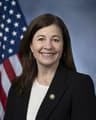 Kristen McDonald Rivet
Democrat · Michigan
 Eric Sorensen
Democrat · Illinois
 Rashida Tlaib
Democrat · Michigan
 Shri Thanedar
Democrat · Michigan
 Jefferson Van Drew
Republican · New Jersey
 Frederica Wilson
Democrat · Florida