
A Republican bill with 23 Democratic cosponsors · See all 38 cosponsors
Last activity — Referred to the Committee on Energy and Commerce, and in addition to the Committees on Ways and Means, and Rules, for a period to be subsequently determined by the Speaker, in each case for consideration of such provisions as fall within the jurisdiction of the committee concerned.
In committee
Introduced and handed to a committee in the chamber it started in.
The committee holds it, and most bills are never heard from again. A hearing or a committee vote would be news; silence is the usual outcome, and it kills the bill without anyone voting against it.
Its path through Congress
- Introduced
- In Committee
What this bill would do
The ``CommonGround for Affordable Health Care Act'' aims to modify and extend the enhanced premium tax credit for the 2026 tax year. It adjusts premium assistance amounts based on specific household income tiers. The bill also introduces stricter guardrails to prevent fraud within health insurance exchanges by establishing civil and criminal penalties for agents and brokers. Additionally, it implements new transparency and accountability requirements for pharmacy benefit managers regarding prescription drug plans. The legislation extends the annual open enrollment period for the 2026 plan year and mandates several studies and reports to monitor drug pricing and pharmacy management.
Yes· 3 of 10
- Scored +7
Does this strengthen the Affordable Care Act?
The bill extends and modifies the enhanced premium tax credit and establishes new guardrails for health insurance exchanges.
- Scored +6
Would households on low incomes be better off under this?
The bill increases premium assistance for households at various levels of the poverty line.
- Scored +6
Does this give people more protection from unfair business practices?
The bill enhances consumer protections by implementing verification processes for insurance enrollments and increasing accountability for pharmacy benefit managers.
The opposite
- Scored -2
Would union members be better off under this?
The bill imposes stricter regulations and penalties on agents and brokers, which may increase the cost of doing business in the insurance sector.
- Scored -2
Does this reduce what the federal government spends?
The expansion of premium tax credits and increased assistance amounts will increase federal outlays for health insurance subsidies.
Who it would affect, and how
Potential Positive Impacts for People
-
Increased Premium Assistance: The bill modifies rules to increase premium assistance amounts for certain income tiers for the 2026 tax year (Section 2(a)).
-
Expanded Tax Credit Eligibility: The bill allows the premium tax credit to be applied to taxpayers whose household income exceeds 400 percent of the poverty line, up to 1000 percent (Section 2(b)).
-
Enhanced Fraud Prevention: The bill establishes civil penalties of up to $50,000 for agents or brokers who negligently provide incorrect information, and civil penalties of up to $200,000 for those who knowingly provide false or fraudulent information (Section 3(a)(1)).
-
Consumer Protections during Enrollment: The bill requires the Secretary to establish a verification process for enrollments to ensure individuals consent to coverage changes and provides for timely notifications regarding changes to coverage or premiums (Section 3(a)(2)).
-
Continuity of Care: The enrollment verification process is required to prioritize continuity of coverage and care, ensuring individuals are not disenrolled without consent (Section 3(a)(2)).
-
Increased Pharmacy Benefit Manager Accountability: The bill requires pharmacy benefit managers to operate under written agreements that include bona fide service fees and mandates the disgorgement of any unlawful remuneration (Section 5(a)(1)).
-
Drug Pricing Transparency: The bill requires pharmacy benefit managers to submit detailed annual reports regarding drug costs, dispensing channels, and manufacturer-derived revenue (Section 5(a)(1)(C)(i)).
Potential Negative Impacts for People
-
Financial Penalties for Agents and Brokers: Agents or brokers may face significant civil penalties for negligence or significant criminal penalties, including fines and up to 10 years in prison, for knowing and willful violations (Section 3(a)(1)).
-
Increased Regulation for Marketing Organizations: Field marketing and third-party marketing organizations must meet specific criteria, including the requirement to register with the Secretary and submit marketing materials for review (Section 3(a)(3)).
-
Strict Requirements for Pharmacy Benefit Managers: Pharmacy benefit managers must comply with rigorous reporting requirements, undergo annual audits, and enter into specific written agreements, which may impact their business operations (Section 5(a)(1)).
Groups and Interests Ranking
Every group the model scored this bill for, from -10 to +10. Tap or hover a score for the reason it gave.
- Healthcare
- Does this strengthen the Affordable Care Act? — The bill extends and modifies the enhanced premium tax credit and establishes new guardrails for health insurance exchanges. Does this lower the price of prescription medicines? — The bill implements new accountability and transparency requirements for pharmacy benefit managers to help control drug costs. Does this put more money into Medicare, the health coverage for people over 65? — The bill increases oversight and transparency requirements for pharmacy benefit managers involved in Medicare Part D plans.
- Demographic And Interest Groups
- Would households on low incomes be better off under this? — The bill increases premium assistance for households at various levels of the poverty line. Would middle-income households be better off under this? — The bill expands premium tax credit eligibility to higher income tiers, providing more relief to middle-income families. Would people over 65 be better off under this? — The bill improves accountability for pharmacy benefit managers managing Medicare Part D prescription drug plans. Would union members be better off under this? — The bill imposes stricter regulations and penalties on agents and brokers, which may increase the cost of doing business in the insurance sector.
- Economy And Finance
- Does this give people more protection from unfair business practices? — The bill enhances consumer protections by implementing verification processes for insurance enrollments and increasing accountability for pharmacy benefit managers. Does this cut taxes for middle-income families? — The bill increases premium assistance amounts for several income tiers, effectively reducing the cost of health insurance for many middle-income families. Does this reduce what the federal government spends? — The expansion of premium tax credits and increased assistance amounts will increase federal outlays for health insurance subsidies.
- Governance And Ideology
- Does this make what the government does easier for the public to see? — The bill mandates detailed annual reporting from pharmacy benefit managers to increase transparency in drug pricing and management.
- Social Issues And Justice
- Is this likely to lift people out of poverty? — By increasing premium assistance for low and middle-income households, the bill reduces the financial burden of healthcare costs.
- 12/11/2025
- 1 Cosponsor added.
- 12/10/2025
- Referred to the Committee on Energy and Commerce, and in addition to the Committees on Ways and Means, and Rules, for a period to be subsequently determined by the Speaker, in each case for consideration of such provisions as fall within the jurisdiction of the committee concerned.
- 37 Cosponsors added.
- Introduced in House
4 bills Congress.gov lists as related to this one — companions in the other chamber, earlier versions, and bills this one absorbed or was folded into.
 Don Bacon
Republican · Nebraska
 Robert Bresnahan
Republican · Pennsylvania
 Ed Case
Democrat · Hawaii
 Jim Costa
Democrat · California
 Henry Cuellar
Democrat · Texas
 Juan Ciscomani
Republican · Arizona
 Donald Davis
Democrat · North Carolina
 Monica De La Cruz
Republican · Texas
 Brian Fitzpatrick
Republican · Pennsylvania
 Shomari Figures
Democrat · Alabama
 Vicente Gonzalez
Democrat · Texas
 Josh Gottheimer
Democrat · New Jersey
 Jared Golden
Democrat · Maine
 Carlos Gimenez
Republican · Florida
 Marie Perez
Democrat · Washington
 Maggie Goodlander
Democrat · New Hampshire
 Adam Gray
Democrat · California
 Jeff Hurd
Republican · Colorado
 Thomas Kean
Republican · New Jersey
 Kevin Kiley
Independent · California
 Susie Lee
Democrat · Nevada
 Nick LaLota
Republican · New York
 Michael Lawler
Republican · New York
 Greg Landsman
Democrat · Ohio
 Sam Liccardo
Democrat · California
 Jared Moskowitz
Democrat · Florida
 Ryan Mackenzie
Republican · Pennsylvania
 Scott Peters
Democrat · California
 Jimmy Panetta
Democrat · California
 Chris Pappas
Democrat · New Hampshire
 Josh Riley
Democrat · New York
 Maria Salazar
Republican · Florida
 Darren Soto
Democrat · Florida
 Thomas Suozzi
Democrat · New York
 Hillary Scholten
Democrat · Michigan
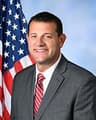 David Valadao
Republican · California
 Jefferson Van Drew
Republican · New Jersey
 Frederica Wilson
Democrat · Florida