
A Republican bill with 9 Democratic cosponsors · See all 22 cosponsors
Last activity — Referred to the Committee on Energy and Commerce, and in addition to the Committees on Ways and Means, and Education and Workforce, for a period to be subsequently determined by the Speaker, in each case for consideration of such provisions as fall within the jurisdiction of the committee concerned.
In committee
Introduced and handed to a committee in the chamber it started in.
The committee holds it, and most bills are never heard from again. A hearing or a committee vote would be news; silence is the usual outcome, and it kills the bill without anyone voting against it.
Its path through Congress
- Introduced
- In Committee
What this bill would do
The Bipartisan Health Insurance Affordability Act aims to amend the Internal Revenue Code and the Patient Protection and Affordable Care Act. It seeks to extend and modify the enhanced premium tax credit for specific income levels through 2027. The bill implements new guardrails to prevent fraud within health insurance exchanges by penalizing agents and brokers for misconduct. It also establishes stricter transparency and reporting requirements for pharmacy benefit managers regarding prescription drug costs. Additionally, the legislation provides new options for individuals to use health savings accounts in connection with exchange-based coverage.
Yes· 3 of 14
- Scored +7
Does this strengthen the Affordable Care Act?
The bill extends enhanced premium tax credits and expands eligibility through the ACA exchanges.
- Scored +6
Does this make health care easier to get in general?
Enhanced tax credits and new HSA options expand ways for individuals to access and pay for coverage.
- Scored +6
Would households on low incomes be better off under this?
The bill increases premium assistance for households at or below 150% of the poverty line.
The opposite
- Scored -4
Would business owners be better off under this?
Agents, brokers, and marketing organizations face much stricter regulations and significant civil and criminal penalties.
Who it would affect, and how
Potential Positive Impacts for People
-
Increased Premium Assistance: The bill modifies rules to increase premium assistance amounts for taxpayers with household incomes at or below 150 percent of the poverty line through 2027 (Section 2).
-
Expanded Tax Credit Eligibility: It extends the ability to receive premium tax credits to taxpayers whose household income exceeds 400 percent of the poverty line, up to 700 percent, for certain years (Section 2).
-
Fraud Prevention and Consumer Protections: The bill creates a verification process for new enrollments to ensure agent consent and establishes penalties for agents or brokers who provide false or fraudulent information (Section 3).
-
Protection Against Unauthorized Changes: The Secretary is required to establish a process where individuals are notified of changes to their enrollment or coverage to prevent unauthorized activity (Section 3).
-
Enhanced Accountability for Pharmacy Benefit Managers: The bill requires pharmacy benefit managers to provide detailed reports on drug costs and transparency regarding pricing guarantees to ensure better oversight (Section 5).
-
New Health Savings Account Options: Qualified Exchange enrollees will be eligible to establish Health Savings Accounts, providing more ways to manage healthcare costs (Section 7).
-
Flexible Premium Payment Options: Individuals may have the option to prepay annual premiums or direct a portion of their premium tax credits into a Health Savings Account (Section 8).
Potential Negative Impacts for People
-
Penalties for Agents and Brokers: Agents or brokers may face significant civil penalties, up to $50,000 for negligence or up to $200,000 for knowing violations, and potential criminal penalties including imprisonment (Section 3).
-
New Verification Requirements: The establishment of a new enrollment verification process and mandatory documentation requirements may create new administrative steps for those using agent-assisted enrollment (Section 3).
-
Increased Oversight for Marketing Organizations: Field and third-party marketing organizations will face new criteria and regulations regarding how they participate in the enrollment chain (Section 3).
Groups and Interests Ranking
Every group the model scored this bill for, from -10 to +10. Tap or hover a score for the reason it gave.
- Healthcare
- Does this strengthen the Affordable Care Act? — The bill extends enhanced premium tax credits and expands eligibility through the ACA exchanges. Does this make health care easier to get in general? — Enhanced tax credits and new HSA options expand ways for individuals to access and pay for coverage. Does this lower the price of prescription medicines? — The bill implements new transparency and accountability requirements for pharmacy benefit managers to control drug costs. Does this lower what people pay for private health insurance? — Increased tax credits directly reduce the net cost of health insurance premiums for eligible households.
- Demographic And Interest Groups
- Would households on low incomes be better off under this? — The bill increases premium assistance for households at or below 150% of the poverty line. Would middle-income households be better off under this? — The extension of enhanced tax credits provides significant relief for middle-income premium costs. Would high-income households be better off under this? — The bill extends tax credit eligibility to those earning up to 700% of the poverty line. Would people in middle age be better off under this? — The bill extends premium tax credits that benefit middle-income households. Would people in their twenties and thirties be better off under this? — The bill provides expanded health insurance subsidies and new HSA options which benefit younger, working populations. Would business owners be better off under this? — Agents, brokers, and marketing organizations face much stricter regulations and significant civil and criminal penalties.
- Economy And Finance
- Does this give people more protection from unfair business practices? — The bill implements strict penalties for fraudulent enrollment and requires greater transparency from pharmacy benefit managers. Does this cut taxes for middle-income families? — The bill extends and modifies premium tax credits that provide financial assistance for health insurance premiums. Is this likely to grow the economy? — Expanding premium assistance and HSA eligibility provides slight relief to household budgets.
- Governance And Ideology
- Does this make what the government does easier for the public to see? — The bill mandates detailed reporting requirements for pharmacy benefit managers and increased oversight for insurance agents.
- Social Issues And Justice
- Is this likely to lift people out of poverty? — Increased premium assistance for those at or below 150% of the poverty line helps reduce financial burden on low-income families.
- 12/16/2025
- 1 Cosponsor added.
- 12/12/2025
- 1 Cosponsor added.
- 12/11/2025
- 1 Cosponsor added.
- 12/10/2025
- 4 Cosponsors added.
- 12/9/2025
- Referred to the Committee on Energy and Commerce, and in addition to the Committees on Ways and Means, and Education and Workforce, for a period to be subsequently determined by the Speaker, in each case for consideration of such provisions as fall within the jurisdiction of the committee concerned.
- 15 Cosponsors added.
- Introduced in House
3 bills Congress.gov lists as related to this one — companions in the other chamber, earlier versions, and bills this one absorbed or was folded into.
 Don Bacon
Republican · Nebraska
 Robert Bresnahan
Republican · Pennsylvania
 Jim Costa
Democrat · California
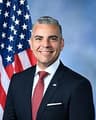 Juan Ciscomani
Republican · Arizona
 Donald Davis
Democrat · North Carolina
 Sharice Davids
Democrat · Kansas
 Vicente Gonzalez
Democrat · Texas
 Jared Golden
Democrat · Maine
 Marie Perez
Democrat · Washington
 Jeff Hurd
Republican · Colorado
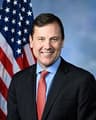 Thomas Kean
Republican · New Jersey
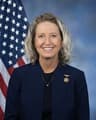 Jennifer Kiggans
Republican · Virginia
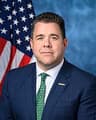 Nick LaLota
Republican · New York
 Michael Lawler
Republican · New York
 Nicole Malliotakis
Republican · New York
 Ryan Mackenzie
Republican · Pennsylvania
 Scott Peters
Democrat · California
 Maria Salazar
Republican · Florida
 Thomas Suozzi
Democrat · New York
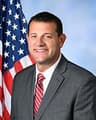 David Valadao
Republican · California
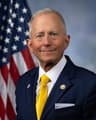 Jefferson Van Drew
Republican · New Jersey
 Frederica Wilson
Democrat · Florida