
A Democratic bill with 5 Republican cosponsors · See all 30 cosponsors
Last activity — Referred to the Committee on Energy and Commerce, and in addition to the Committee on Ways and Means, for a period to be subsequently determined by the Speaker, in each case for consideration of such provisions as fall within the jurisdiction of the committee concerned.
In committee
Introduced and handed to a committee in the chamber it started in.
The committee holds it, and most bills are never heard from again. A hearing or a committee vote would be news; silence is the usual outcome, and it kills the bill without anyone voting against it.
Its path through Congress
- Introduced
- In Committee
What this bill would do
The Medical Nutrition Therapy Act of 2025 aims to expand the availability of medical nutrition therapy services under the Medicare program. It proposes to amend title XVIII of the Social Security Act to include a wider range of diseases and conditions. This includes expanding the list of conditions beyond just diabetes or renal disease to include items like obesity, hypertension, and cancer. The bill also expands the types of professionals who can provide these services, such as physician assistants and nurse practitioners. These changes are intended to make medical nutrition therapy part of the standard of care for many more chronic conditions. The new provisions are set to take effect two years after the Act is enacted.
Yes· 3 of 10
- Scored +8
Would people over 65 be better off under this?
The bill directly expands healthcare coverage for Medicare beneficiaries, who are predominantly seniors.
- Scored +8
Would retired people be better off under this?
The bill provides increased healthcare benefits through Medicare, which is a primary resource for retirees.
- Scored +7
Does this make health care easier to get in general?
The bill significantly expands the range of conditions for which Medicare beneficiaries can access medical nutrition therapy.
The opposite
No question was scored the opposite.
Who it would affect, and how
Potential Positive Impacts for People
-
Expanded Disease Coverage: The bill adds several conditions to the list of those covered by medical nutrition therapy, including prediabetes, obesity, hypertension, dyslipidemia, malnutrition, eating disorders, cancer, gastrointestinal diseases, HIV, AIDS, and cardiovascular disease (Section 3(a)(2)(A)). This provides coverage for people managing these specific health issues.
-
Broader Clinical Scope: The Secretary of Health and Human Services can determine that services are medically necessary for other conditions, such as those involving unintentional weight loss or others specified by clinical guidelines (Section 3(a)(2)(A)(B)(4)(N)).
-
Increased Provider Options: The bill expands the list of people who can furnish these services to include physician assistants, nurse practitioners, clinical nurse specialists, and clinical psychologists for eating disorders (Section 3(a)(2)(A)(ii)).
-
Cost-Effective Treatment: Congress finds that medical nutrition therapy is a cost-effective component of treatment for various chronic conditions (Section 2(4)).
Potential Negative Impacts for People
-
Dialysis Exclusion: Medical nutrition therapy services will not be included for the prevention, management, or treatment of a renal disease if the individual is receiving maintenance dialysis for which payment is made under section 1881 (Section 3(a)(2)(A)(ii)).
-
Delayed Implementation: The amendments and expanded services will not apply until years beginning on or after the date that is 2 years after the date of the enactment of the Act (Section 3(c)).
Groups and Interests Ranking
Every group the model scored this bill for, from -10 to +10. Tap or hover a score for the reason it gave.
- Demographic And Interest Groups
- Would retired people be better off under this? — The bill provides increased healthcare benefits through Medicare, which is a primary resource for retirees. Would people over 65 be better off under this? — The bill directly expands healthcare coverage for Medicare beneficiaries, who are predominantly seniors. Would LGBTQ people be better off under this? — The bill includes expanded coverage for HIV and AIDS, which disproportionately affects members of the LGBTQ community. Would Black Americans be better off under this? — The bill addresses chronic diseases that are more prevalent in racial and ethnic minority groups. Would Asian Americans be better off under this? — The bill addresses chronic diseases that are more prevalent in racial and ethnic minority groups. Would Hispanic Americans be better off under this? — The bill addresses chronic diseases that are more prevalent in racial and ethnic minority groups. Would Native Americans be better off under this? — The bill addresses chronic diseases that are more prevalent in racial and ethnic minority groups.
- Healthcare
- Does this make health care easier to get in general? — The bill significantly expands the range of conditions for which Medicare beneficiaries can access medical nutrition therapy. Does this put more money into Medicare, the health coverage for people over 65? — The bill expands the scope of services covered under Medicare Part B.
- Social Issues And Justice
- Does this narrow racial gaps in how people are treated? — The bill addresses chronic diseases that disproportionately affect racial and ethnic minority backgrounds.
- 11/12/2026
- 1 Cosponsor added.
- 11/9/2026
- 1 Cosponsor added.
- 9/16/2026
- 1 Cosponsor added.
- 8/3/2026
- 2 Cosponsors added.
- 7/22/2026
- 2 Cosponsors added.
- 6/30/2026
- 1 Cosponsor added.
- 6/29/2026
- 1 Cosponsor added.
- 6/23/2026
- 1 Cosponsor added.
- 5/26/2026
- 2 Cosponsors added.
- 5/11/2026
- 1 Cosponsor added.
- 4/20/2026
- 2 Cosponsors added.
- 4/16/2026
- 1 Cosponsor added.
- 4/6/2026
- 1 Cosponsor added.
- 3/16/2026
- 1 Cosponsor added.
- 2/3/2026
- 1 Cosponsor added.
- 12/23/2025
- 1 Cosponsor added.
- 12/18/2025
- 1 Cosponsor added.
- 11/25/2025
- 1 Cosponsor added.
- 11/20/2025
- Referred to the Committee on Energy and Commerce, and in addition to the Committee on Ways and Means, for a period to be subsequently determined by the Speaker, in each case for consideration of such provisions as fall within the jurisdiction of the committee concerned.
- 8 Cosponsors added.
- Introduced in House
One bill Congress.gov lists as related to this one — companions in the other chamber, earlier versions, and bills this one absorbed or was folded into.
 Nanette Barragán
Democrat · California
 Becca Balint
Democrat · Vermont
 Ed Case
Democrat · Hawaii
 Emanuel Cleaver
Democrat · Missouri
 André Carson
Democrat · Indiana
 Sean Casten
Democrat · Illinois
 Angie Craig
Democrat · Minnesota
 Gilbert Cisneros
Democrat · California
 Christopher Deluzio
Democrat · Pennsylvania
 Sharice Davids
Democrat · Kansas
 Maxine Dexter
Democrat · Oregon
 Jahana Hayes
Democrat · Connecticut
 Julie Johnson
Democrat · Texas
 Jennifer Kiggans
Republican · Virginia
 Ted Lieu
Democrat · California
 Carol Miller
Republican · West Virginia
 John Mannion
Democrat · New York
 Kristen McDonald Rivet
Democrat · Michigan
 Sarah McBride
Democrat · Delaware
 Eleanor Norton
Democrat · District of Columbia
 Chellie Pingree
Democrat · Maine
 Mark Pocan
Democrat · Wisconsin
 Josh Riley
Democrat · New York
 Terri Sewell
Democrat · Alabama
 Claudia Tenney
Republican · New York
 Rashida Tlaib
Democrat · Michigan
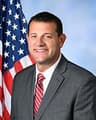 David Valadao
Republican · California
 Marc Veasey
Democrat · Texas
 Jefferson Van Drew
Republican · New Jersey
 James Walkinshaw
Democrat · Virginia