
Mark Harris (R-NC)
No Taxpayer Funded Abortion Travel for Illegal Aliens Act
A Republican bill with 36 Republican cosponsors · See all 36 cosponsors
Last activity — Referred to the House Committee on Energy and Commerce.
In committee
Introduced and handed to a committee in the chamber it started in.
The committee holds it, and most bills are never heard from again. A hearing or a committee vote would be news; silence is the usual outcome, and it kills the bill without anyone voting against it.
Its path through Congress
- Introduced
- In Committee
What this bill would do
This bill, titled the No Taxpayer Funded Abortion Travel for Illegal Aliens Act'', aims to stop the use of Federal funds for specific abortion-related services. Under this Act, no Federal funds can be used to help an illegal alien access covered abortion services. The term covered abortion services'' is defined broadly to include expenses like travel, lodging, meals, and childcare. The bill also provides a specific definition for what constitutes an ``illegal alien'' based on the Immigration and Nationality Act.
Yes
- Scored +3
Does this reduce what the federal government spends?
The bill prohibits the use of federal funds for specific abortion-related travel and support services.
- Scored +1
Does this tighten control of the border?
The bill addresses a specific subset of the immigrant population through the restriction of federal benefits.
The opposite· 3 of 6
- Scored -7
Does this make abortion easier to get?
The bill restricts the use of federal funds to cover essential costs like travel, lodging, and childcare for abortion services.
- Scored -6
Would immigrants be better off under this?
The bill explicitly limits federal assistance for illegal aliens seeking abortion-related services.
- Scored -4
Would households on low incomes be better off under this?
The bill reduces the availability of federal support for essential costs like travel and childcare for specific medical services.
Who it would affect, and how
Potential Positive Impacts for People
- Prohibition of Federal funds for certain services: This provision prevents Federal funds from being used to assist an illegal alien in accessing covered abortion services (Section 2(a)).
Potential Negative Impacts for People
- Restricting covered abortion services: This would prevent the use of Federal funds for various expenses related to accessing abortion services, such as travel, lodging, meals, childcare, translation services, doula care, and patient education (Section 2(b)(1)).
Groups and Interests Ranking
Every group the model scored this bill for, from -10 to +10. Tap or hover a score for the reason it gave.
- Demographic And Interest Groups
- Would immigrants be better off under this? — The bill explicitly limits federal assistance for illegal aliens seeking abortion-related services. Would households on low incomes be better off under this? — The bill reduces the availability of federal support for essential costs like travel and childcare for specific medical services. Would Hispanic Americans be better off under this? — The restrictions on illegal aliens often disproportionately affect the Hispanic community.
- Healthcare
- Does this make abortion easier to get? — The bill restricts the use of federal funds to cover essential costs like travel, lodging, and childcare for abortion services.
- Social Issues And Justice
- Does this tighten control of the border? — The bill addresses a specific subset of the immigrant population through the restriction of federal benefits. Does this make child care cost less? — The bill removes federal funding for childcare expenses related to accessing abortion services. Does this narrow racial gaps in how people are treated? — The bill targets a specific demographic—illegal aliens—which may disproportionately affect certain racial or ethnic groups.
- Economy And Finance
- Does this reduce what the federal government spends? — The bill prohibits the use of federal funds for specific abortion-related travel and support services.
- 11/10/2026
- 1 Cosponsor added.
- 3/3/2026
- 1 Cosponsor added.
- 2/4/2026
- 1 Cosponsor added.
- 1/16/2026
- 1 Cosponsor added.
- 12/4/2025
- 1 Cosponsor added.
- 12/1/2025
- 1 Cosponsor added.
- 11/25/2025
- 1 Cosponsor added.
- 11/20/2025
- Referred to the House Committee on Energy and Commerce.
- 29 Cosponsors added.
- Introduced in House
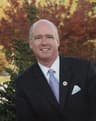 Robert Aderholt
Republican · Alabama
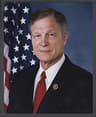 Brian Babin
Republican · Texas
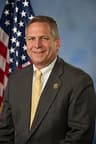 Mike Bost
Republican · Illinois
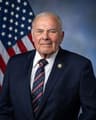 James Baird
Republican · Indiana
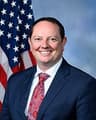 Eric Burlison
Republican · Missouri
 Sheri Biggs
Republican · South Carolina
 Elijah Crane
Republican · Arizona
 Byron Donalds
Republican · Florida
 Warren Davidson
Republican · Ohio
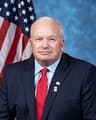 Scott Fitzgerald
Republican · Wisconsin
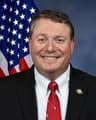 Randy Fine
Republican · Florida
 Glenn Grothman
Republican · Wisconsin
 Marjorie Greene
Republican · Georgia
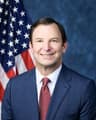 Craig Goldman
Republican · Texas
 Brandon Gill
Republican · Texas
 Andy Harris
Republican · Maryland
 Clay Higgins
Republican · Louisiana
 Diana Harshbarger
Republican · Tennessee
 Erin Houchin
Republican · Indiana
 Doug LaMalfa
Republican · California
 Thomas Massie
Republican · Kentucky
 Mary Miller
Republican · Illinois
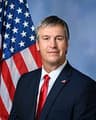 Barry Moore
Republican · Alabama
 Riley Moore
Republican · West Virginia
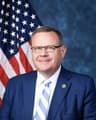 Tim Moore
Republican · North Carolina
 John McGuire
Republican · Virginia
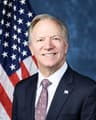 Robert Onder
Republican · Missouri
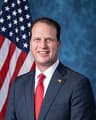 August Pfluger
Republican · Texas
 John Rose
Republican · Tennessee
 Chip Roy
Republican · Texas
 Marlin Stutzman
Republican · Indiana
 W. Steube
Republican · Florida
 Keith Self
Republican · Texas
 Jefferson Shreve
Republican · Indiana
 Daniel Webster
Republican · Florida
 Randy Weber
Republican · Texas