
A Republican bill with 34 Republican cosponsors · See all 34 cosponsors
Last activity — Referred to the House Committee on the Judiciary.
In committee
Introduced and handed to a committee in the chamber it started in.
The committee holds it, and most bills are never heard from again. A hearing or a committee vote would be news; silence is the usual outcome, and it kills the bill without anyone voting against it.
Its path through Congress
- Introduced
- In Committee
What this bill would do
The "No Shari'a Act" seeks to prohibit the application of Shari'a or any foreign law in United States courts if it violates constitutional rights. It defines foreign law to include religious law used as a substitute for domestic law. The bill aims to ensure that American courts rely solely on Federal and State law to provide certainty and clarity. It specifically addresses judicial decisions, contract provisions, and family law matters. The Act also mandates that the Attorney General issue regulations and judicial education to ensure uniform application. This legislation takes effect 180 days after being enacted.
Yes· 3 of 9
- Scored +4
Does this protect the right to fair treatment by the courts?
The bill ensures that judicial decisions and arbitration are subject to U.S. constitutional standards of due process.
- Scored +3
Does this give the federal government more power?
The bill empowers the Attorney General to issue regulations and judicial education to ensure uniform application of the law.
- Scored +3
Would children be better off under this?
The bill seeks to protect children from unequal treatment in family law matters involving foreign law.
The opposite
- Scored -2
Would immigrants be better off under this?
The bill's restriction on foreign law may impact immigrants who rely on non-U.S. legal customs for family or contract matters.
Who it would affect, and how
Potential Positive Impacts for People
-
Protection of Constitutional Rights: The bill prohibits courts from enforcing judgments or arbitration decisions that rely on Shari'a or foreign law when those laws violate constitutional rights (Section 5(a)). This is intended to safeguard fundamental liberties such as due process, equal protection, and freedom of speech (Section 4(3)).
-
Safeguarding Vulnerable Populations: The Act expresses a concern for protecting women, children, and vulnerable populations who might face unequal treatment or coercion under foreign legal systems (Section 2(3)).
-
Clarity in Family Law: In matters of marriage, divorce, child custody, adoption, or inheritance, the bill prevents the application of foreign law if it is inconsistent with fundamental rights or public policy (Section 5(c)).
-
Legal Certainty: The Act intends to provide certainty and clarity in how constitutional protections are applied across the nation (Section 3(b)(3)).
Potential Negative Impacts for People
- Limitations on Contract Provisions: While a contract provision choosing foreign law can be valid, it will not be enforceable if it results in a violation of constitutional rights (Section 5(b)).
Groups and Interests Ranking
Every group the model scored this bill for, from -10 to +10. Tap or hover a score for the reason it gave.
- Governance And Ideology
- Does this protect the right to fair treatment by the courts? — The bill ensures that judicial decisions and arbitration are subject to U.S. constitutional standards of due process. Does this give the federal government more power? — The bill empowers the Attorney General to issue regulations and judicial education to ensure uniform application of the law. Does this protect the individual right to speak freely? — The bill explicitly includes freedom of speech as a fundamental right to be protected from foreign legal application. Does this make what the government does easier for the public to see? — The bill aims to provide certainty and clarity in the application of constitutional protections nationwide.
- Demographic And Interest Groups
- Would children be better off under this? — The bill seeks to protect children from unequal treatment in family law matters involving foreign law. Would women be better off under this? — The bill intends to safeguard women from potential coercion or unequal treatment under foreign legal systems. Would immigrants be better off under this? — The bill's restriction on foreign law may impact immigrants who rely on non-U.S. legal customs for family or contract matters.
- Social Issues And Justice
- Does this narrow the gap between how men and women are treated? — The bill aims to protect women from potentially unequal treatment under foreign legal systems in family law matters. Does this narrow racial gaps in how people are treated? — The bill seeks to protect constitutional rights and prevent unequal treatment in the judicial system.
- Economy And Finance
- Does this give people more protection from unfair business practices? — The bill limits the enforcement of foreign law in contract disputes to ensure constitutional protections are upheld.
- 10/26/2026
- 1 Cosponsor added.
- 8/3/2026
- 1 Cosponsor added.
- 7/16/2026
- 1 Cosponsor added.
- 4/20/2026
- 1 Cosponsor added.
- 3/18/2026
- 1 Cosponsor added.
- 3/2/2026
- 1 Cosponsor added.
- 2/23/2026
- 2 Cosponsors added.
- 2/9/2026
- 2 Cosponsors added.
- 2/4/2026
- 1 Cosponsor added.
- 1/12/2026
- 1 Cosponsor added.
- 1/6/2026
- 1 Cosponsor added.
- 11/4/2025
- 1 Cosponsor added.
- 10/28/2025
- 1 Cosponsor added.
- 10/21/2025
- 1 Cosponsor added.
- 10/17/2025
- 3 Cosponsors added.
- 10/14/2025
- 1 Cosponsor added.
- 10/8/2025
- 2 Cosponsors added.
- 10/3/2025
- 2 Cosponsors added.
- 9/30/2025
- 1 Cosponsor added.
- 9/26/2025
- 7 Cosponsors added.
- 9/23/2025
- 1 Cosponsor added.
- 9/19/2025
- Referred to the House Committee on the Judiciary.
- 1 Cosponsor added.
- Introduced in House
One bill Congress.gov lists as related to this one — companions in the other chamber, earlier versions, and bills this one absorbed or was folded into.
 Rick Allen
Republican · Georgia
 Brian Babin
Republican · Texas
 Andy Biggs
Republican · Arizona
 Michael Baumgartner
Republican · Washington
 Sheri Biggs
Republican · South Carolina
 Byron Donalds
Republican · Florida
 Warren Davidson
Republican · Ohio
 Russ Fulcher
Republican · Idaho
 Michelle Fischbach
Republican · Minnesota
 Russell Fry
Republican · South Carolina
 Brandon Gill
Republican · Texas
 Andy Harris
Republican · Maryland
 Kevin Hern
Republican · Oklahoma
 Diana Harshbarger
Republican · Tennessee
 Abraham Hamadeh
Republican · Arizona
 Mike Haridopolos
Republican · Florida
 Mark Harris
Republican · North Carolina
 Anna Paulina Luna
Republican · Florida
 Barry Moore
Republican · Alabama
 Cory Mills
Republican · Florida
 Mark Messmer
Republican · Indiana
 John McGuire
Republican · Virginia
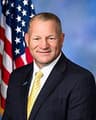 Troy Nehls
Republican · Texas
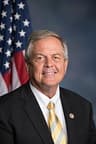 Ralph Norman
Republican · South Carolina
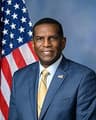 Burgess Owens
Republican · Utah
 Scott Perry
Republican · Pennsylvania
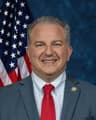 Jimmy Patronis
Republican · Florida
 Chip Roy
Republican · Texas
 Michael Rulli
Republican · Ohio
 Adrian Smith
Republican · Nebraska
 Keith Self
Republican · Texas
 David Taylor
Republican · Ohio
 Beth Van Duyne
Republican · Texas
 Derrick Van Orden
Republican · Wisconsin