A Democratic bill with 17 Republican cosponsors · See all 110 cosponsors
Last activity — Received in the Senate.
Passed one chamber, waiting for the other to take it up
Passed one chamber, and the other has not yet sent it to a committee or put it on its calendar.
The other chamber will hand it to a committee, place it on its calendar, or leave it where it is. Nothing has been decided, and a bill can sit here indefinitely.
Its path through Congress
- Introduced
- Passed House 230–193
- Awaiting Senate
What this bill would do
The "Faster Labor Contracts Act" aims to speed up the process of creating initial labor contracts after a union is recognized. It amends the National Labor Relations Act to require parties to begin bargaining within 10 days of a written request. If an agreement isn't reached within 90 days, the parties can request mediation through the Federal Mediation and Conciliation Service. If mediation fails after 30 days, the dispute is referred to a three-person arbitration panel. This panel's binding decision remains in effect for two years unless both parties agree in writing to change it. Finally, the Comptroller General is required to report to Congress on the average time it takes to reach these initial agreements.
Yes· 3 of 4
- Scored +8
Would union members be better off under this?
The act prevents employers from using protracted negotiations to sap union resolve by mandating faster timelines and arbitration.
- Scored +7
Does this strengthen the rights of workers to organise?
The bill accelerates the process of securing initial labor contracts through mandatory bargaining timelines and arbitration.
- Scored +5
Would households on low incomes be better off under this?
Faster contract negotiation can more quickly secure higher wages and benefits for workers.
The opposite
No question was scored the opposite.
What Congress actually voted on
One recorded vote has been taken on this bill.
- The House: the vote on whether to pass the bill This is the real decision in this chamber. Passing here sends the bill to the other chamber, which must pass it too before it can go to the President. Passed 230 yes · 193 no
06/09/2026 · Roll call 216 · recorded as “On Passage”
Who it would affect, and how
Potential Positive Impacts for People
-
Faster contract negotiation: The bill requires parties to meet and begin bargaining within 10 days of a written request, intended to prevent long delays in securing a first contract (Section 3, paragraph 3, subparagraph A).
-
Resolution of stalled negotiations: If bargaining does not result in an agreement after 90 days, the bill provides a pathway through mediation and, if necessary, binding arbitration (Section 3, paragraph 3, subparagraphs B and C).
-
Standardized criteria for contract decisions: The arbitration panel must base its decision on specific factors, such as the employer's financial status, the size of the business, the cost of living, and the employees' ability to support themselves and their families (Section 3, paragraph 3, subparagraph C).
-
Maintenance of current conditions: The amendment adds language to ensure that current wages, hours, and terms of employment are maintained while a new agreement is being negotiated (Section 3, paragraph 1, subparagraph C).
Potential Negative Impacts for People
-
Binding decisions by arbitration: If mediation fails, a three-person arbitration panel will issue a decision that is binding upon the parties for a period of two years (Section 3, paragraph 3, subparagraph C).
-
Pressure on employer and labor organization selection: While parties can select members of the arbitration panel, if they fail to do so within 14 days of a referral, the Federal Mediation and Conciliation Service will designate those members instead (Section 3, paragraph 3, subparagraph C).
Groups and Interests Ranking
Every group the model scored this bill for, from -10 to +10. Tap or hover a score for the reason it gave.
- Demographic And Interest Groups
- Would union members be better off under this? — The act prevents employers from using protracted negotiations to sap union resolve by mandating faster timelines and arbitration. Would households on low incomes be better off under this? — Faster contract negotiation can more quickly secure higher wages and benefits for workers.
- Economy And Finance
- Does this strengthen the rights of workers to organise? — The bill accelerates the process of securing initial labor contracts through mandatory bargaining timelines and arbitration.
- Governance And Ideology
- Does this make what the government does easier for the public to see? — The bill requires the Comptroller General to submit a report to Congress on average time-to-contract metrics.
- 6/10/2026
- Received in the Senate.
- 6/9/2026
- Motion to reconsider laid on the table Agreed to without objection.
- Passed/agreed to in House: On passage Passed by the Yeas and Nays: 230 - 193 (Roll no. 216).
- On passage Passed by the Yeas and Nays: 230 - 193 (Roll no. 216). (text: CR H4029-4030)
- The previous question was ordered pursuant to the rule.
- DEBATE - The House proceeded with one hour of debate on H.R. 5408.
- Considered under the provisions of rule H. Res. 1140. (consideration: CR H4029-4037)
- 2 Cosponsors added.
- 6/8/2026
- 5 Cosponsors added.
- 5/21/2026
- 1 Cosponsor added.
- 5/19/2026
- 1 Cosponsor added.
- 5/13/2026
- 2 Cosponsors added.
- 5/12/2026
- 1 Cosponsor added.
- 5/4/2026
- 2 Cosponsors added.
- 4/29/2026
- 3 Cosponsors added.
- 4/27/2026
- 11 Cosponsors added.
- 4/23/2026
- 4 Cosponsors added.
- 4/22/2026
- 9 Cosponsors added.
- 4/21/2026
- 10 Cosponsors added.
- 4/20/2026
- 24 Cosponsors added.
- 3/16/2026
- 2 Cosponsors added.
- 2/9/2026
- 2 Cosponsors added.
- 1/21/2026
- 2 Cosponsors added.
- 1/20/2026
- 2 Cosponsors added.
- 10/28/2025
- 2 Cosponsors added.
- 9/16/2025
- Referred to the House Committee on Education and Workforce.
- 25 Cosponsors added.
- Introduced in House
2 bills Congress.gov lists as related to this one — companions in the other chamber, earlier versions, and bills this one absorbed or was folded into.
 Pete Aguilar
Democrat · California
 Gabe Amo
Democrat · Rhode Island
 Sanford Bishop
Democrat · Georgia
 Suzanne Bonamici
Democrat · Oregon
 Julia Brownley
Democrat · California
 Brendan Boyle
Democrat · Pennsylvania
 Don Bacon
Republican · Nebraska
 Jack Bergman
Republican · Michigan
 Shontel Brown
Democrat · Ohio
 Nikki Budzinski
Democrat · Illinois
 Wesley Bell
Democrat · Missouri
 Robert Bresnahan
Republican · Pennsylvania
 Ed Case
Democrat · Hawaii
 Emanuel Cleaver
Democrat · Missouri
 Kathy Castor
Democrat · Florida
 Judy Chu
Democrat · California
 J. Correa
Democrat · California
 Salud Carbajal
Democrat · California
 Sean Casten
Democrat · Illinois
 Angie Craig
Democrat · Minnesota
 Gilbert Cisneros
Democrat · California
 Mike Carey
Republican · Ohio
 Sheila Cherfilus-McCormick
Democrat · Florida
 Greg Casar
Democrat · Texas
 Rosa DeLauro
Democrat · Connecticut
 Donald Davis
Democrat · North Carolina
 Christopher Deluzio
Democrat · Pennsylvania
 Mark DeSaulnier
Democrat · California
 Debbie Dingell
Democrat · Michigan
 Dwight Evans
Democrat · Pennsylvania
 Veronica Escobar
Democrat · Texas
 Sarah Elfreth
Democrat · Maryland
 Lois Frankel
Democrat · Florida
 Brian Fitzpatrick
Republican · Pennsylvania
 Laura Friedman
Democrat · California
 John Garamendi
Democrat · California
 Josh Gottheimer
Democrat · New Jersey
 Jesús García
Democrat · Illinois
 Jared Golden
Democrat · Maine
 Andrew Garbarino
Republican · New York
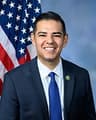 Robert Garcia
Democrat · California
 Daniel Goldman
Democrat · New York
 Maggie Goodlander
Democrat · New Hampshire
 Adelita Grijalva
Democrat · Arizona
 Josh Harder
Democrat · California
 Val Hoyle
Democrat · Oregon
 Henry Johnson
Democrat · Georgia
 Pramila Jayapal
Democrat · Washington
 Jonathan Jackson
Democrat · Illinois
 William Keating
Democrat · Massachusetts
 Raja Krishnamoorthi
Democrat · Illinois
 Timothy Kennedy
Democrat · New York
 Rick Larsen
Democrat · Washington
 Stephen Lynch
Democrat · Massachusetts
 Mike Levin
Democrat · California
 Nick LaLota
Republican · New York
 Michael Lawler
Republican · New York
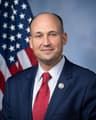 Nicholas Langworthy
Republican · New York
 Greg Landsman
Democrat · Ohio
 James McGovern
Democrat · Massachusetts
 Nicole Malliotakis
Republican · New York
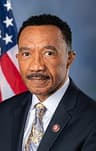 Kweisi Mfume
Democrat · Maryland
 Grace Meng
Democrat · New York
 Seth Moulton
Democrat · Massachusetts
 Lucy McBath
Democrat · Georgia
 Frank Mrvan
Democrat · Indiana
 Morgan McGarvey
Democrat · Kentucky
 Max Miller
Republican · Ohio
 Seth Magaziner
Democrat · Rhode Island
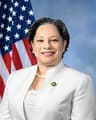 Jennifer McClellan
Democrat · Virginia
 John Mannion
Democrat · New York
 April McClain Delaney
Democrat · Maryland
 Riley Moore
Republican · West Virginia
 Kristen McDonald Rivet
Democrat · Michigan
 Sarah McBride
Democrat · Delaware
 Eleanor Norton
Democrat · District of Columbia
 Joe Neguse
Democrat · Colorado
 Alexandria Ocasio-Cortez
Democrat · New York
 Ilhan Omar
Democrat · Minnesota
 Chellie Pingree
Democrat · Maine
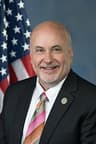 Mark Pocan
Democrat · Wisconsin
 Scott Peters
Democrat · California
 Chris Pappas
Democrat · New Hampshire
 Brittany Pettersen
Democrat · Colorado
 Nellie Pou
Democrat · New Jersey
 Patrick Ryan
Democrat · New York
 Michael Rulli
Republican · Ohio
 Emily Randall
Democrat · Washington
 Josh Riley
Democrat · New York
 Brad Sherman
Democrat · California
 Christopher Smith
Republican · New Jersey
 Thomas Suozzi
Democrat · New York
 Mary Gay Scanlon
Democrat · Pennsylvania
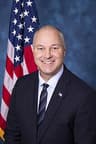 Pete Stauber
Republican · Minnesota
 Haley Stevens
Democrat · Michigan
 Kim Schrier
Democrat · Washington
 Melanie Stansbury
Democrat · New Mexico
 Hillary Scholten
Democrat · Michigan
 Eric Sorensen
Democrat · Illinois
 Dina Titus
Democrat · Nevada
 Rashida Tlaib
Democrat · Michigan
 Shri Thanedar
Democrat · Michigan
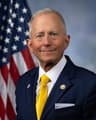 Jefferson Van Drew
Republican · New Jersey
 Derrick Van Orden
Republican · Wisconsin
 Maxine Waters
Democrat · California
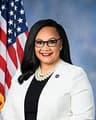 Nikema Williams
Democrat · Georgia
 Debbie Wasserman Schultz
Democrat · Florida
 Frederica Wilson
Democrat · Florida
 Bonnie Watson Coleman
Democrat · New Jersey
 James Walkinshaw
Democrat · Virginia