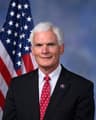
Robert Latta (R-OH)
Nuclear REFUEL (Recycling Efficient Fuels Utilizing Expedited Licensing) Act
A Republican bill with 8 Democratic cosponsors · See all 28 cosponsors
Last activity — Received in the Senate. Read twice. Placed on Senate Legislative Calendar under General Orders. Calendar No. 695.
Waiting for a floor vote in the other chamber
Passed one chamber and is on the other chamber's calendar.
The calendar is a queue, not a date. The majority leadership decides what comes to the floor and when; much of what is placed on it is never called, and a bill that is never called simply expires with the Congress.
Its path through Congress
- Introduced
- Passed House 397–2
- Awaiting Senate
- On Senate calendar
What this bill would do
This bill is known as the Nuclear REFUEL Act. It changes the definition of a production facility found in the Atomic Energy Act of 1954. Specifically, it excludes certain equipment or devices used for reprocessing spent nuclear fuel. This exclusion applies when the reprocessing does not separate plutonium from other transuranic elements. The House of Representatives passed the bill on November 9, 2026. It was then received in the Senate, read twice, and placed on the calendar.
Yes
- Scored +5
Does this cut the pollution that drives climate change?
The bill facilitates advanced nuclear fuel recycling which can support cleaner nuclear energy development.
The opposite
No question was scored the opposite.
How the text last changed
Reported in House (11/5/2026), compared with Introduced in House. Each change is on the Text tab.
The newer version of the bill adds a new Section 2 that updates the Atomic Energy Act of 1954 to include reprocessing alongside uranium enrichment. It changes how the exclusion from the definition of a production facility applies to reprocessing spent nuclear fuel. Specifically, it shifts the rule from not separating plutonium from other transuranic elements to not isolating plutonium.
What Congress actually voted on
One recorded vote has been taken on this bill.
- The House: a fast-track vote, needing two-thirds to pass The House sets aside its normal procedure to move quickly: no amendments, little debate, and a two-thirds bar instead of a simple majority. It is used for measures expected to be uncontroversial, so a bill that fails here failed despite broad expectations that it would not. Passed 397 yes · 2 no
11/09/2026 · Roll call 315 · recorded as “On Motion to Suspend the Rules and Pass, as Amended”
Who it would affect, and how
Potential Positive Impacts for People
- Exclusion from strict facility definitions: Section 2 amends Section 11 v. of the Atomic Energy Act of 1954 to exclude equipment or devices capable of reprocessing spent nuclear fuel from the definition of a production facility, provided it does not isolate plutonium. This change is explicitly found in the text, though the provided text does not elaborate on specific outcomes or benefits beyond making this statutory change.
Potential Negative Impacts for People
- Textual limitations on negative impacts: Based strictly on the provided text, there are no specific sections or provisions identified that outline negative consequences or burdens for individuals or groups of people in the United States. The text solely contains the legislative language amending the definition of a production facility.
Groups and Interests Ranking
Every group the model scored this bill for, from -10 to +10. Tap or hover a score for the reason it gave.
- Environment Energy And Infrastructure
- Does this cut the pollution that drives climate change? — The bill facilitates advanced nuclear fuel recycling which can support cleaner nuclear energy development.
In the queue for a floor vote, with no date set
What changed from Engrossed in House: No change to the wording. Only the printed details that record the bill’s progress, such as the heading and dates, are different.
The version one chamber actually passed
What changed from Reported in House: No change to the wording. Only the printed details that record the bill’s progress, such as the heading and dates, are different.
A committee approved it and sent it to the floor
What changed from Introduced in House
The newer version of the bill adds a new Section 2 that updates the Atomic Energy Act of 1954 to include reprocessing alongside uranium enrichment. It changes how the exclusion from the definition of a production facility applies to reprocessing spent nuclear fuel. Specifically, it shifts the rule from not separating plutonium from other transuranic elements to not isolating plutonium.
Each change
- Added Section 2 to include "or reprocessing" after "uranium enrichment" in Section 11 v. of the Atomic Energy Act of 1954.
- Changed Section 2 (which was renumbered and reworded) regarding the reprocessing of spent nuclear fuel, replacing the phrase [-separate-] with {+isolate+} and changing [-from other transuranic elements''.-]
Written by an AI model from a comparison of this version’s text with the one before it, not by a person. .
- 11/10/2026
- Received in the Senate. Read twice. Placed on Senate Legislative Calendar under General Orders. Calendar No. 695.
- 11/9/2026
- Motion to reconsider laid on the table Agreed to without objection.
- Passed/agreed to in House: On motion to suspend the rules and pass the bill, as amended Agreed to by the Yeas and Nays: (2/3 required): 397 - 2 (Roll no. 315). (text: CR H6096)
- On motion to suspend the rules and pass the bill, as amended Agreed to by the Yeas and Nays: (2/3 required): 397 - 2 (Roll no. 315). (text: CR H6096)
- Considered as unfinished business. (consideration: CR H6107-6108)
- At the conclusion of debate, the Yeas and Nays were demanded and ordered. Pursuant to the provisions of clause 8, rule XX, the Chair announced that further proceedings on the motion would be postponed.
- DEBATE - The House proceeded with forty minutes of debate on H.R. 3978.
- Considered under suspension of the rules. (consideration: CR H6096-6097)
- Mr. Latta moved to suspend the rules and pass the bill, as amended.
- 11/5/2026
- Reported (Amended) by the Committee on Energy and Commerce. H. Rept. 119-871.
- Placed on the Union Calendar, Calendar No. 768.
- 9/2/2026
- 1 Cosponsor added.
- 8/31/2026
- 1 Cosponsor added.
- 7/14/2026
- Subcommittee Consideration and Mark-up Session Held
- Forwarded by Subcommittee to Full Committee by Voice Vote.
- 6/30/2026
- 1 Cosponsor added.
- 6/24/2026
- 1 Cosponsor added.
- 6/8/2026
- 1 Cosponsor added.
- 5/20/2026
- 1 Cosponsor added.
- 5/19/2026
- 1 Cosponsor added.
- 5/12/2026
- 1 Cosponsor added.
- 5/4/2026
- 1 Cosponsor added.
- 3/26/2026
- 1 Cosponsor added.
- 1/20/2026
- 1 Cosponsor added.
- 11/12/2025
- 1 Cosponsor added.
- 11/4/2025
- 1 Cosponsor added.
- 10/17/2025
- 2 Cosponsors added.
- 9/26/2025
- 1 Cosponsor added.
- 9/3/2025
- 1 Cosponsor added.
- 9/2/2025
- 1 Cosponsor added.
- 8/22/2025
- 2 Cosponsors added.
- 7/17/2025
- 1 Cosponsor added.
- 7/2/2025
- 1 Cosponsor added.
- 6/27/2025
- 1 Cosponsor added.
- 6/26/2025
- 1 Cosponsor added.
- 6/23/2025
- 3 Cosponsors added.
- 6/12/2025
- Referred to the House Committee on Energy and Commerce.
- Referred to the Subcommittee on Energy.
- 1 Cosponsor added.
- Introduced in House
One bill Congress.gov lists as related to this one — companions in the other chamber, earlier versions, and bills this one absorbed or was folded into.
 Jake Auchincloss
Democrat · Massachusetts
 Troy Balderson
Republican · Ohio
 Ken Calvert
Republican · California
 Earl Carter
Republican · Georgia
 Troy Carter
Democrat · Louisiana
 Byron Donalds
Republican · Florida
 Gabe Evans
Republican · Colorado
 Charles Fleischmann
Republican · Tennessee
 Julie Fedorchak
Republican · North Dakota
 Marie Perez
Democrat · Washington
 Diana Harshbarger
Republican · Tennessee
 Erin Houchin
Republican · Indiana
 Michael Lawler
Republican · New York
 Tracey Mann
Republican · Kansas
 Mariannette Miller-Meeks
Republican · Iowa
 Kevin Mullin
Democrat · California
 John McGuire
Republican · Virginia
 Jay Obernolte
Republican · California
 Robert Onder
Republican · Missouri
 August Pfluger
Republican · Texas
 Scott Peters
Democrat · California
 Gary Palmer
Republican · Alabama
 Thomas Suozzi
Democrat · New York
 Jefferson Shreve
Republican · Indiana
 Claudia Tenney
Republican · New York
 Marc Veasey
Democrat · Texas
 Eugene Vindman
Democrat · Virginia
 Randy Weber
Republican · Texas