
A Democratic bill with 31 Democratic cosponsors · See all 31 cosponsors
Last activity — Referred to the House Committee on Energy and Commerce.
In committee
Introduced and handed to a committee in the chamber it started in.
The committee holds it, and most bills are never heard from again. A hearing or a committee vote would be news; silence is the usual outcome, and it kills the bill without anyone voting against it.
Its path through Congress
- Introduced
- In Committee
What this bill would do
The School Violence Prevention Act authorizes a program to assist youth at high risk for involvement in gun violence. The Secretary, in consultation with the Secretary of Education, will award grants to establish or expand school-based prevention programs. These programs target students from kindergarten through 12th grade or youth younger than 19. Eligibility requires partnerships between State educational agencies and community-based nonprofit organizations. Grant recipients must operate in areas demonstrating a unique need due to homicide or violent crime rates. The bill authorizes $25,000,000 for each fiscal year from 2025 through 2031.
Yes· 3 of 14
- Scored +8
Would students be better off under this?
The bill directly funds safety, mental health, and developmental programs for students.
- Scored +7
Would children be better off under this?
The bill provides safety and developmental support for youth in kindergarten through 12th grade.
- Scored +7
Would people in their twenties and thirties be better off under this?
It targets youth under the age of 19 for violence prevention and support.
The opposite
No question was scored the opposite.
Who it would affect, and how
Potential Positive Impacts for People
-
Targeted Assistance for High-Risk Youth: The bill provides grants to assist youth at highest risk for involvement in gun violence within local communities and schools (Section 2(a)(b)).
-
Comprehensive Support Strategies: Programs can use evidence-based strategies to promote healing from trauma, strengthen emotional skills like empathy and problem-solving, and connect youth to mental health professionals or mentors (Section 2(a)(b)(1)).
-
Professional Development for Educators: The program allows for increasing access to trauma support services, social and emotional learning, and mental health services for teachers and school personnel (Section 2(a)(b)(4)).
-
Community and Family Engagement: Grants can be used to facilitate partnerships among youth, families, schools, and local businesses (Section 2(a)(b)(3)).
-
Equitable Distribution: The Secretary is required to ensure that grants are distributed equitably among the different regions of the United States (Section 2(a)(d)).
Potential Negative Impacts for People
-
Strict Eligibility Requirements for Localities: To qualify, a local government must have met specific, high thresholds regarding homicides, violent injury rates, or juvenile arrest rates for the preceding two to three years (Section 2(a)(c)(1)(A)).
-
Grant Funding Limitations: Grantees are restricted in how they use funds for evaluation, specifically not being able to use more than 20 percent of the total grant amount for those activities (Section 2(a)(i)(2)(A)).
Groups and Interests Ranking
Every group the model scored this bill for, from -10 to +10. Tap or hover a score for the reason it gave.
- Demographic And Interest Groups
- Would students be better off under this? — The bill directly funds safety, mental health, and developmental programs for students. Would children be better off under this? — The bill provides safety and developmental support for youth in kindergarten through 12th grade. Would people in their twenties and thirties be better off under this? — It targets youth under the age of 19 for violence prevention and support. Would people in cities be better off under this? — The bill targets municipalities with high homicide rates, which are often urban areas. Would households on low incomes be better off under this? — The bill targets high-risk areas that often include underserved communities. Would Native Americans be better off under this? — The bill specifically mentions includes schools funded by the Bureau of Indian Education.
- Healthcare
- Does this make mental health care easier to get? — The bill funds connections to mental health professionals and provides professional development for trauma-informed care. Does this put more money into medical research? — The bill authorizes funds for evaluating violence prevention programs through independent researchers. Does this make health care easier to get in general? — It enhances access to mental health and trauma support services within schools.
- Education And Technology
- Does this put more money into public schools? — The bill authorizes significant funding for violence prevention programs within schools. Does this put more money into scientific research? — It supports research related to the outcomes of violence prevention programs.
- Governance And Ideology
- Does this make what the government does easier for the public to see? — It requires the public dissemination of best practices and evaluation results. Does this give the federal government more power? — It expands the role of the Secretary of HHS and Secretary of Education in school-based programs.
- Social Issues And Justice
- Does this put more limits on buying or owning guns? — The bill focuses on violence prevention specifically targeting gun violence among youth.
- 9/16/2026
- 1 Cosponsor added.
- 12/15/2025
- 1 Cosponsor added.
- 9/10/2025
- 1 Cosponsor added.
- 8/15/2025
- 1 Cosponsor added.
- 7/21/2025
- 1 Cosponsor added.
- 7/15/2025
- 1 Cosponsor added.
- 7/2/2025
- 2 Cosponsors added.
- 6/24/2025
- 1 Cosponsor added.
- 6/20/2025
- 1 Cosponsor added.
- 6/17/2025
- 2 Cosponsors added.
- 6/12/2025
- Referred to the House Committee on Energy and Commerce.
- 19 Cosponsors added.
- Introduced in House
One bill Congress.gov lists as related to this one — companions in the other chamber, earlier versions, and bills this one absorbed or was folded into.
 Suzanne Bonamici
Democrat · Oregon
 Becca Balint
Democrat · Vermont
 Wesley Bell
Democrat · Missouri
 Ed Case
Democrat · Hawaii
 Angie Craig
Democrat · Minnesota
 Sheila Cherfilus-McCormick
Democrat · Florida
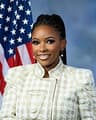 Jasmine Crockett
Democrat · Texas
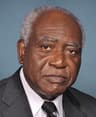 Danny Davis
Democrat · Illinois
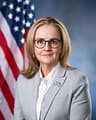 Madeleine Dean
Democrat · Pennsylvania
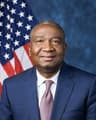 Cleo Fields
Democrat · Louisiana
 Daniel Goldman
Democrat · New York
 Henry Johnson
Democrat · Georgia
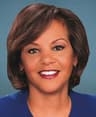 Robin Kelly
Democrat · Illinois
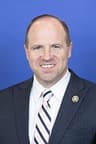 Timothy Kennedy
Democrat · New York
 Stephen Lynch
Democrat · Massachusetts
 Greg Landsman
Democrat · Ohio
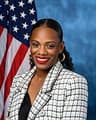 Summer Lee
Democrat · Pennsylvania
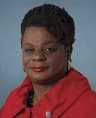 Gwen Moore
Democrat · Wisconsin
 Seth Moulton
Democrat · Massachusetts
 Seth Magaziner
Democrat · Rhode Island
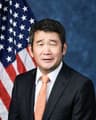 Dave Min
Democrat · California
 Eleanor Norton
Democrat · District of Columbia
 Joe Neguse
Democrat · Colorado
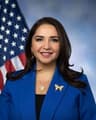 Delia Ramirez
Democrat · Illinois
 Janice Schakowsky
Democrat · Illinois
 Andrea Salinas
Democrat · Oregon
 Lateefah Simon
Democrat · California
 Dina Titus
Democrat · Nevada
 Rashida Tlaib
Democrat · Michigan
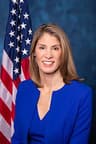 Lori Trahan
Democrat · Massachusetts
 Shri Thanedar
Democrat · Michigan