
A Republican bill with 2 Democratic cosponsors · See all 11 cosponsors
Last activity — Referred to the House Committee on the Judiciary.
In committee
Introduced and handed to a committee in the chamber it started in.
The committee holds it, and most bills are never heard from again. A hearing or a committee vote would be news; silence is the usual outcome, and it kills the bill without anyone voting against it.
Its path through Congress
- Introduced
- In Committee
What this bill would do
The Carla Walker Act establishes a grant program to improve state and local forensic activities through advanced DNA technology. It authorizes competitive grants for entities like law enforcement, prosecutor's offices, and medical examiners to use whole genome sequencing and forensic genetic genealogy. These funds are intended to generate investigative leads for criminal investigations or to identify unidentified human remains when traditional methods fail. The bill also provides for grants to purchase specific forensic equipment needed for these processes. The legislation includes strict requirements for following Department of Justice policies and maintaining detailed records for auditing.
Yes· 3 of 6
- Scored +4
Does this put more money into scientific research?
The bill provides significant funding for the advancement of forensic DNA technologies.
- Scored +3
Does this change how police departments operate?
The bill enhances investigative capabilities for law enforcement through advanced DNA technology.
- Scored +2
Does this give the federal government more power?
The bill expands federal grant oversight and requirements for state and local forensic laboratories.
The opposite
- Scored -3
Does this protect people from being watched or searched?
The focus on genetic genealogy technology presents potential implications for genetic privacy.
- Scored -2
Does this give people more control over their personal data?
The use of genealogical databases for forensic searches may pose new risks to genetic privacy.
Who it would affect, and how
Potential Positive Impacts for People
-
Criminal Investigations: Grants can be used for whole genome sequencing technology to assess at least 100,000 genetic markers to generate investigative leads (Section 3062(b)).
-
Identification of Human Remains: Funds can be used to identify unidentified human remains that investigators believe are victims of homicide, especially when the Combined DNA Index System has failed to provide an identity (Section 3062(d)(1)(B)).
-
Improved Forensic Capabilities: The act allows for the outsourcing of DNA analyses to accredited forensic laboratories, whether they are publicly funded or nongovernmental (Section 3062(d)(1)(C)).
-
Technological Advancement: Grants are authorized to help eligible entities purchase equipment, supplies, and reagents necessary to deploy forensic genetic genealogy techniques (Section s 3063(d)).
Potential Negative Impacts for People
-
Restrictions on Fund Use: Under Section 3062(e)(2)(A), funds are strictly prohibited from being used for staffing, training, travel, or equipment, limiting how the money can be applied to general forensic needs.
-
Administrative Cost Limits: The Attorney General is restricted to using no more than 10 percent of the appropriated amounts for administrative costs (Section 3062(e)(2)(B)).
Groups and Interests Ranking
Every group the model scored this bill for, from -10 to +10. Tap or hover a score for the reason it gave.
- Social Issues And Justice
- Does this change how police departments operate? — The bill enhances investigative capabilities for law enforcement through advanced DNA technology.
- Education And Technology
- Does this put more money into scientific research? — The bill provides significant funding for the advancement of forensic DNA technologies. Does this give people more control over their personal data? — The use of genealogical databases for forensic searches may pose new risks to genetic privacy.
- Governance And Ideology
- Does this make what the government does easier for the public to see? — The bill mandates detailed reporting and record-keeping for grant recipients. Does this give the federal government more power? — The bill expands federal grant oversight and requirements for state and local forensic laboratories. Does this protect the right to fair treatment by the courts? — The bill may aid in the identification of unidentified human remains, aiding justice for families. Does this protect people from being watched or searched? — The focus on genetic genealogy technology presents potential implications for genetic privacy.
- National Security And Foreign Policy
- Does this give the government more power to monitor people inside the country? — The bill expands the use of genetic genealogy for investigative leads, which increases biological surveillance capabilities.
- 9/10/2026
- 1 Cosponsor added.
- 1/7/2026
- 1 Cosponsor added.
- 12/18/2025
- 1 Cosponsor added.
- 12/9/2025
- 2 Cosponsors added.
- 11/20/2025
- 1 Cosponsor added.
- 11/18/2025
- 1 Cosponsor added.
- 11/12/2025
- 1 Cosponsor added.
- 9/17/2025
- 1 Cosponsor added.
- 9/16/2025
- 1 Cosponsor added.
- 5/29/2025
- 1 Cosponsor added.
- 5/23/2025
- Referred to the House Committee on the Judiciary.
- Introduced in House
One bill Congress.gov lists as related to this one — companions in the other chamber, earlier versions, and bills this one absorbed or was folded into.
 John Carter
Republican · Texas
 Emanuel Cleaver
Democrat · Missouri
 Earl Carter
Republican · Georgia
 Julie Fedorchak
Republican · North Dakota
 Mark Harris
Republican · North Carolina
 Barry Moore
Republican · Alabama
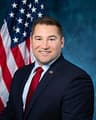 Guy Reschenthaler
Republican · Pennsylvania
 Michael Simpson
Republican · Idaho
 Eric Swalwell
Democrat · California
 Jefferson Van Drew
Republican · New Jersey
 Ann Wagner
Republican · Missouri