
Celeste Maloy (R-UT)
Water Rights Protection Act
A Republican bill with 6 Republican cosponsors · See all 6 cosponsors
Last activity — Placed on the Union Calendar, Calendar No. 334.
Cleared committee, waiting for its first floor vote
A committee approved it and it is on the calendar of the chamber it started in.
This is further than most bills get, and still no promise of a vote: the calendar is a queue, and the majority leadership decides what is called. A bill can sit here until the Congress ends.
Its path through Congress
- Introduced
- On Calendar
What this bill would do
The Water Rights Protection Act aims to prevent federal officials from forcing water right transfers as a condition for land use agreements. It instructs the Secretary of Agriculture and the Secretary of the Interior to respect state authority regarding water allocation and regulation. The bill prohibits these Secretaries from requiring users to transfer water rights to the United States to obtain or renew permits, leases, or easements. It also prevents the federal government from imposing restrictions on water use that go beyond what state law allows. Finally, the Act includes several exceptions to ensure it does not interfere with existing reclamation contracts or the Endangered Species Act.
Yes· 3 of 7
- Scored +8
Does this leave more decisions to the states?
The bill mandates that federal actions respect state authority and be consistent with state water laws.
- Scored +5
Would business owners be better off under this?
The bill provides regulatory certainty for entities that hold land use agreements dependent on water rights.
- Scored +5
Would Native Americans be better off under this?
The bill explicitly protects the water rights of federally recognized Indian Tribes from being transferred to the United States as a condition of land use.
The opposite
- Scored -3
Does this better protect air, water and wildlife?
The bill limits the ability of federal agencies to impose water use restrictions that might be necessary for environmental management.
Who it would affect, and how
Potential Positive Impacts for People
-
Protection of Water Rights Ownership: The bill prevents the Secretary from conditioning the issuance or renewal of permits, leases, or land use agreements on the transfer of water rights to the United States (Section 4, Subsection 1). This means people and entities can maintain their water rights without being forced to give them up to the federal government to keep their land use agreements.
-
Protection of Water Users and Tribes: It prohibits requiring any water user, including federally recognized Indian Tribes, to acquire water rights in the name of the United States as a condition for land use agreements (Section 4, Subsection 2). This helps ensure that water users and Tribes maintain their specific legal standing under state law.
-
Consistency with State Water Law: The bill requires federal actions to be consistent with and impose no greater restrictions than applicable State water law (Section 3, Subsection 1, Part B). This ensures that federal management does not create unexpected regulatory burdens that exceed what the state has already established.
-
Prevention of Unilateral Water Restrictions: The bill stops the federal government from conditioning land use agreements on limiting the time, location, or quantity of water diversion beyond what state law already dictates (Section 4, Subsection 3, Part A). This provides stability for those who rely on specific water usage patterns.
Potential Negative Impacts for People
- No specific negative impacts are explicitly detailed within the text provided, as the bill is designed to restrict federal authority rather than impose new burdens on the public. However, the text notes several areas where the law's protections do not apply, such as existing Bureau of Reclamation contracts (Section 5, Subsection a) or the implementation of the Endangered Species Act (Section 5, Subsection b).
Groups and Interests Ranking
Every group the model scored this bill for, from -10 to +10. Tap or hover a score for the reason it gave.
- Demographic And Interest Groups
- Would business owners be better off under this? — The bill provides regulatory certainty for entities that hold land use agreements dependent on water rights. Would farmers be better off under this? — The bill prevents the federal government from imposing water diversion restrictions beyond what state law allows, benefiting agricultural water users. Would Native Americans be better off under this? — The bill explicitly protects the water rights of federally recognized Indian Tribes from being transferred to the United States as a condition of land use. Would people in rural areas be better off under this? — Protecting water rights and state-level control provides stability for communities relying on local water allocations.
- Governance And Ideology
- Does this leave more decisions to the states? — The bill mandates that federal actions respect state authority and be consistent with state water laws.
- Social Issues And Justice
- Does this narrow racial gaps in how people are treated? — The bill protects the water rights of federally recognized Indian Tribes from being conditioned on transfers to the United States.
- Environment Energy And Infrastructure
- Does this invest in rural communities? — By protecting water rights and preventing forced transfers, the bill provides greater stability for rural water users and land agreements. Does this better protect air, water and wildlife? — The bill limits the ability of federal agencies to impose water use restrictions that might be necessary for environmental management.
- 11/25/2025
- Reported (Amended) by the Committee on Natural Resources. H. Rept. 119-384, Part I.
- Committee on Agriculture discharged.
- Placed on the Union Calendar, Calendar No. 334.
- 2/14/2025
- Referred to the Subcommittee on Conservation, Research, and Biotechnology.
- 2/12/2025
- Committee Consideration and Mark-up Session Held
- Ordered to be Reported in the Nature of a Substitute by the Yeas and Nays: 22 - 16.
- 2/11/2025
- 1 Cosponsor added.
- 1/14/2025
- 1 Cosponsor added.
- 1/9/2025
- Referred to the Committee on Natural Resources, and in addition to the Committee on Agriculture, for a period to be subsequently determined by the Speaker, in each case for consideration of such provisions as fall within the jurisdiction of the committee concerned.
- 4 Cosponsors added.
- Introduced in House
 Andy Biggs
Republican · Arizona
 Ron Estes
Republican · Kansas
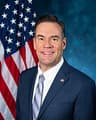 Russ Fulcher
Republican · Idaho
 Mike Kennedy
Republican · Utah
 Blake Moore
Republican · Utah
 Burgess Owens
Republican · Utah