
John Joyce (R-PA)
Addressing Boarding and Crowding in the Emergency Department
A Republican bill with 25 Democratic cosponsors · See all 34 cosponsors
Last activity — Referred to the Committee on Energy and Commerce, and in addition to the Committee on Ways and Means, for a period to be subsequently determined by the Speaker, in each case for consideration of such provisions as fall within the jurisdiction of the committee concerned.
In committee
Introduced and handed to a committee in the chamber it started in.
The committee holds it, and most bills are never heard from again. A hearing or a committee vote would be news; silence is the usual outcome, and it kills the bill without anyone voting against it.
Its path through Congress
- Introduced
- In Committee
What this bill would do
This bill, known as the "Addressing Boarding and Crowding in the Emergency Department Act of 2025," aims to amend existing laws regarding public health and Medicare/Medicaid. It allows public health data modernization grants to be used for tracking hospital bed capacity and its impact on emergency departments. The bill also expands the Center for Medicare and Medicaid Innovation to include research-based models for improving emergency care for older adults and those in psychiatric crisis. Additionally, it directs the Comptroller General to conduct a study on best practices for hospital capacity tracking systems.
Yes· 3 of 20
- Scored +9
Would people over 65 be better off under this?
Directly targets improved emergency care, staffing, and coordination for older adults.
- Scored +9
Would retired people be better off under this?
Focuses specifically on enhancing geriatric-focused emergency protocols and care.
- Scored +7
Does this make mental health care easier to get?
Implements dedicated units for acute psychiatric crisis and improves transfers to post-acute care.
The opposite
- Scored -1
Does this protect people from being watched or searched?
Potential privacy concerns related to public dashboards of hospital capacity.
Who it would affect, and how
Potential Positive Impacts for People
-
Improved Hospital Tracking: Grants can be used to develop real-time systems to track hospital bed capacity, emergency department boarding rates, treatment wait times, and how long emergency medical services personnel wait to offload patients (Section 2).
-
Public Transparency: The bill allows for a public-facing dashboard that provides information on tracked hospital capacity, provided it follows privacy laws (Section 2).
-
Enhanced Care for Older Adults: The Center for Medicare and Medicaid Innovation will include models to improve emergency care for older adults through better staffing, infrastructure changes, geriatric-focused policies, and better coordination with post-acute care facilities (Section 3).
-
Improved Care for Psychiatric Crises: New models will promote better care for individuals in acute psychiatric crisis by implementing dedicated emergency department units and improving transfers to post-acute care facilities (Section 3).
-
Data System Optimization: A study will be conducted to determine the best ways to track capacity across various facilities—including intensive care units and skilled nursing facilities—and ensure these systems integrate with hospital electronic medical records (Section 4).
Potential Negative Impacts for People
- Privacy Concerns: While the bill mandates that information on the public-facing dashboard be redacted in accordance with applicable privacy laws, the tracking of hospital capacity and emergency department data is a central component of the legislation (Section 2).
Groups and Interests Ranking
Every group the model scored this bill for, from -10 to +10. Tap or hover a score for the reason it gave.
- Demographic And Interest Groups
- Would retired people be better off under this? — Focuses specifically on enhancing geriatric-focused emergency protocols and care. Would people over 65 be better off under this? — Directly targets improved emergency care, staffing, and coordination for older adults. Would people with disabilities be better off under this? — Improves emergency care for psychiatric crises and coordination with post-acute facilities. Would high-income households be better off under this? — Improves general hospital resource transparency and efficiency. Would households on low incomes be better off under this? — Increases access to mental health crisis care and reduces ER wait times. Would middle-income households be better off under this? — Improves general hospital resource transparency and efficiency. Would people in cities be better off under this? — Reduces crowding and wait times in high-volume urban emergency departments. Would people in middle age be better off under this? — Reduces emergency department wait times and boarding rates. Would people in rural areas be better off under this? — Improves tracking of capacity across regions, aiding rural patient transfers. Would people in their twenties and thirties be better off under this? — Improves emergency care for those in acute psychiatric crisis. Would children be better off under this? — Includes pediatric intensive care units in the scope of capacity tracking.
- Healthcare
- Does this make mental health care easier to get? — Implements dedicated units for acute psychiatric crisis and improves transfers to post-acute care. Does this make health care easier to get in general? — Aims to reduce ER wait times and boarding rates through better capacity tracking and geriatric-focused care. Does this put more money into medical research? — Provides grants for data modernization and funds research-based models for emergency care. Does this make the country readier for the next outbreak? — Modernizing real-time hospital bed capacity tracking improves resource management during health crises. Does this put more money into Medicaid, the health coverage for people on low incomes? — Creates pilot programs through the Center for Medicare and Medicaid Innovation. Does this put more money into Medicare, the health coverage for people over 65? — Creates pilot programs through the Center for Medicare and Medicaid Innovation.
- Governance And Ideology
- Does this make what the government does easier for the public to see? — Creates a public-facing dashboard for hospital bed capacity. Does this give the federal government more power? — Expands federal grant capabilities for public health data systems. Does this protect people from being watched or searched? — Potential privacy concerns related to public dashboards of hospital capacity.
- Education And Technology
- Does this put more money into scientific research? — Funds research-based models for geriatric and psychiatric emergency care.
- 9/14/2026
- 1 Cosponsor added.
- 8/17/2026
- 1 Cosponsor added.
- 7/9/2026
- 3 Cosponsors added.
- 6/23/2026
- 1 Cosponsor added.
- 6/8/2026
- 5 Cosponsors added.
- 5/11/2026
- 7 Cosponsors added.
- 4/21/2026
- 1 Cosponsor added.
- 2/20/2026
- 1 Cosponsor added.
- 12/17/2025
- 1 Cosponsor added.
- 10/24/2025
- 1 Cosponsor added.
- 9/15/2025
- 1 Cosponsor added.
- 8/15/2025
- 6 Cosponsors added.
- 5/20/2025
- 4 Cosponsors added.
- 4/17/2025
- Referred to the Committee on Energy and Commerce, and in addition to the Committee on Ways and Means, for a period to be subsequently determined by the Speaker, in each case for consideration of such provisions as fall within the jurisdiction of the committee concerned.
- 1 Cosponsor added.
- Introduced in House
One bill Congress.gov lists as related to this one — companions in the other chamber, earlier versions, and bills this one absorbed or was folded into.
 Jake Auchincloss
Democrat · Massachusetts
 Mark Amodei
Republican · Nevada
 Gabe Amo
Democrat · Rhode Island
 Cliff Bentz
Republican · Oregon
 Don Bacon
Republican · Nebraska
 Nanette Barragán
Democrat · California
 Kathy Castor
Democrat · Florida
 Earl Carter
Republican · Georgia
 Salud Carbajal
Democrat · California
 Jason Crow
Democrat · Colorado
 Donald Davis
Democrat · North Carolina
 Debbie Dingell
Democrat · Michigan
 Valerie Foushee
Democrat · North Carolina
 Al Green
Democrat · Texas
 Josh Gottheimer
Democrat · New Jersey
 William Keating
Democrat · Massachusetts
 Doris Matsui
Democrat · California
 Mariannette Miller-Meeks
Republican · Iowa
 Seth Magaziner
Democrat · Rhode Island
 Sarah McBride
Democrat · Delaware
 Eleanor Norton
Democrat · District of Columbia
 Joe Neguse
Democrat · Colorado
 Jay Obernolte
Republican · California
 Chellie Pingree
Democrat · Maine
 Deborah Ross
Democrat · North Carolina
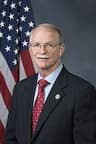 John Rutherford
Republican · Florida
 Darren Soto
Democrat · Florida
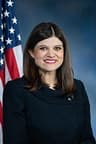 Haley Stevens
Democrat · Michigan
 Glenn Thompson
Republican · Pennsylvania
 Rashida Tlaib
Democrat · Michigan
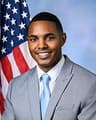 Ritchie Torres
Democrat · New York
 Lauren Underwood
Democrat · Illinois
 Eugene Vindman
Democrat · Virginia
 Joe Wilson
Republican · South Carolina