
John Rose (R-TN)
Homebuyers Privacy Protection Act
A Republican bill with 33 Democratic cosponsors · See all 89 cosponsors
Last activity — Became Public Law No: 119-36.
Became law
Passed both chambers and was signed by the President, or became law without a signature.
Nothing more in Congress: it is law. When it takes effect depends on the dates written into it — some parts start at once, others a year or more later.
Its path through Congress
- Introduced
- Passed House voice vote
- Passed Senate unanimous consent
- To President
- Became Law
No one's position on it was recorded: the House by voice vote (members called out yes or no together), and the Senate by unanimous consent (no one objected, so there was no vote).
What this bill would do
This bill, titled the ``Homebuyers Privacy Protection Act'', aims to amend the Fair Credit Reporting Act. It seeks to prevent consumer reporting agencies from sharing consumer reports with others after a person requests a report for a residential mortgage loan. To share a report under these circumstances, the transaction must be a firm offer of credit or insurance, and the recipient must meet specific criteria like having consumer authorization or managing a current loan or account for that consumer. The Act also mandates a study by the Comptroller General regarding the value of trigger leads received via text message. This study should include input from various financial and regulatory entities.
Yes
- Scored +7
Does this give people more control over their personal data?
The bill strengthens data privacy by preventing the sharing of credit reports after a mortgage request.
- Scored +7
Does this protect people from being watched or searched?
The bill provides significant protection for individual privacy regarding sensitive financial information.
- Scored +6
Does this give people more protection from unfair business practices?
The bill enhances consumer protection by restricting the sharing of sensitive credit information used for mortgage requests.
The opposite
No question was scored the opposite.
Who it would affect, and how
Potential Positive Impacts for People
-
Enhanced Privacy for Mortgage Applicants: Under Section 2(b), consumer reporting agencies are prohibited from furnishing reports to third parties based on a mortgage loan request unless specific conditions are met. This limits the sharing of sensitive credit information when a person is seeking a residential mortgage loan.
-
Increased Control Over Financial Information: The bill requires that for a report to be shared, the recipient must have submitted documentation certifying they have the consumer's authorization, as noted in Section 2(b)(ii)(I).
-
Protections for Existing Customers: Section 2(b)(ii) allows for the sharing of reports only if the person is a servicer, originator, or holder of a current account for the consumer, which ensures that information remains within established financial relationships like those with a credit union or insured depository institution.
Potential Negative Impacts for People
- No specific negative impacts are explicitly stated in the text of the bill.
Groups and Interests Ranking
Every group the model scored this bill for, from -10 to +10. Tap or hover a score for the reason it gave.
- Education And Technology
- Does this give people more control over their personal data? — The bill strengthens data privacy by preventing the sharing of credit reports after a mortgage request.
- Governance And Ideology
- Does this protect people from being watched or searched? — The bill provides significant protection for individual privacy regarding sensitive financial information.
- Economy And Finance
- Does this give people more protection from unfair business practices? — The bill enhances consumer protection by restricting the sharing of sensitive credit information used for mortgage requests.
- Public Law (9/6/2025)
The text as it became law
- Enrolled Bill
The final version, on its way to the President
In the queue for a floor vote, with no date set
- 9/5/2025
- Signed by President.
- Became Public Law No: 119-36.
- 8/25/2025
- Presented to President.
- 8/8/2025
- Message on Senate action sent to the House.
- 8/2/2025
- Passed/agreed to in Senate: Passed Senate without amendment by Unanimous Consent.
- Passed Senate without amendment by Unanimous Consent. (consideration: CR S5522)
- 6/24/2025
- Received in the Senate. Read twice. Placed on Senate Legislative Calendar under General Orders. Calendar No. 104.
- 6/23/2025
- Motion to reconsider laid on the table Agreed to without objection.
- Passed/agreed to in House: On motion to suspend the rules and pass the bill, as amended Agreed to by voice vote. (text: CR H2876)
- On motion to suspend the rules and pass the bill, as amended Agreed to by voice vote. (text: CR H2876)
- DEBATE - The House proceeded with forty minutes of debate on H.R. 2808.
- Considered under suspension of the rules. (consideration: CR H2876-2877)
- Mr. Rose moved to suspend the rules and pass the bill, as amended.
- 6/20/2025
- Reported (Amended) by the Committee on Financial Services. H. Rept. 119-166.
- Placed on the Union Calendar, Calendar No. 133.
- 2 Cosponsors added.
- 6/17/2025
- 3 Cosponsors added.
- 6/12/2025
- 1 Cosponsor added.
- 6/10/2025
- Committee Consideration and Mark-up Session Held
- Ordered to be Reported (Amended) by the Yeas and Nays: 46 - 0.
- 1 Cosponsor added.
- 6/9/2025
- 1 Cosponsor added.
- 6/5/2025
- 3 Cosponsors added.
- 6/4/2025
- 1 Cosponsor added.
- 5/29/2025
- 2 Cosponsors added.
- 5/23/2025
- 1 Cosponsor added.
- 5/21/2025
- 5 Cosponsors added.
- 5/20/2025
- 1 Cosponsor added.
- 5/19/2025
- 1 Cosponsor added.
- 5/17/2025
- 5 Cosponsors added.
- 5/15/2025
- 1 Cosponsor added.
- 5/14/2025
- 1 Cosponsor added.
- 5/13/2025
- 1 Cosponsor added.
- 5/8/2025
- 1 Cosponsor added.
- 5/7/2025
- 7 Cosponsors added.
- 5/5/2025
- 2 Cosponsors added.
- 5/1/2025
- 1 Cosponsor added.
- 4/30/2025
- 3 Cosponsors added.
- 4/29/2025
- 4 Cosponsors added.
- 4/28/2025
- 8 Cosponsors added.
- 4/21/2025
- 1 Cosponsor added.
- 4/17/2025
- 3 Cosponsors added.
- 4/14/2025
- 2 Cosponsors added.
- 4/10/2025
- Referred to the House Committee on Financial Services.
- 27 Cosponsors added.
- Introduced in House
One bill Congress.gov lists as related to this one — companions in the other chamber, earlier versions, and bills this one absorbed or was folded into.
 Mark Amodei
Republican · Nevada
 Mark Alford
Republican · Missouri
 Gabe Amo
Democrat · Rhode Island
 Sanford Bishop
Democrat · Georgia
 Stephanie Bice
Republican · Oklahoma
 Vern Buchanan
Republican · Florida
 Joyce Beatty
Democrat · Ohio
 Julia Brownley
Democrat · California
 Don Bacon
Republican · Nebraska
 Jack Bergman
Republican · Michigan
 Tim Burchett
Republican · Tennessee
 Tom Barrett
Republican · Michigan
 Janelle Bynum
Democrat · Oregon
 Ed Case
Democrat · Hawaii
 Emanuel Cleaver
Democrat · Missouri
 Michael Cloud
Republican · Texas
 Ben Cline
Republican · Virginia
 Angie Craig
Democrat · Minnesota
 Jason Crow
Democrat · Colorado
 Byron Donalds
Republican · Florida
 Monica De La Cruz
Republican · Texas
 Warren Davidson
Republican · Ohio
 Troy Downing
Republican · Montana
 Mike Ezell
Republican · Mississippi
 Cleo Fields
Democrat · Louisiana
 Bill Foster
Democrat · Illinois
 Charles Fleischmann
Republican · Tennessee
 Brian Fitzpatrick
Republican · Pennsylvania
 Michelle Fischbach
Republican · Minnesota
 Scott Franklin
Republican · Florida
 Mike Flood
Republican · Nebraska
 Brad Finstad
Republican · Minnesota
 Glenn Grothman
Republican · Wisconsin
 Josh Gottheimer
Democrat · New Jersey
 Michael Guest
Republican · Mississippi
 Jared Golden
Democrat · Maine
 Andrew Garbarino
Republican · New York
 Bill Huizenga
Republican · Michigan
 Kevin Hern
Republican · Oklahoma
 Ashley Hinson
Republican · Iowa
 Mike Haridopolos
Republican · Florida
 Dusty Johnson
Republican · South Dakota
 Robin Kelly
Democrat · Illinois
 Trent Kelly
Republican · Mississippi
 David Kustoff
Republican · Tennessee
 Jennifer Kiggans
Republican · Virginia
 Kevin Kiley
Independent · California
 Frank Lucas
Republican · Oklahoma
 Stephen Lynch
Democrat · Massachusetts
 Darin LaHood
Republican · Illinois
 Anna Paulina Luna
Republican · Florida
 Michael Lawler
Republican · New York
 Sam Liccardo
Democrat · California
 Tracey Mann
Republican · Kansas
 Lisa McClain
Republican · Michigan
 Gregory Meeks
Democrat · New York
 John Moolenaar
Republican · Michigan
 Daniel Meuser
Republican · Pennsylvania
 Frank Mrvan
Democrat · Indiana
 Tim Moore
Republican · North Carolina
 Sarah McBride
Democrat · Delaware
 Eleanor Norton
Democrat · District of Columbia
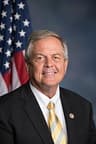 Ralph Norman
Republican · South Carolina
 Joe Neguse
Democrat · Colorado
 Zachary Nunn
Republican · Iowa
 Andrew Ogles
Republican · Tennessee
 Brittany Pettersen
Democrat · Colorado
 Deborah Ross
Democrat · North Carolina
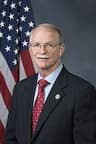 John Rutherford
Republican · Florida
 Pete Sessions
Republican · Texas
 Brad Sherman
Democrat · California
 David Scott
Democrat · Georgia
 Adrian Smith
Republican · Nebraska
 Marlin Stutzman
Republican · Indiana
 Bradley Schneider
Democrat · Illinois
 Lloyd Smucker
Republican · Pennsylvania
 Thomas Suozzi
Democrat · New York
 Bryan Steil
Republican · Wisconsin
 Eric Sorensen
Democrat · Illinois
 Derek Schmidt
Republican · Kansas
 Thomas Tiffany
Republican · Wisconsin
 Bennie Thompson
Democrat · Mississippi
 William Timmons
Republican · South Carolina
 Ritchie Torres
Democrat · New York
 Nydia Velázquez
Democrat · New York
 Eugene Vindman
Democrat · Virginia
 Nikema Williams
Democrat · Georgia
 Robert Wittman
Republican · Virginia
 Daniel Webster
Republican · Florida