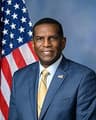
Burgess Owens (R-UT)
Accreditation for College Excellence Act of 2025
A Republican bill with 12 Republican cosponsors · See all 12 cosponsors
Last activity — Placed on the Union Calendar, Calendar No. 380.
Cleared committee, waiting for its first floor vote
A committee approved it and it is on the calendar of the chamber it started in.
This is further than most bills get, and still no promise of a vote: the calendar is a queue, and the majority leadership decides what is called. A bill can sit here until the Congress ends.
Its path through Congress
- Introduced
- On Calendar
What this bill would do
This bill, known as the "Accreditation for College Excellence Act of 2025," seeks to amend the Higher Education Act of 1965. It focuses on prohibiting political litmus tests within the accreditation process for institutions of higher education. The legislation aims to prevent accrediting agencies from requiring or encouraging institutions to support specific political, social, or cultural viewpoints. It also ensures that institutions can maintain religious missions and specific codes of conduct. Additionally, it limits the scope of criteria that the Secretary can establish for accrediting agencies.
Yes· 3 of 4
- Scored +5
Does this protect the freedom to practise a religion?
The bill explicitly protects the ability of religious institutions to maintain their mission and require adherence to statements of faith.
- Scored +3
Does this protect what people are allowed to say in public life?
By prohibiting political litmus tests in accreditation, the bill protects institutional expression and prevents political coercion.
- Scored +3
Does this protect the individual right to speak freely?
The bill protects institutions from being coerced into supporting specific political or ideological viewpoints.
The opposite
- Scored -2
Does this give the federal government more power?
The bill limits the scope of criteria the Secretary can establish for accrediting agencies.
Who it would affect, and how
Potential Positive Impacts for People
-
Protection against political coercion: The bill prohibits accrediting agencies from requiring, encouraging, or coercing institutions to support or oppose specific partisan, political, or ideological viewpoints or beliefs on social, cultural, or political issues (Section 2(a)(10)(A)(i)).
-
Protection against disparate treatment: It prevents accrediting agencies from requiring institutions to support the disparate treatment of individuals based on protected classes under Federal civil rights law (Section 2(a)(10)(A)(ii)).
-
Preservation of religious missions: The bill allows institutions to maintain a religious mission, operate as a religious institution, or be controlled by a religious organization (Section 2(a)(10)(B)(i)).
-
Freedom for religious institutions to set standards: It protects the ability of religious institutions to require applicants, students, employees, or independent contractors to adhere to a statement of faith or a code of conduct consistent with the institution's religious mission (Section 2(a)(10)(B)(i)).
-
Protection of constitutional oaths: The bill ensures institutions can require applicants, students, employees, or contractors to take an oath to uphold the Constitution of the United States (Section 2(a)(10)(B)(ii)).
-
Protection of constitutional rights: It prohibits accrediting agencies from coercing institutions to violate any right protected by the Constitution (Section 2(a)(10)(C)).
Potential Negative Impacts for People
- No specific negative impacts are explicitly detailed within the text provided.
Groups and Interests Ranking
Every group the model scored this bill for, from -10 to +10. Tap or hover a score for the reason it gave.
- Social Issues And Justice
- Does this protect the freedom to practise a religion? — The bill explicitly protects the ability of religious institutions to maintain their mission and require adherence to statements of faith. Does this protect what people are allowed to say in public life? — By prohibiting political litmus tests in accreditation, the bill protects institutional expression and prevents political coercion.
- Demographic And Interest Groups
- Would students be better off under this? — The bill may impact the variety of institutional missions available to students while protecting institutional autonomy.
- Governance And Ideology
- Does this protect the individual right to speak freely? — The bill protects institutions from being coerced into supporting specific political or ideological viewpoints. Does this give the federal government more power? — The bill limits the scope of criteria the Secretary can establish for accrediting agencies.
- 1/13/2026
- Reported (Amended) by the Committee on Education and Workforce. H. Rept. 119-444.
- Placed on the Union Calendar, Calendar No. 380.
- 8/8/2025
- 1 Cosponsor added.
- 7/15/2025
- 1 Cosponsor added.
- 7/2/2025
- 1 Cosponsor added.
- 6/25/2025
- Committee Consideration and Mark-up Session Held
- Ordered to be Reported (Amended) by the Yeas and Nays: 21 - 15.
- 5/14/2025
- 1 Cosponsor added.
- 3/31/2025
- Referred to the House Committee on Education and Workforce.
- 8 Cosponsors added.
- Introduced in House
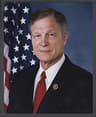 Brian Babin
Republican · Texas
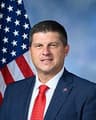 Brad Finstad
Republican · Minnesota
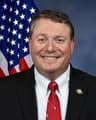 Randy Fine
Republican · Florida
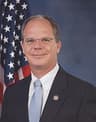 Brett Guthrie
Republican · Kentucky
 Glenn Grothman
Republican · Wisconsin
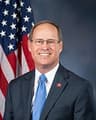 Gregory Murphy
Republican · North Carolina
 Mark Messmer
Republican · Indiana
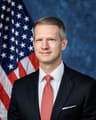 Riley Moore
Republican · West Virginia
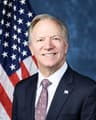 Robert Onder
Republican · Missouri
 John Rose
Republican · Tennessee
 W. Steube
Republican · Florida
 Claudia Tenney
Republican · New York