
A Democratic bill with 1 Republican cosponsor · See all 16 cosponsors
Last activity — Referred to the Committee on Education and Workforce, and in addition to the Committees on Financial Services, and Ways and Means, for a period to be subsequently determined by the Speaker, in each case for consideration of such provisions as fall within the jurisdiction of the committee concerned.
In committee
Introduced and handed to a committee in the chamber it started in.
The committee holds it, and most bills are never heard from again. A hearing or a committee vote would be news; silence is the usual outcome, and it kills the bill without anyone voting against it.
Its path through Congress
- Introduced
- In Committee
What this bill would do
The Women's Retirement Protection Act aims to amend the Employee Retirement Income Security Act of 1974 to increase spousal protections for defined contribution plans. It requires participants to obtain written spousal consent for certain distributions or changes to beneficiary designations. The bill also mandates that financial product providers provide links to consumer information from the CFPB. Additionally, it authorizes competitive grants to improve financial literacy among women and to assist low-income women and survivors of domestic violence in obtaining qualified domestic relations orders.
Yes· 3 of 9
- Scored +8
Would women be better off under this?
The bill directly addresses women's retirement security through literacy grants and legal aid.
- Scored +7
Does this narrow the gap between how men and women are treated?
The bill specifically targets closing the retirement gap for women through financial literacy and legal assistance.
- Scored +5
Would people over 65 be better off under this?
The bill provides protections that secure retirement assets for seniors.
The opposite
- Scored -2
Would business owners be better off under this?
Plan administrators face new administrative requirements and potential liabilities.
Who it would affect, and how
Potential Positive Impacts for People
-
Increased Spousal Protection: The bill requires that individual account plans provide spousal consent for distributions and beneficiary changes, providing protections similar to traditional defined benefit plans (Section 3(a)).
-
Access to Financial Education: Financial product or service providers must provide an easily accessible link to the Bureau of Consumer Financial Protection website to help consumers access retirement planning resources (Section 5(b)).
-
Improved Financial Literacy for Women: The Secretary of Labor will award grants to community-based organizations to develop programs that increase women's knowledge of retirement planning and economic concepts (Section 6).
-
Assistance with Legal Orders: Grants will be available to help low-income women and survivors of domestic violence prepare, obtain, and effectuate qualified domestic relations orders (Section 7).
Potential Negative Impacts for People
-
Restrictions on Distributions: Under the new rules, certain distributions or changes to beneficiary designations cannot be made without the written consent of a spouse, which must be witnessed by a plan representative or a notary public (Section 3(a)(e)).
-
Administrative Requirements for Plans: Plan administrators must provide a written explanation of rights to participants and their spouses within a reasonable period of time before a distribution or designation occurs (Section 3(a)(e)(1)(A)).
Groups and Interests Ranking
Every group the model scored this bill for, from -10 to +10. Tap or hover a score for the reason it gave.
- Demographic And Interest Groups
- Would women be better off under this? — The bill directly addresses women's retirement security through literacy grants and legal aid. Would retired people be better off under this? — Protections on distributions help ensure long-term retirement stability. Would people over 65 be better off under this? — The bill provides protections that secure retirement assets for seniors. Would households on low incomes be better off under this? — The bill provides specific grants to assist low-income women in obtaining legal orders. Would middle-income households be better off under this? — Spousal protections benefit middle-class families managing defined contribution plans. Would business owners be better off under this? — Plan administrators face new administrative requirements and potential liabilities.
- Social Issues And Justice
- Does this narrow the gap between how men and women are treated? — The bill specifically targets closing the retirement gap for women through financial literacy and legal assistance. Is this likely to lift people out of poverty? — The bill helps low-income women secure retirement assets through legal support.
- Economy And Finance
- Does this give people more protection from unfair business practices? — The bill enhances consumer protection by requiring financial providers to include links to CFPB resources.
- Governance And Ideology
- Does this give the federal government more power? — The bill expands federal oversight of private retirement plan distributions.
- 7/6/2026
- 1 Cosponsor added.
- 12/18/2025
- 1 Cosponsor added.
- 8/26/2025
- 1 Cosponsor added.
- 7/25/2025
- 1 Cosponsor added.
- 4/7/2025
- 1 Cosponsor added.
- 3/21/2025
- 2 Cosponsors added.
- 3/14/2025
- 1 Cosponsor added.
- 3/11/2025
- Referred to the Committee on Education and Workforce, and in addition to the Committees on Financial Services, and Ways and Means, for a period to be subsequently determined by the Speaker, in each case for consideration of such provisions as fall within the jurisdiction of the committee concerned.
- 8 Cosponsors added.
- Introduced in House
One bill Congress.gov lists as related to this one — companions in the other chamber, earlier versions, and bills this one absorbed or was folded into.
 Suzanne Bonamici
Democrat · Oregon
 Salud Carbajal
Democrat · California
 Raúl Grijalva
Democrat · Arizona
 Mike Haridopolos
Republican · Florida
 Pablo Hernández
Democrat · Puerto Rico
 Summer Lee
Democrat · Pennsylvania
 James McGovern
Democrat · Massachusetts
 LaMonica McIver
Democrat · New Jersey
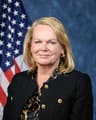 April McClain Delaney
Democrat · Maryland
 Eleanor Norton
Democrat · District of Columbia
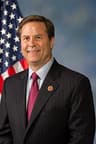 Donald Norcross
Democrat · New Jersey
 Chellie Pingree
Democrat · Maine
 Deborah Ross
Democrat · North Carolina
 Janice Schakowsky
Democrat · Illinois
 Emilia Sykes
Democrat · Ohio
 Rashida Tlaib
Democrat · Michigan