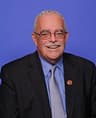
Gerald Connolly (D-VA)
Veteran Fraud Reimbursement Act of 2025
A Democratic bill with 4 Republican cosponsors · See all 7 cosponsors
Last activity — Became Public Law No: 119-56.
Became law
Passed both chambers and was signed by the President, or became law without a signature.
Nothing more in Congress: it is law. When it takes effect depends on the dates written into it — some parts start at once, others a year or more later.
Its path through Congress
- Introduced
- Passed House voice vote
- Passed Senate unanimous consent
- To President
- Became Law
No one's position on it was recorded: the House by voice vote (members called out yes or no together), and the Senate by unanimous consent (no one objected, so there was no vote).
What this bill would do
The Veteran Fraud Reimbursement Act of 2025 amends title 38 of the United States Code. It requires the Secretary of Veterans Affairs to pay beneficiaries or their successor fiduciaries an amount equal to benefits misused by a fiduciary. The Secretary must also try to recoup those funds from the original fiduciary. If a beneficiary dies, payments go to an individual or entity according to section 5121, but not to the fiduciary who misused the funds. The total payment cannot exceed the amount misused. Additionally, the Secretary must establish methods to determine if misuse resulted from Secretary negligence.
Yes· 3 of 9
- Scored +10
Would veterans be better off under this, taking everything together?
Directly protects veterans by ensuring reimbursement of misused benefits.
- Scored +8
Does this increase the pay, pensions or support veterans receive?
Ensures veterans recover benefits misused by fiduciaries.
- Scored +7
Would people with disabilities be better off under this?
People with disabilities are more likely to require fiduciaries and thus benefit from these protections.
The opposite
No question was scored the opposite.
Who it would affect, and how
Potential Positive Impacts for People
-
Recovery of Misused Funds: Beneficiaries or their successor fiduciaries will receive payments equal to the amount of benefits misused by a fiduciary (Section 2, subsection a(1)).
-
Recoupment from Wrongdoers: The Secretary is required to make a good faith effort to get money back from the fiduciary who misused the payments (Section 2, subsection a(2)).
-
Protection for Deceased Beneficiaries: If a beneficiary dies, the funds are still paid to an authorized individual or entity, ensuring the misuse of funds doesn't simply erase the benefit (Section 2, subsection b(1)).
-
Prevention of Further Abuse: The law explicitly prohibits the Secretary from paying the reissued funds to the fiduciary who misused the benefits (Section 2, subsection b(2)).
-
Faster Access to Funds: The Secretary cannot delay reissuing a benefit payment just because they are still determining if the misuse was caused by Secretary negligence (Section 2, subsection d(2)).
Potential Negative Impacts for People
-
Limited Reimbursement: The total amount paid to a beneficiary or successor fiduciary cannot exceed the total benefit amount that was misused (Section 2, subsection c).
-
Discretionary Oversight: The Secretary is not required to determine if the government was negligent in every single instance of fiduciary misuse (Section 2, subsection d(3)).
Groups and Interests Ranking
Every group the model scored this bill for, from -10 to +10. Tap or hover a score for the reason it gave.
- Demographic And Interest Groups
- Would veterans be better off under this, taking everything together? — Directly protects veterans by ensuring reimbursement of misused benefits. Would people with disabilities be better off under this? — People with disabilities are more likely to require fiduciaries and thus benefit from these protections. Would households on low incomes be better off under this? — Protects low-income veterans from the financial loss caused by fiduciary fraud. Would retired people be better off under this? — Protects retired veterans from fiduciary fraud. Would people over 65 be better off under this? — Many seniors utilize fiduciary services for benefits and would benefit from fraud reimbursement. Would middle-income households be better off under this? — Provides a mechanism for recovering misused financial benefits.
- National Security And Foreign Policy
- Does this increase the pay, pensions or support veterans receive? — Ensures veterans recover benefits misused by fiduciaries.
- Governance And Ideology
- Does this protect the right to fair treatment by the courts? — Improves the process for veterans to reclaim funds stolen by fiduciaries. Does this make what the government does easier for the public to see? — Requires the Secretary to establish methods for determining government negligence in fiduciary misuse.
- Public Law (12/13/2025)
The text as it became law
- Enrolled Bill
The final version, on its way to the President
- 12/12/2025
- Signed by President.
- Became Public Law No: 119-56.
- 12/3/2025
- Presented to President.
- 11/20/2025
- Senate Committee on Veterans' Affairs discharged by Unanimous Consent.
- Passed/agreed to in Senate: Passed Senate without amendment by Unanimous Consent.
- Passed Senate without amendment by Unanimous Consent. (consideration: CR S8400)
- Message on Senate action sent to the House.
- 5/6/2025
- Received in the Senate and Read twice and referred to the Committee on Veterans' Affairs.
- 5/5/2025
- Motion to reconsider laid on the table Agreed to without objection.
- Passed/agreed to in House: On motion to suspend the rules and pass the bill Agreed to by voice vote. (text: CR H1817-1818: 1)
- On motion to suspend the rules and pass the bill Agreed to by voice vote. (text: CR H1817-1818)
- DEBATE - The House proceeded with forty minutes of debate on H.R. 1912.
- Considered under suspension of the rules. (consideration: CR H1817-1819)
- Mr. Bergman moved to suspend the rules and pass the bill.
- 4/7/2025
- 1 Cosponsor added.
- 3/27/2025
- Referred to the Subcommittee on Disability Assistance and Memorial Affairs.
- 3/21/2025
- 1 Cosponsor added.
- 3/6/2025
- Referred to the House Committee on Veterans' Affairs.
- 5 Cosponsors added.
- Introduced in House
One bill Congress.gov lists as related to this one — companions in the other chamber, earlier versions, and bills this one absorbed or was folded into.
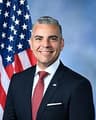 Juan Ciscomani
Republican · Arizona
 Brian Fitzpatrick
Republican · Pennsylvania
 Josh Harder
Democrat · California
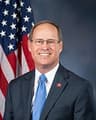 Gregory Murphy
Republican · North Carolina
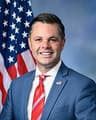 Zachary Nunn
Republican · Iowa
 Andrea Salinas
Democrat · Oregon
 Rashida Tlaib
Democrat · Michigan