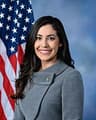
Anna Paulina Luna (R-FL)
Foreign Propaganda Disclosure Act
A Republican bill with 3 Democratic cosponsors · See all 20 cosponsors
Last activity — Referred to the House Committee on the Judiciary.
In committee
Introduced and handed to a committee in the chamber it started in.
The committee holds it, and most bills are never heard from again. A hearing or a committee vote would be news; silence is the usual outcome, and it kills the bill without anyone voting against it.
Its path through Congress
- Introduced
- In Committee
What this bill would do
This bill is called the Foreign Propaganda Disclosure Act. It amends the Foreign Agents Registration Act of 1938. The main goal is to require certain people to submit registration statements. Specifically, it updates the law to include social media influencers. A social media influencer is defined as someone with a monetized social media account on a social media platform.
Yes· 3 of 6
- Scored +4
Does this give the federal government more power?
Expands the reach of the Foreign Agents Registration Act to include digital content creators.
- Scored +4
Does this make what the government does easier for the public to see?
Creates a public record of influencers acting as foreign agents.
- Scored +3
Does this make elections run better?
Attempts to reduce undisclosed foreign influence in domestic discourse.
The opposite· 3 of 7
- Scored -4
Does this protect people from being watched or searched?
Requires individuals to register and disclose their status as foreign agents to the government.
- Scored -3
Would people in their twenties and thirties be better off under this?
Young adults are the primary demographic of social media influencers affected by registration burdens.
- Scored -3
Does this protect the individual right to speak freely?
Imposes registration and disclosure mandates on speech conducted by monetized accounts.
Who it would affect, and how
Potential Positive Impacts for People
- Increases transparency for the public: By updating the definition of who must register under the Foreign Agents Registration Act to include a social media influencer under Section 2, the bill helps people know if online personalities are working for foreign interests.
Potential Negative Impacts for People
- Adds new registration rules and burdens: Under Section 2, anyone defined as a social media influencer who has a monetized social media account must now submit registration statements, which creates new requirements for those individuals.
Groups and Interests Ranking
Every group the model scored this bill for, from -10 to +10. Tap or hover a score for the reason it gave.
- Demographic And Interest Groups
- Would people in their twenties and thirties be better off under this? — Young adults are the primary demographic of social media influencers affected by registration burdens. Would business owners be better off under this? — Influencers acting as business entities face increased compliance costs. Would immigrants be better off under this? — Foreign nationals with monetized accounts may face more stringent registration requirements.
- Governance And Ideology
- Does this make what the government does easier for the public to see? — Creates a public record of influencers acting as foreign agents. Does this give the federal government more power? — Expands the reach of the Foreign Agents Registration Act to include digital content creators. Does this make elections run better? — Attempts to reduce undisclosed foreign influence in domestic discourse. Does this protect people from being watched or searched? — Requires individuals to register and disclose their status as foreign agents to the government. Does this protect the individual right to speak freely? — Imposes registration and disclosure mandates on speech conducted by monetized accounts.
- National Security And Foreign Policy
- Does this give the government more power to monitor people inside the country? — Expands the government's ability to track and monitor foreign agents operating through social media.
- Social Issues And Justice
- Does this protect what people are allowed to say in public life? — Increases government reporting requirements for individuals expressing views on social media platforms.
- Education And Technology
- Does this put more rules on large technology companies? — Indirectly regulates how content is presented on social platforms through agent disclosure.
- Economy And Finance
- Does this give people more protection from unfair business practices? — Increases transparency for users regarding foreign-funded influence operations. Does this make it easier to run a small business? — Adds administrative and registration burdens to individual monetized social media creators.
- 9/16/2026
- 1 Cosponsor added.
- 9/10/2026
- 4 Cosponsors added.
- 8/27/2026
- Referred to the House Committee on the Judiciary.
- 15 Cosponsors added.
- Introduced in House
 Kat Cammack
Republican · Florida
 J. Correa
Democrat · California
 Russ Fulcher
Republican · Idaho
 Brad Finstad
Republican · Minnesota
 Clay Fuller
Republican · Georgia
 Paul Gosar
Republican · Arizona
 Vicente Gonzalez
Democrat · Texas
 James Gallagher
Republican · California
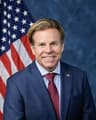 Mike Haridopolos
Republican · Florida
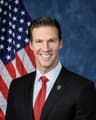 Pat Harrigan
Republican · North Carolina
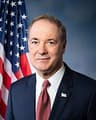 John Joyce
Republican · Pennsylvania
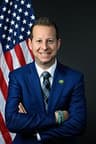 Jared Moskowitz
Democrat · Florida
 Richard McCormick
Republican · Georgia
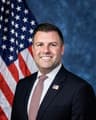 Ryan Mackenzie
Republican · Pennsylvania
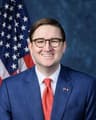 Addison McDowell
Republican · North Carolina
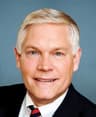 Pete Sessions
Republican · Texas
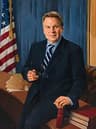 Christopher Smith
Republican · New Jersey
 Derrick Van Orden
Republican · Wisconsin
 Randy Weber
Republican · Texas
 Tony Wied
Republican · Wisconsin