
Rick Scott (R-FL)
A resolution designating March 5, 2026, as "National Slam the Scam Day" to raise awareness about pervasive scams and to prevent government imposter scams and other types of scams by promoting education about such scams.
A Republican resolution with 5 Democratic cosponsors · See all 9 cosponsors
Last activity — Resolution agreed to in Senate without amendment and with a preamble by Unanimous Consent. (consideration: CR S1789)
Adopted
The chamber formally agreed to it, and for a resolution that is the finish line: what it says is now officially the chamber's position, rule or tribute.
Nothing more is needed. A resolution is how a chamber speaks for itself or sets its own rules, so adopting it is what puts it into effect. It is not a law, so there is nothing for the President to sign.
Its path through Congress
- Introduced
- Adopted by the Senate unanimous consent
A Senate resolution is the Senate speaking for itself: stating a position, honouring someone, or setting its own rules. Adopting it is the whole process. Once the Senate agrees to it, it is officially the Senate's word; it is not a law, so the House and the President have no part in it.
The Senate by unanimous consent (no one objected, so there was no vote): no senator's position on it was recorded.
What this bill would do
This resolution designates March 5, 2026, as ``National Slam the Scam Day''. The goal is to raise awareness about widespread scams, specifically government imposter scams. It highlights how scams cost consumers billions of dollars and disproportionately hurt older adults. The text encourages the public to ignore fake government solicitations and report them to the proper authorities. Finally, it recognizes the roles that law enforcement, consumer protection groups, and financial institutions play in preventing these crimes.
Who it would affect, and how
Potential Positive Impacts for People
-
Raising Awareness: Under Resolved (1) and (2), the Senate designates March 5, 2026, as ``National Slam the Scam Day'' to raise awareness and amplify messaging about government imposter scams that use mail, telephone, text message, email, social media, or internet websites. This is a positive step to help educate the public on how to spot these bad actors.
-
Encouraging Public Protection and Reporting: Under Resolved (4) and (5), the bill encourages policies and programs to prevent scams and protects the people of the United States. It also encourages the public to ignore fake government solicitations, share scam information with family and friends, and report scams to agencies like the Federal Trade Commission or the Inspectors General for Social Security and Tax Administration.
-
Honoring Anti-Fraud Workers: Under Resolved (6), the resolution honors the commitment and dedication of the individuals and organizations that work tirelessly to fight against government imposter scams, which gives well-deserved credit to those protecting everyday people.
Potential Negative Impacts for People
Based on the provided text, there are no specific sections or provisions identified that create negative consequences, burdens, or penalties for individuals or groups of people in the United States.
- 4/15/2026
- Senate Committee on the Judiciary discharged by Unanimous Consent.
- Passed/agreed to in Senate: Resolution agreed to in Senate without amendment and with a preamble by Unanimous Consent.
- Resolution agreed to in Senate without amendment and with a preamble by Unanimous Consent. (consideration: CR S1789)
- 4/14/2026
- 1 Cosponsor added.
- 3/5/2026
- Submitted in Senate
- Referred to the Committee on the Judiciary. (text: CR S887-888)
- 8 Cosponsors added.
One bill Congress.gov lists as related to this one — companions in the other chamber, earlier versions, and bills this one absorbed or was folded into.
 Angela Alsobrooks
Democrat · Maryland
 Marsha Blackburn
Republican · Tennessee
 Richard Blumenthal
Democrat · Connecticut
 Susan Collins
Republican · Maine
 Kirsten Gillibrand
Democrat · New York
 Mark Kelly
Democrat · Arizona
 Ashley Moody
Republican · Florida
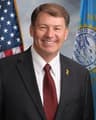 Mike Rounds
Republican · South Dakota
 Raphael Warnock
Democrat · Georgia