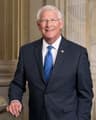
Roger Wicker (R-MS)
A resolution supporting the designation of October 30 as the "International Day of Political Prisoners".
A Republican resolution with 2 Democratic cosponsors · See all 2 cosponsors
Last activity — Resolution agreed to in Senate without amendment and with a preamble by Unanimous Consent. (consideration: CR S5525)
Adopted
The chamber formally agreed to it, and for a resolution that is the finish line: what it says is now officially the chamber's position, rule or tribute.
Nothing more is needed. A resolution is how a chamber speaks for itself or sets its own rules, so adopting it is what puts it into effect. It is not a law, so there is nothing for the President to sign.
Its path through Congress
- Introduced
- Adopted by the Senate unanimous consent
A Senate resolution is the Senate speaking for itself: stating a position, honouring someone, or setting its own rules. Adopting it is the whole process. Once the Senate agrees to it, it is officially the Senate's word; it is not a law, so the House and the President have no part in it.
The Senate by unanimous consent (no one objected, so there was no vote): no senator's position on it was recorded.
What this bill would do
This resolution supports designating October 30 as the International Day of Political Prisoners. It notes that there are an estimated 1,000,000 political prisoners worldwide, including journalists and human rights defenders. The text highlights that authoritarian regimes use systematic imprisonment against independent voices. It mentions that the United States Government previously secured the release of several dozen political prisoners from Belarus, Russia, and Venezuela through negotiations. Finally, the Senate states it deplores political repression and supports ongoing efforts to secure the release of these prisoners.
Yes· 3 of 7
- Scored +4
Does this protect the individual right to speak freely?
The measure strongly supports free expression by standing with journalists, activists, and dissidents facing imprisonment for their speech.
- Scored +4
Does this favour talking over confrontation abroad?
The resolution actively supports bilateral and multilateral diplomatic negotiations by the U.S. government to secure the release of political prisoners.
- Scored +4
Does this protect what people are allowed to say in public life?
The resolution supports international awareness and advocacy for dissidents, journalists, and activists imprisoned for peacefully expressing their political views.
The opposite
No question was scored the opposite.
Who it would affect, and how
Potential Positive Impacts for People
-
Support for Prisoners: Under resolved section (2), the Senate conveys its unwavering solidarity with all individuals imprisoned around the world for peacefully expressing their political or religious beliefs, which offers moral support to those suffering from political repression.
-
Government Action and Accountability: Under resolved section (3), the resolution supports United States Government efforts to condemn political imprisonment, hold responsible regimes accountable, raise international awareness, and secure the release of political prisoners through negotiations, which holds foreign officials accountable for their actions against the people.
-
Official Recognition: Under resolved section (5), the Senate supports the annual designation of October 30 in the United States as the International Day of Political Prisoners, bringing formal attention to the plight of roughly 1,000,000 political prisoners worldwide.
Potential Negative Impacts for People
- No Negative Impacts Identified: The provided text does not contain any specific sections or provisions that outline negative consequences, burdens, or harms for individuals or groups of people in the United States.
Groups and Interests Ranking
Every group the model scored this bill for, from -10 to +10. Tap or hover a score for the reason it gave.
- Governance And Ideology
- Does this protect the individual right to speak freely? — The measure strongly supports free expression by standing with journalists, activists, and dissidents facing imprisonment for their speech. Does this protect the right to fair treatment by the courts? — The resolution speaks out against arbitrary detention and imprisonment without credible offenses, implicitly championing global due process rights. Does this make what the government does easier for the public to see? — The resolution promotes governmental transparency by officially condemning authoritarian political repression and holding regimes accountable.
- National Security And Foreign Policy
- Does this favour talking over confrontation abroad? — The resolution actively supports bilateral and multilateral diplomatic negotiations by the U.S. government to secure the release of political prisoners. Does this strengthen ties with allied countries? — The resolution reinforces diplomatic efforts and international cooperation to condemn political repression and secure prisoner releases.
- Social Issues And Justice
- Does this protect what people are allowed to say in public life? — The resolution supports international awareness and advocacy for dissidents, journalists, and activists imprisoned for peacefully expressing their political views. Does this protect the freedom to practise a religion? — The resolution expresses solidarity with individuals imprisoned worldwide for peacefully expressing their religious beliefs.
The resolution as the chamber adopted it
What changed from Introduced in Senate: No change to the wording. Only the printed details that record the bill’s progress, such as the heading and dates, are different.
- 11/10/2026
- Senate Committee on Foreign Relations discharged by Unanimous Consent.
- Passed/agreed to in Senate: Resolution agreed to in Senate without amendment and with a preamble by Unanimous Consent.
- Resolution agreed to in Senate without amendment and with a preamble by Unanimous Consent. (consideration: CR S5525)
- 10/29/2025
- Referred to the Committee on Foreign Relations. (text: CR S7829)
- 2 Cosponsors added.
- Introduced in Senate
 Jeanne Shaheen
Democrat · New Hampshire
 Sheldon Whitehouse
Democrat · Rhode Island