
Cindy Hyde-Smith (R-MS)
A resolution designating September 2025 as "National Cholesterol Education Month" and September 30, 2025, as "LDL-C Awareness Day".
A Republican resolution with 2 Democratic cosponsors · See all 5 cosponsors
Last activity — Submitted in the Senate, considered, and agreed to without amendment and with a preamble by Unanimous Consent. (consideration: CR S7735; text: CR S7732-7733)
Adopted
The chamber formally agreed to it, and for a resolution that is the finish line: what it says is now officially the chamber's position, rule or tribute.
Nothing more is needed. A resolution is how a chamber speaks for itself or sets its own rules, so adopting it is what puts it into effect. It is not a law, so there is nothing for the President to sign.
Its path through Congress
- Introduced
- Officially Recorded
- Adopted by the Senate unanimous consent
A Senate resolution is the Senate speaking for itself: stating a position, honouring someone, or setting its own rules. Adopting it is the whole process. Once the Senate agrees to it, it is officially the Senate's word; it is not a law, so the House and the President have no part in it.
The Senate by unanimous consent (no one objected, so there was no vote): no senator's position on it was recorded.
What this bill would do
S. Res. 464 designates September 2025 as "National Cholesterol Education Month" and September 30, 2025, as "LDL-C Awareness Day." The resolution encourages people in the United States to know their low density lipoprotein cholesterol (LDL-C) number. It recognizes the urgent need to screen and treat elevated LDL-C to lower the risk of heart attacks, strokes, and cardiovascular disease.
Yes· 3 of 18
- Scored +5
Would people in middle age be better off under this?
Focuses on a critical age group for cardiovascular screening and LDL-C management.
- Scored +5
Would people over 65 be better off under this?
Directly addresses the leading cause of death for seniors through awareness and screening.
- Scored +5
Would Black Americans be better off under this?
Explicitly recognizes and aims to address higher prevalence and lower screening rates for African-Americans.
The opposite
No question was scored the opposite.
Who it would affect, and how
Potential Positive Impacts for People
-
Increased Health Awareness: By designating September 2025 as "National Cholesterol Education Month" and September 30, 2025, as "LDL-C Awareness Day," the resolution aims to raise awareness about cardiovascular disease and the importance of knowing LDL-C numbers. (Resolved sections 2 and 3)
-
Risk Reduction: The resolution recognizes that screening and treating elevated LDL-C is urgently needed to reduce the risk of cardiovascular events, including strokes and heart attacks. (Resolved section 4)
-
Individual Proactivity: The resolution encourages all individuals in the United States to find out their LDL-C number, which is a modifiable risk factor for cardiovascular disease. (Resolved section 1)
Potential Negative Impacts for People
- No negative impacts for individuals or groups are mentioned in the provided text.
Groups and Interests Ranking
Every group the model scored this bill for, from -10 to +10. Tap or hover a score for the reason it gave.
- Demographic And Interest Groups
- Would Black Americans be better off under this? — Explicitly recognizes and aims to address higher prevalence and lower screening rates for African-Americans. Would people in middle age be better off under this? — Focuses on a critical age group for cardiovascular screening and LDL-C management. Would retired people be better off under this? — Seniors and retirees are at higher risk for the cardiovascular events the bill seeks to prevent. Would people in rural areas be better off under this? — Specifically recognizes higher death rates and prevalence of cardiovascular disease in rural areas. Would people over 65 be better off under this? — Directly addresses the leading cause of death for seniors through awareness and screening. Would men be better off under this? — Addresses cardiovascular disease as a leading cause of death for men. Would women be better off under this? — Addresses cardiovascular disease as a leading cause of death for women. Would Asian Americans be better off under this? — General health awareness benefits for cardiovascular disease risk reduction. Would high-income households be better off under this? — Increases health awareness and risk reduction for the general population. Would Hispanic Americans be better off under this? — General health awareness benefits for cardiovascular disease risk reduction. Would households on low incomes be better off under this? — Raises awareness for screening in populations with inequitable access to care. Would middle-income households be better off under this? — Increases health awareness and risk reduction for the general population. Would Native Americans be better off under this? — General health awareness benefits for cardiovascular disease risk reduction. Would people in cities be better off under this? — General health awareness benefits for the population. Would white Americans be better off under this? — General health awareness benefits for cardiovascular disease risk reduction. Would people in their twenties and thirties be better off under this? — Encourages early awareness of cardiovascular risk factors.
- Healthcare
- Does this make health care easier to get in general? — Promotes screening and awareness for cholesterol which can lead to better preventive care.
- Social Issues And Justice
- Does this narrow racial gaps in how people are treated? — Acknowledges gaps in care for African-American adults regarding LDL-C testing.
- 10/23/2025
- Passed/agreed to in Senate: Submitted in the Senate, considered, and agreed to without amendment and with a preamble by Unanimous Consent.
- Submitted in the Senate, considered, and agreed to without amendment and with a preamble by Unanimous Consent. (consideration: CR S7735; text: CR S7732-7733)
- 5 Cosponsors added.
- Introduced in Senate
One bill Congress.gov lists as related to this one — companions in the other chamber, earlier versions, and bills this one absorbed or was folded into.
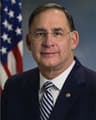 John Boozman
Republican · Arkansas
 Steve Daines
Republican · Montana
 Roger Marshall
Republican · Kansas
 Alex Padilla
Democrat · California
 Gary Peters
Democrat · Michigan